Dieting and Weight: A New Way to Think

healthy lifeI struggled with what to title this post even though I know exactly what I want to say. Sometimes I notice things or patterns or trends about people, eating, food, or whatever and say to myself “I need to write about that”. Especially when it is something I see over and over again. To me it may be glaringly obvious how ridiculous it is yet so many wise and wonderful people are still doing the same dumb things (I don’t mean to be insulting to anyone as they are not “dumb” at all, which is why it is so baffling they might make the same mistakes over and over, even after many years).

I am referring to dieting, specifically spending money to go on the same diet program they may have been “successful” on 2 years ago. Lately I have bumped into old friends or acquaintances who last time I saw them looked a whole lot different. It could go either way, either they may have gained a lot of weight or lost a lot of weight. Following the same “program”. Or not.

It seems they have so much faith in their diet program because after all, it did “work”. If only they could have stayed with it, had more willpower. So this next time should be the last. But it never is and the reason is because nothing has really changed except the number on the scale (down, then up). You have heard it before, from me and others, why dieting and focusing on your weight is not the answer to feeling good or being healthy…..you know that any new diet book hooks you in because it gives a false sense of hope.

Instead, my hope is you might be open to stopping for just a few minutes to reflect on this. Do you have a goal stuck in your brain that you absolutely will not give up until you reach a certain size or weight? Then I am asking you for just a few minutes to let go of that thought and think about all of the things you have done over the past months or years to change your body. If you have spent months or years working on this and are still in the same place, would you consider something different? You could go another few years repeating the cycle and many people do. And you should not be hard on yourself if you have, because that is the only way to learn (and learning what does not work is equally important as learning what does work). Just like with dating, you have to kiss a lot of frogs!

Anyway, my suggestion is putting on a “detective” hat instead. Instead of judging and commanding yourself, could you first of all try to stay neutral and nonjudgmental? What are some of the unhealthy habits you may have fallen into that you wish you could change? For instance, are you stopping for fast food on the way home from work on a daily basis? Do you plop on the couch the minute you get home? Do you notice you drink too much when you go out with certain friends or overeat when you have sweets in your house? How about considering some simple “health” goals and making a mental list of some of the healthy things you would like to incorporate in your life? Someone once told me, or maybe I read it somewhere, that you are either moving forward, backward, or staying still. It is ok to stay still sometimes. And we learn from going backwards too. But why not take some simple steps to “move forward” instead of starting that same old diet plan or program (or a new one) that will leave you in the same place a year from now? You may decide to pick just one day where you don’t stop for fast food and cook instead. You may just decide to collect some of those healthy recipes you actually did enjoy from that diet plan and cook dinner (even if you are not “on” the diet, if you found healthy meals you liked, that could be useful!). Or maybe you may decide to take just ten minutes after work to walk before you settled in to watch TV. Even just one day a week. It is all positive action and all with a good goal: to move into a healthier lifestyle. Yes, you can stop for fast food, overeat with your friends, drink too much sometimes, and decide to spend the entire day on the couch if that is what you need. It is finding the balance that leads to a healthy body and mind. In the end, you will probably find that a year from now, for once, you will be in a better place, both physically and mentally (and financially!).

So consider putting on that detective hat, think about YOUR unique lifestyle and habits, and YOU decide what you may want to start with to move FORWARD. One step at a time…..

What I learned about food and eating in Italy

IMG_5635 I recently returned from an almost three week vacation in Italy. It was an amazing trip in many ways, mostly because it truly validated who I am and why I like the foods I do, (and why I love dancing). I felt very connected to my roots. Growing up in an Italian family with a grandfather who spoke broken English and a grandmother who did not speak a work of English created many wonderful memories. Family was the center of our lives and meals and gatherings that centered around cooking and eating were just a part of life. I remember going to my grandmother’s house who did not speak English, and she would take chunks of aged Parmesan cheese and melt them on a gas stove as a snack on the end of a fork. Every Sunday was pasta and meatballs and fresh Italian bread.

In Italy I loved the way everyone was never in a hurry. Meals took a long time! If we went to a restaurant, the bread always came out with the olive oil first. Then the liter of homemade red wine which was cheaper than the water! and tasted better : ) And then the “first course” would come which was your pasta, pesto or sauce or whatever and it was always homemade. Then came the meat or fish, chicken was rare to find on a menu. And salad was last, always simple and always olive oil and vinegar. Dessert was offered but the funny thing was that every single breakfast we had at every hotel or B and B consisted of beautiful homemade cakes and croissants and pastry as well as some type of cheese and ham. We joked at the end of the vacation that we did not want to see another slice of ham or salami for awhile! Italians love their ham and prosciutto and salami! and the olives were out of this world. In fact, if you stopped in anywhere for just a drink you were always given a platter of food that usually consisted of cheese, ham, bread, nuts, olives and/or potato chips….I was in heaven.

What I loved the most was the feeling of never being rushed. Italians will never bring the check until you ask for it. They do not seem to care if you sit for three hours over the same plate…..they understand the importance of savoring a delicious meal and a glass of wine and spending time with friends talking. It was absolutely wonderful. Oh, and I had real gelato for the first time…in a word, YUM! But they have not learned about super-sizing…the cups were tiny….but just enough. It did not strike me that Italians wanted quantity, they were more into quality and deliciousness.

I hope to continue to take the time to enjoy and savor all that meal times represent. It is more than just eating. It is savoring and enjoying and connecting over traditions. Whether you are Italian or Polish or Asian or French or Hispanic, whatever your culture and your food traditions, take the time to learn about them, learn how to prepare them and cherish your heritage.

But it is good to be home!!!

Restrained Eating: is it ever good?

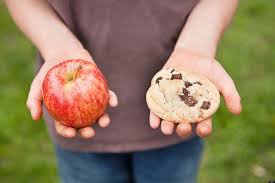
cookie and apple in handDecades of research indicate that “cognitively restraining” your food intake often leads to binge eating and/or disordered eating. Cognitive restraint means using your head to determine what to eat instead of listening to your body. Most people who restrain their eating do it in order to lose weight. They may follow a specific diet and try not to sway from the diet. They may count calories or avoid certain foods altogether (see “Are You In Diet Jail”). They typically weigh themselves regularly. There is actually a “Restraint Scale” consisting of several questions that evaluate the degree of restrained eating.

You may have already heard about this research. I think this can be confusing for many who may say “then does that mean we should not pay attention to what we eat? Aren’t we supposed to try to eat healthy?”

The answer is yes, it is good to care about your health, but that does not mean avoiding any foods or counting calories or weighing yourself. Instead it means using your head to make healthy choices WITHOUT being overly restrictive.  What the research also has revealed is that certain types of “restrained” eating may not lead to problems but may actually be helpful. This type of eating is referred to as “flexible” restraint verses “rigid”. Flexible means just that. You may love the bread sticks at a certain restaurant, however you may also love the entree you just ordered….so you decide you are going to eat one bread stick to save room for what you really love! If you were to “listen to your body” and you were really hungry, theoretically you could eat 5 bread sticks! But then you would ruin your appetite! Is that restrained eating? Well, yes, in a way, however it is also flexible. You are making a decision because you know your body and you want to honor it and feel good. Another example may be planning ahead of time to cook for the week. This does not mean you will not allow yourself to stop for a burger at the drive through, however you also may not want to waste the money, and if you plan ahead and have healthy and yummy foods in your home, you are again being healthy but not rigidly restrictive.

The bottom line is that it is ok to want to be healthy, eat healthy, and yes, you do have to use your head! But being flexible is what is important. Being rigid does not contribute to health, just food obsession, disordered eating and a that is certainly not healthy.


Body Image: Ten Steps to Loving Your Body

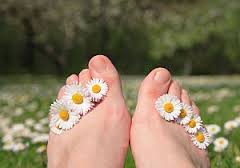
daisy feet

A wonderful organization that does so much to support people struggling with eating disorders is the National Eating Disorders Association. On their website, they have a wonderful page on body image that lists “Ten Steps to Loving Your Body“. If you or anyone you know is struggling with body image or eating concerns, check out NEDA and check out this inspirational page: https://www.nationaleatingdisorders.org/10-steps-positive-body-image. Spread the positive thinking!!! or click on the link: NEDA

Binge Eating Disorder: New Approaches to Appetite Control

ice creamToday I attended a conference presented by Walden Behavioral Care on the topic of Binge Eating Disorder (BED). Dr. James Greenblatt, Chief Medical Officer at Walden and author of the book “Answers to Appetite Control:New Hope for Binge Eating and Weight Management”  spoke about the complicated interactions between our physiology and brain when it comes to binge eating.  There are specific criteria that define a diagnosis of BED and just one of the criteria includes “recurrent episodes of binge eating characterized by both of the following: (1) consuming an abnormally large amount of food in a short period of time compared to what others might eat in the same amount of time and under the same or similar circumstances, and (2) experiencing a loss of control over eating during the episode. Additionally, in BED there is “significant distress” about the binge eating.

Dr. Greenblatt stressed that some binge eaters experience cravings that are physiologically based, in other words, the cravings are a result of your biology rather than just the environment or a social trigger. In fact, some research showed that brain scans of those who scored higher on a “food addiction” rating scale were similar to those of drug addicts.  There was an elevated activation in the reward circuitry in response to food cues. Again, this does not mean that if you binge eat, you are “addicted” to food, but that everyone is different and some people have the physiology that makes it much harder (and it is not their fault).

In addition, disordered eating such as binge eating often co-exists with mood disorders such as bipolar disorder, anxiety disorders, depression and ADHD . In fact, ADHD has been linked to BED (apparently the act of chewing helps to decrease day dreaming brain waves and helps you pay attention). The odds of developing a binge eating disorder is 12 X greater in children with ADHD. Dr. Greenblatt stressed the importance of treating the mood disorder first before the binge eating could be addressed.

Another very important point was regarding the importance of protein. There are over 250 neurotransmitters that send impulses throughout our brains and affect our thoughts, feelings and behaviors, many of these directly affecting our appetite regulatory mechanisms. They are all derived from amino acids. Adequate protein intake is critical, often an issue for some. For example,  vegetarians and vegans may not get enough protein (especially if they are not educated on nutrition) and chronic dieters often have inadequate intakes. And, even if a person does consume adequate protein, it may not always be available, such as in the case of insufficient digestive enzymes or excessive antacid use.

Finally, there was mention of how for a small percentage of people, certain foods substances may contribute to food addiction and binge eating, such as high fructose corn syrup and MSG (he also discussed the gluten craze as well as casein but I may save that for another post!) This does not mean we need to cut out any foods  or that we should never eat them, it just is important to have balance in your life.

The importance of medication (such as mood stabilizers) in some cases was also  mentioned, as well as how medication was not helpful in other cases. The bottom line is that everyone is different, and it is very important to get evaluated by a professional. BED is a serious and debilitating eating disorder, but there is help.

If you are interested in the book which contains a wealth of information from Dr. Greenblatt, check out: http://answerstoappetitecontrol.com/ 

Should You Have A “Cheat Day”?

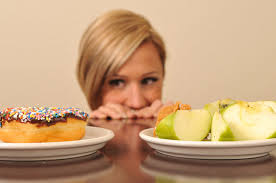
donut vs apple and womanWhen I hear a person say “Saturday is my cheat day” I gotta be honest, it pushes my buttons. To most people it sounds like a harmless thing, but to me it is a red flag. An alarm goes off, triggering this irritating feeling throughout my body. I try not to react, it is a conscious decision on my part to ignore it if I am overhearing a conversation in the elevator of the hospital where I work part time, or somewhere else where there really is not time to get into it. Otherwise, such as a party or other informal gathering where women especially tend to chat about what they are doing to change their bodies…. I always take the opportunity to educate people about Health at Every Size, and how focusing on being healthy verses being thin is a much more sane goal. Then I may ask what they mean by”cheat day”. Inevitably, it means following some type of “healthy” eating plan or dieting throughout the week, then allowing themselves to overeat any of the foods  they have denied themselves during the week on Friday or Saturday, and often again on Sunday.

What bothers me about this approach to eating is that it ignores all of the principles of “mindful” eating, and about “listening to your body” . It gives food so much more power than it deserves. It makes me think of how back in the day (and actually still today unfortunately) food is used as a reward. For example, “if you finish your spinach, you can have the cookie”. What does that message send? It says “something is very wrong with spinach, and something is very special about cookies”. I wish food was never treated this way. If you are really honest with yourself, you have to admit, that sometimes fresh vegetables or a great salad or roasted garlic with asparagus is extremely yummy. And an Oreo cookie could never substitute for that taste. If however, one were to hold that Oreo up as a reward, then it might be different. Over time,we might become conditioned to look at that sweet in a different way, and want it even if we really didn’t want it! If we really were mindful and not conditioned to think some foods were good and some foods were bad (that we could only eat them on a “cheat” day) and REALLY listened to what our bodies wanted, then we would not even need a “cheat” day. We would eat in a mindful way, cooking meals that were healthy and that we enjoyed, because we want to feel good, have energy and live a long and healthy life. But that means enjoying the fun foods too, the ones that are important to us, in our culture, our family traditions or socially. Having a homemade blueberry muffin at Grandma’s house or sharing a favorite dessert when out with our old college roommate,or Grandma Harmon’s favorite cinnamon buns that you only get once in a blue moon. It may not be a Saturday or a “cheat” day, but it may be and should be just part of normal life. Monday, Tuesday, Wednesday, Thursday, Friday, Saturday, Sunday….I hope everyday you listen to your hunger, and fullness, and enjoy healthy eating, have energy, and never miss an opportunity to enjoy a serving of a special food that you enjoy. Heck with “cheat” days. Enjoying life is living, not cheating.

Are You in Diet Jail?

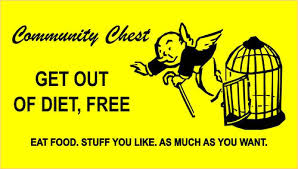
Idiet jail first encountered the term “Diet Jail” in 1975. I was a biology major at Clark University in Worcester, Mass. I remember clearly working with the lab teacher who was doing his research on birds (he kind of looked like a cool woodpecker). He made me count bird chirps he had taped on a recorder. I decided I did not want to be a biology major because counting bird chirps was incredibly boring. So I met with my adviser who asked me what I was interested in. My best friend Joyce was a vegetarian and ate very interesting things such as yogurt with sunflower seeds and honey, and so I told him, I though vegetarianism was interesting. He told me I should be a dietitian. I did not know what that was, but anyway, I ended up transferring to the University of Connecticut to study nutrition. For my first nutrition class (Nutrition 101) I had to do a  report about fad diets and at the time there were many books out there on the market, including the Atkins Diet. But I found one called “The Psychologist’s Eat Anything Diet” by two psychologists, Dr. Pearson and his wife, also Dr. Pearson.  It changed my thinking in a way that lasted, well, forever. The authors were decades before their times in the strategies they were promoting, before we knew about mindful eating or how our bodies regulated themselves regarding calorie intake, fat, carbohydrate intake, etc. They described what they called “diet jail” where individuals who diet tend to “lock themselves up” in a jail where only the healthy foods exist. In other words, they tell themselves they are only going to eat healthy foods such as grilled chicken, vegetables, fruits, salad, etc until they lose the weight. So psychologically it is as if they “lock themselves up” in a world where only the healthy foods are available (or allowable). But outside the jail are all the other foods, the “bad” foods. The chips, cookies, ice cream, burgers, pizza, you get the picture. All the foods they have determined they are not allowed to eat (while they are on that diet). And so, most people can last a bit in Diet Jail. Yes, they get cravings, but they use their “willpower” and overcome them. Unfortunately, we now know our bodies send out very loud signals when we are not getting enough carbohydrate or fat (the foods that do not exist in Diet Jail!) and so eventually, our bodies drive our brains to give in. Add this physiological drive to an environmental trigger, such as walking into your friend’s home who just baked some homemade chocolate chip cookies, and things change. Your brain, which is triggered by the deficiency in your body, tells you to eat a cookie! It has just what you need, what you have been missing, that fat and carbohydrate! But you can’t have someone throw just one cookie into your jail cell, so you have to step out of the jail to get that one cookie…….the problem is, once you take that bite, your realize you are out there! Out of Diet Jail! And since you know you will go back in (you tell yourself that on Monday you will really start again!) you better eat while you are out here! So you decide to order pizza, and then have ice cream (a lot) because, heck, you are going to start again on Monday. Often a full blown binge results. Because you know this is just this one time. Soon you will be back on track. Back in Diet Jail. Until the next time.

As repetitive as this cycle is in so many people’s lives, they do not seem to stop. The next diet craze offers the next magic scheme. Weight is lost and then regained. Back then we did not know the physiological reasons people were driven to eat but now we do. We know if you restrict you will suffer from “disinhibition” or breaking out of Diet Jail.Often referred to as the “what the hell” effect. It is a very sad and draining cycle.

So why not take those bars down? Why not entertain the thought of changing what you have been doing that is not working? What if you were to start to believe that all foods are equal? No food is good, no food is bad, they all have a place in your life. Yes, we need certain nutrients to feel good, have energy, normal bowel movements, prevent disease, etc. So educate yourself (I will gladly help you!), experiment, enjoy your cultural traditions (yay. pasta fagioli!) but start paying attention to your body. Are you hungry? Are you full? Are you so confused that you might really want to get some help (such as from an eating disorder specialist?). Wherever you are, it is ok, just take some time to truly reflect on your patterns. My hope for you is to enjoy eating, be healthy, and take down those darn bars.

Regarding “Clean” Eating….

mopThis women’s face is how I feel several times per week. Have you fallen for the latest weight loss craze? This is driving me crazy!! It angers me when people are taken advantage of because they are desperate to lose weight. How do you define “clean eating”??? And why does it usually involve some type of juice that you need to purchase?? Anyway, try to find some good long term outcome studies on this diet approach, and please share them with me. I can’t find any. The bottom line is any trick to make you eat A LOT less will make the force of gravity on your body less over time (that means you will weigh less). It won’t last. Most of these diets have you do a juice fast or just fruits and vegetables or maybe a “clean” shake for a certain amount of time. You will lose weight as your body breaks down muscle (sorry but the Krebb Cycle prefers amino acids to keep producing it’s ATP’s for energy, not the fat you are hoping it would use). Not to mention the typical dehydration that occurs when your body is breaking down muscle from starvation (because when you break down muscle you need to get rid of the nitrogen through your kidneys, and your body knows to use water to dilute it otherwise your kidneys would be damaged…unfortunately, that happens to some people anyway). And if you are getting way too little calories, your body may be building up toxins in your blood called ketones….that isn’t too “clean” if you ask me.

Not to mention, don’t you have to eventually eat something? Then what? Have you learned anything about yourself? Have you identified some unhealthy habits you may have had and are you magically now able to change them? Probably not. If I could have a dollar for everyone I knew who lost weight on a plan like this, but then gained it back, I might have retired by now. This latest fad is nothing new, just like the low carbohydrate diets, the low fat diets, the high protein diets, and on and on, it just delays the inevitable work your really need to do.

I’m good with vegetables and fruits in your diet. But this is way too much thinking and that is something we know people can’t sustain over time. Why not simply work on adding in these healthy foods to your diet and continue working on listening to your hunger and fullness, recognizing when you are eating when you are not really hungry, taking time to move your body because it is fun and feels good and also contributes to your health? Stop all the “cognitive restraint” and focus on health. There  is no such thing as clean eating.

What is “HAES”?

images

I have a few simple questions to ask before I explain what HAES is:

1. How many people have you known who have “gone on a diet” specifically to lose weight?

2. Have you ever known someone who has gone on a diet and who has lost weight and kept it off? I am not talking about the person who took up a sport or quit smoking and adopted a healthier life style. I am talking about someone who followed a specific “diet plan” such as a low carb diet or meal replacement diet or counting calories or points kind of diet.

3. Have scientists discovered the one diet that works to help people lose weight and keep it off? Of course we know researchers have been looking into this, since people have been struggling with trying to lose weight for a long time. The “obesity epidemic”is always in the news. So have they found the one diet that works?

Not sure of your answer for question #1, but for #2, I am guessing the answer is NO, and for question #3, I will tell you the answer is NO. What most of the public does not know (because who would be interested in the research over the years regarding dieting except someone like a dietitian?) is that many researchers have been looking into dieting behavior for decades. In fact, when I went back to graduate school and did my research on “cognitive restraint” back in the ’90’s, I was angry! I could not believe the world did not know that the “experts” already knew many of the reasons dieting did not work! But then I realized, it is about the diet industry combined with desperate people wanting to lose weight.

I was not the only one who was angry. There now exists a split among health professionals working with people with weight issues (actually, the split has been there for many years but only recently gaining attention). Thanks to the more recent research and new groundbreaking books (see below) by Dr. Linda Bacon, the “Health at Every Size” Movement  has now been brought into the public eye and the movement is gaining momentum.. Those of us who believe in promoting health instead of some perfect weight, are no longer alone. Yes, there are still doctors, nurses and dietitians who will put someone on a diet (boy could I tell you some horror stories). So it is important to ask any professional you are working with which side of the fence they are on. Are they familiar with the HAES Approach? If not, they may be a bit behind the times. Or, they may still be influenced by a society who values a certain physical appearance instead of health.

Here is an excerpt taken the HAES website at http://www.haescommunity.org/  :

“Health at Every Size” is based on the simple premise that the best way to improve health is to honor your body. It supports people in adopting health habits for the sake of health and well-being (rather than weight control). Health at Every Size encourages:

  • Accepting and respecting the natural diversity of body sizes and shapes.
  • Eating in a flexible manner that values pleasure and honors internal cues of hunger, satiety, and appetite.
  • Finding the joy in moving one’s body and becoming more physically vital.

  • and from Dr. Linda Bacon: “Health at Every Size is the new peace movement.”

    “Very simply, it acknowledges that good health can best be realized independent from considerations of size. It supports people of all sizes in addressing health directly by adopting healthy behaviors.”

    If you are tired of dieting and ready to focus on health instead of some magic number on the scale, check out  Health at Every Size: The Surprising Truth About Your Weight by Linda Bacon, PhD and her most recently released book, Body Respect (http://thebodypolitic.biz/bodyrespect/), co-authored with Lucy Aphramor

  • And be sure to check out the HAES website at http://www.haescommunity.org/

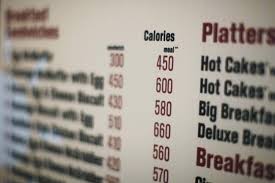
Should you count calories?

calorie labelI was a little concerned when restaurants started to post the calorie content of menu items. I have to admit, I am a bit torn between the importance of educating people about nutrition and my mission to prevent disordered eating and promote a healthy relationship to food. My friends and family often argue with me when I say “listen to your body”. My husband says “my body told me to eat the whole thing!”.

What my husband is referring to is most likely the “trigger” that yummy food is to most of us (and not true hunger, something not very easy to tune in to for many). We are all different in the way we respond to food and eating, and not everyone is able to “listen to your body” because they have a unique eating, weight, dieting, genetic history that no one can understand except themselves. So what does counting calories have to do with anything? Why would I have any concerns with labeling calories on menu items? Should you count calories to have a healthy weight?

My answer: The Top 5 Reasons you should not count calories:

1. It is hard enough to work on the task of paying attention to your hunger and fullness, so when you attach a number to a meal or snack, you are almost guaranteed to become “disconnected” to your true body signals. Imagine you have determined you need a certain amount of calories for the day, and by evening you feel full after your last meal and do not want that pm snack you are supposed to have. Should you force yourself to eat it? or what if the opposite happens and after your dinner with the specified calories, you are still hungry? Do you forbid yourself a snack and think about food all night long? What if you made a mistake, which leads me to reason number 2.

2. You will not be accurate! The calories posted on many packages and menus may not be accurate! Check out this interesting video about a small experiment in NYC regarding this topic. WARNING: this video only looked at a few foods and most had more calories than stated on the package or menu. The reverse is also likely, where menu items have less than stated. The message is, nobody is held responsible for accuracy! If you are obsessive already about eating and calories, this video may be triggering and you should skip it.

3. It encourages obsessive thinking about food which can backfire. When you use “cognitive restraint” such as counting calories, you become MORE focused on food, not less. Research shows that people who are overly restrictive tend to be more likely to binge eat. Even worse, this behavior is more likely to lead to disordered eating patterns.

4. Counting Calories does not translate into healthy eating.  As I said earlier, although I believe in “listening to your body” I also believe it is good to want to be healthy. That may mean learning about nutrition, healthy cooking, what your body needs to feel good, etc. If you only look at calories, you are missing the boat.

And Finally,

5. Counting Calories is not fun and really interferes with your social life! Not only is it harder to go out to eat once in awhile with friends, even family celebrations become a chore instead of something that should be enjoyed as one of the most wonderful parts of life. Not only that, people who are restrained eaters (such as calorie counters) tend to be more depressed.

So the bottom line is: it is ok to educate yourself about nutrition, but calorie counting is not a great thing. You can’t avoid seeing the calorie count on the menus, and if you get indigestion every time you get that certain giant burger, well, seeing the calories may help you understand why….but your tummy will tell you that, you really didn’t need to know the number after all : )