The Power of a Cookie

chocolate-chip-cookies-20-1328002This weekend I was reminded of the power of a cookie. I was at a social gathering which was a very joyful celebration filled with laughter, games, children, and great food. As with most summer time picnics that are pot luck, people bring their favorite dishes or desserts to share. Being someone who loves to cook and get new recipes, it is a fun experience for me. I tend to skip the dishes I can make myself (simple potato salad, coleslaw, plain old chocolate chip cookies, etc) and always enjoy trying things where I don’t even know what is in it! For example, there was an interesting quinoa salad with avocado and kale that was amazing (it looked a bit sketchy but tasted great!). Someone made buffalo chicken appetizer balls with a blue cheese dip that I am definitely getting the recipe for. You get the picture, great food, great day, great fun.

But near the end of the night a woman came out to the dessert table looking for a cookie. There had been a few platters of cookies but most of the guests had left and apparently the platters were gone too. She seemed really desperate for a cookie, so I looked around and found a small plate which I showed her. She quickly grabbed one and gobbled it up. I was glad she was happy until a few seconds later when her mood drastically changed. I was thrown when she started to say “why did I eat that cookie? I feel so guilty! I have to fit into my dress next week! What was I thinking!?” I suddenly felt bad for being a part of this, as she was truly upset. But then my dietitian mode kicked in as I tried to convince her one cookie truly would have no effect on her body. It took some time but eventually she seemed to let it go.

It struck me later that reactions like this to a cookie are not uncommon. Have you ever witnessed someone reacting to what they have eaten is such a dramatic way? The reaction is one you might expect from someone who truly did something really bad. The primary feeling is one of guilt. The word “guilty” came up several times. To me, that word is a strong one. It means you did something really wrong, something you regret and don’t want to do again because you feel so bad. How does one cookie make someone feel like that?

Part of it could be the “black and white” thinking many people have about food and eating. Food is “good” or food is “bad”. Who decides what foods fit into what category is the individual and how they define the word as well as how they judge the particular food. To me “good” means it tastes good. To someone else, good means it is good for you, a “healthy” food. So for me, those buffalo chicken balls with the blue cheese dip were definitely good! But to someone else, they may be considered “bad”. Peanut butter cookies may be “bad” to someone who thinks sweets are bad because they don’t consider cookies “healthy”, but to me they are bad because I just plain don’t like peanut butter cookies (sugar cookies however are definitely good).

Another way to explain some people’s guilty overreaction to eating just one cookie might be the “diet jail” I referred to in a previous post Are You in Diet Jail? When people are dieting to lose weight (which often happens when they are getting ready for a specific event, such as a reunion, holiday or wedding, big party, etc and want to fit into specific clothing) they put themselves in diet jail where most normal foods are forbidden. Even one bite of a food that is not in their diet world of foods in diet jail can set someone off.

It also seems like a “perfectionism” kind of approach to food and eating. The word “perfection” is interesting because I think we all have areas in our lives where we strive for it. To my grandfather back in the day, it was his lawn. It was perfect. He would have a fit if a neighborhood dog would set foot on it, and heaven forbid, pee. I remember being very careful as a child when we went to my grandparents home, being sure to stay within the manicured border of the small sidewalk leading to the door. Don’t step on the grass!!

My husband is a bit of a perfectionist when he entertains friends. He spends a lot of time on cutting foods perfectly so the presentation is the way he wants it to be. I, however do not have that kind of patience, and tend to throw it all together. Other people need to have a perfectly organized closet. One woman I worked with had all of her clothes hung up by color, and her shoes all labeled. I, on the other hand, still have sweaters stuffed in my closet mixed in with the sun dresses…never did get around to switching those clothes around. My perfectionism tends to involve being a bit overly concerned that I make everyone happy if they are coming to my house for a get together. It is important to me that everyone has a great experience and I truly do enjoy the cooking and entertaining. It is stressful though to be thinking so hard about pleasing everyone, and I am working on having it be “good enough”.

So maybe that is the take home message. Why can’t everything be “good enough?” Why isn’t your body good enough? Why isn’t your diet good enough?  Not that I promote looking at calories, but the truth is your body certainly does not care if you eat 100 calories from an apple or a cookie, it is probably just happy to have the energy. Yes, you should care about nutrition and getting the nutrients you need, and yes, your health does matter. Assuming you are not allergic to it and don’t have some other health condition such as diabetes, one cookie truly does not have the power to affect your body in any significant way.

So the next time you catch yourself reacting dramatically from eating something, try to stop and do a reality check. Do you really need to waste so much time feeling guilty about something that has no affect on your body or your health? For some, this is much harder than for others. Some have spent months and years with this mindset and it does not change overnight. But even just being aware of your own experience is a step in the right direction. Try not to accept this and instead start questioning yourself. Look at the big picture and all the positive things you do to be the best you can be. To me, being perfect means being imperfect.

And the truth is a cookie has no power at all.
Who is ED?

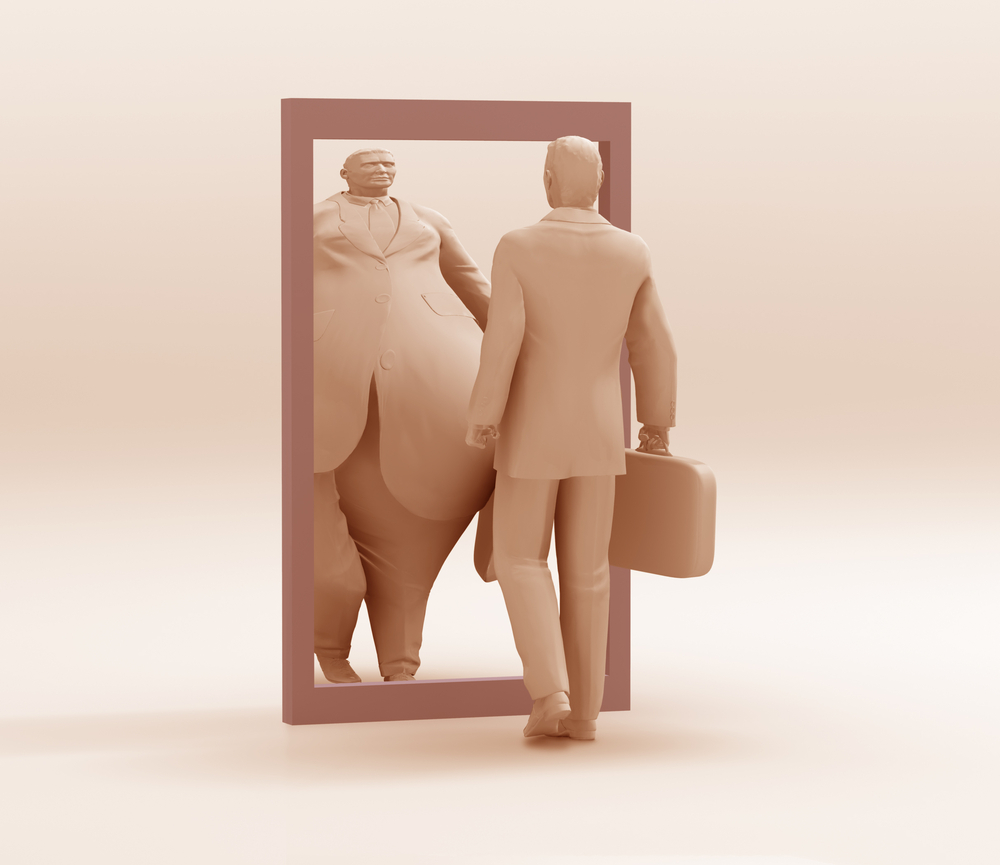
eating-disorder-mirror-drawingI first was introduced to ED back in 1996. I had just finished graduate school and took a part time job at an eating disorder program. As a dietitian, my main interest was in health promotion and disease prevention. It made sense to me that it seemed smarter and easier to help people prevent disease if possible through promoting a healthy lifestyle. It is much harder to treat illnesses that may have been prevented. I specifically remember a middle aged man who I met during my very first job as a dietitian in a small hospital. He was admitted after having a heart attack. His lifestyle was not healthy at all (smoking, unhealthy diet, no physical activity). I remember thinking that he should not have been there.

I left the hospital after just one year and changed my focus to helping people be healthy. I worked for WIC (Women, Infants and Children) and loved teaching young mothers about healthy eating. I also did some private practice and that is when I knew I needed more skills with counseling, and went back to graduate school (with a focus on counseling). It was while working on the college campus that I encountered students with “sub-clinical” eating disorders. In other words, they were restrained eaters who dieted yet had not developed an eating disorder yet. I did my research on “cognitive restraint” because I felt if we could stop people from dieting and focus on health instead, we could possibly prevent an eating disorder.

Although working with eating disorders was something I never planned to do, after doing my research, I ended up connecting with many eating disorder professionals and got my job at the eating disorder program. It was here where I was introduced to “ED”.

I got to observe group sessions and then got to run my own. Every patient is different however one of the common connections all of the patients related to was a “voice” that was constantly in their heads. Meet ED. I eventually imagined a little ugly creature sitting on my patient’s shoulders, feeding them thoughts and ideas, rules and insults, misinformation about themselves, food, their bodies, absolutely everything. This voice (ED) would follow them around all day long, into the night. It never stopped. It was a learning process for me as I learned about how this voice contributes to all of the distortions and beliefs individuals suffering from these eating disorders experience.

Here are some of the things my patients have told me ED says (warning, it will make you sad):

  • you can’t have that, it will make you fat
  • why did you eat that? you are worthless, you have no willpower!
  • don’t listen to her, she is lying, she wants you to gain weight
  • white flour is bad
  • meat is bad
  • you can’t eat fried food
  • you can’t have that, it has sugar in it
  • you need to burn that up, when are you going to do it? figure it out, you ate it, now you need to get rid of it
  • you look fine, they are just jealous because you lost weight. You need to lose more. Don’t listen to them
  • you are disgusting
  • you didn’t do enough. You need to do more, more laps, more sit-ups, more more more.

Get the picture? Depending on where someone is in the recovery process, talking about this voice does come up. It is a slow process, but helping individuals fight this voice is critical. Exposing ED for the liar that he is takes a lot of work and energy. Of course, every patient needs therapy to work through their specific issues that led to the eating disorder in the first place. As a dietitian, I focus on teaching the truth about foods, eating, weight, etc. Sometimes, during a visit with a patient who is fighting hard and finally aware of what a “healthy” voice is, ED still weasels his way back in. I admit to falling into the trap of arguing with ED, and then it hits me, and I stop. I have often said to patients “wait a minute, I am not going to engage ED, can I talk to YOU?!” Once I had a patient get up and dramatically rip ED from her shoulder and throw him in the waste basket! She said “I have lots of family celebrations this weekend and I want to enjoy them. ED is not invited!” I will never forget that strong visual.

Another thing people don’t often realize is that individuals with eating disorders are just that. Individuals who unfortunately struggle with this disease. They are not an “anorexic” or a “bulimic”. They are people. I have met the most extraordinary people who have had ED on their shoulders and have had to fight him daily. I have met lawyers, dancers, chefs, professors, soccer players, football players, mothers, aunts, fathers, sons, daughters. I have enjoyed getting to know these individuals and especially as ED fades away and they can be their very interesting, fun, loving, energetic and happy selves again. That to me has been rewarding beyond explanation.

And what about you? Unfortunately, I hear people mumbling out loud about food, their bodies, what they ate, exercise, etc. in ways that are not always healthy, and sound way too much like ED. He is a villain that somehow has become culturally acceptable (which makes it real hard for those struggling). Remember, prevention is a lot easier than recovery. When you hear a berating, negative voice in your head about anything to do with eating or your body, just try to be aware. Stop ED in his tracks. Say “you are full of it!” If you can’t stop that voice, you may want to consider getting some help. Maybe someday, our culture will normalize it’s view of eating and body size and he will fade away. Until then, I hope you continue to fight the craziness in your own way.

What’s Your Life’s Masterpiece?

another great post about body image that will really make you reflect….thanks GLENYSO!

Glenys Oyston's avatarDare to Not Diet

you're awesomeSomeone left a message on my Facebook page along the lines of (and I’m paraphrasing because I deleted it toute suite) “This comment probably won’t be appreciated here [correct!] but this page seems like a big excuse for people to be overindulgent and lazy. You don’t have to do crazy fad diets or anything but people should try to eat better and be the best they can be.” It was left by a gentleman who was very muscled and shirtless (and notably, headless) in his FB photo, so based on that and the general negative tone of his comment, I’m guessing he disapproved of my message to love our bodies as they are through a Health At Every Size® approach.

I deleted the comment because of the negative, accusatory tone – I intend for my Facebook page and blog to be safe, positive spaces for people practicing HAES®, body…

View original post 628 more words

Do You Need Vitamin Supplements?

end-of-the-bottle-1495091One of my pet peeves is when people are taken advantage of by the diet industry. When someone dangles a magical carrot in front of those struggling for answers to a difficult problem, it is hard not to jump on it. Things like diet pills have been around for a long time, but what about vitamin, mineral or herbal supplements? So many people I have known throughout the years have spent a lot of money on these. Are they necessary? If so, which ones do we need and why? How much to we take and when do we take them?

Since every person is different, I will not even attempt to answer that question, however I will share with you the situations I have encountered where it is smart to get some guidance on whether or not to take a supplement. I also will explain some basics so that you might be able to have a better understanding of the issue, and make more informed decisions. When it comes to nutrition, we often refer to “macronutrients” and micronutrients”:

Macronutrients: include carbohydrates, proteins (amino acids) and lipids (fats). These all contain carbon (“organic”) and provide energy to our body (they provide us with calories and are needed in larger amounts than micronutrients). We obtain the macronutrients from food. Some people buy supplemental protein powder, drinks or bars, or they may buy certain supplemental fats such as fish oil or coconut oil. Some athletes may buy supplemental carbohydrate (I remember a very high carbohydrate product that came in a tube that many of my bicycling friends used to use for an instant glucose source while biking long distances).

Micronutrients: include vitamins (C, A, D, E, riboflavin, thiamin, niacin, folic acid, B12, B6, biotin, pantothenic acid) and minerals (iron, zinc, calcium, phosporous, magnesium, copper, selenium, etc). We need these in very small amounts and they also are provided in foods. Although vitamins contain carbon, minerals do not. Vitamins and minerals do not provide any energy to our body (they are not a source of calories like macronutrients). They DO however function in many reactions in our body that help us utilize energy, and provide other important functions. Consider the mineral iron (part of hemoglobin) which helps to carry oxygen to our muscles so we can move. Or the mineral calcium that besides contributing to our bone structure also acts as a catalyst in many reactions in our body. The vitamins niacin, thiamin and riboflavin play major roles in glucose and energy metabolism while vitamins C, A and E may serve as antioxidants along with other functions. But just because the micronutrients perform all of these functions does not mean the more you take in the better.

Besides the macro and micronutrients, there are other substances that help our bodies stay healthy such as antioxidants. Again, these are obtained from food, but also offered in supplements. Take a walk down the vitamin isle in any store and you will also see enzymes, energy enhancers, protein supplements, the list goes on and on.  Everything is pretty tempting if you just glance at the labels! Who wouldn’t want more energy, better sleep, more stamina, less hot flashes, clear skin, better eyesight, improved digestion, disease prevention? How do you decide if you need any of these products?

I suggest taking a look at your usual dietary intake. If your insurance covers it, or you want to invest in even one visit with a Registered Dietitian, you would be able to get a good assessment of your needs and what you might be missing in your diet. Women of child bearing age or who are pregnant or nursing have very different needs than a postmenopausal woman. Elite athletes have different needs than a sedentary office worker. People with food allergies, or vegetarians or vegans are going to need some very specific advice on the nutrients they are missing and how to meet their needs with diet, or if supplementation is necessary.

What are some of the concerns with supplementation when you do it on your own without expert advice? (Please don’t trust someone who works in a health food store, remember they are usually trying to sell their products. Unless they have at least a degree in nutrition, I would be leery).

  1. For most vitamins and minerals your body can can only absorb a certain amount. Any additional (such as mega doses) may be lost in the urine or feces, or worse, interfere with the absorption of other nutrients, or some may have negative side effects, depending on the person.
  2. Some supplements interfere with the function of prescribed medications. Talk to your doctor before taking any supplement.
  3. You never really know what you are getting, especially with herbal supplements. They are not regulated as a drug and may contain more or less than the label says.
  4. They are expensive. Food is usually cheaper.
  5. Protein powders are risky, especially for teens or children because it is easy to add too much. Excessive protein can put stress on your kidneys and this can be dangerous.
  6. There are many healthy benefits in real foods that we do not even understand yet. Some things you just can’t bottle.

Some suggestions:

  • If you are a picky eater or have eliminated an entire food group (such as dairy or meat) from your diet for whatever reason, you may need a supplemental source of a vitamin or mineral (such as calcium) or you may need to learn about alternative sources of macronutrients such as protein. Talk to a registered dietitian (RD) for advice or check out Academy of Nutrition and Dietetics-eatright.org for more information or to find an RD near you.
  • If you are pregnant or planning to be, talk to your doctor or a Registered Dietitian about obtaining all of the nutrients you need to promote a healthy pregnancy.
  • If you do decide to get a supplement, avoid those with greater than 100 percent of the Daily Recommended Intake.
  • ALWAYS talk to your doctor before taking any supplement or herbal product as many of these can be dangerous depending on your condition or other medications.
  • Never give a supplement to a child without consulting with your pediatrician.
  • For more information, check out: NIH: Should You Take Dietary Supplements?

We also need water of course since our bodies are over half water and water helps to make all those reactions happen among other important functions. We need electrolytes such as sodium, chloride and potassium, and we also need fiber. Remember, that good ole boring advice: eat a balanced diet of all food groups, proteins, grains, dairy, fruits and vegetables. And use all the money you save from buying supplements for something much more fun!

Remembering My Addiction

have-1-on-me-1316923 It was the summer of 1969. I was hiding in the bathroom in my parent’s home, (the house I grew up in) when I lit my first cigarette (it was a Marlborough). I probably did not inhale.  I also remember exactly what I was thinking that day: “I don’t like it, I don’t get it, but there has to be something good to it or my mom would not be doing it”.

All the kids my age smoked back then because it was “cool”, but I was embarrassed to smoke in front of anyone, it felt awkward to me. But I continued to do it and not sure why, only that my role models did it. Of course back then, the dangers of smoking were not broadcast, and people could smoke wherever they wanted (on airplanes, buses, even in church!). That’s how addicted we all were.

As time went on, and I went off to college, I went from smoking 3 or 4 cigarettes a day to more than a pack. I slowly but surely developed an addiction. After an hour of studying I would have a cigarette to take a “break”. I had one with my coffee in the morning. I had one after dinner. I had one with a beer on a Friday night. I had one when I was anxious about an exam or mad at my boyfriend. I turned to smoking to make me feel better. What started out as a simple behavior I did because I wanted to be like my mom ended up being something I craved and needed to cope with life.

The next thing that happened changed my life. I was going to be moving into an apartment with my best friend and another girl who both were on the track team. The summer before the move into the apartment I would go stand there and watch them jogging around the track, while I would be puffing away and thinking “who would jog 2 miles? That’s what cars are for!” I could not understand how or why they would do that. Anyway, a few weeks later it dawned on me that I was the only smoker, and I would be the reason our apartment would stink. I did not want to be that person. I had tried to quit before (mostly because the price of a pack had gone up to 65 cents….I know, that was a LONG time ago!) Every attempt I had made previously failed, probably because my self-talk kind of went like this: “how long can I last? Oh well”.

This time, something was different. I remember that day clearly. Instead of saying “how long will I last?” I made a decision. “I am a non-smoker”. I cried and I never knew why I felt so overwhelmingly sad until years later when I was working in health promotion. I was trained by the American Cancer Society on teaching their class “Fresh Start” to help people quit smoking. I learned about the 3 parts of addiction:

  1. chemical addiction (nicotine)
  2. habit
  3. emotional addiction

The nicotine (chemical) addiction does not last that long, it is out of your system rather quickly (ten days? I am not sure, but just that this is not really the hard part!). The habit addiction is just like any other habit, it is repeated so often and associated with many triggers that we just automatically reach for a cigarette in certain situations. Pouring the coffee, seeing the beer, sitting down with friends (even after I quit, when I would go out with my friends and as they all reached into their purses to get a cigarette, my hand would be going into my purse automatically! and then I would laugh and realize what was going on. It doesn’t happen any more!) It takes a longer time to break a habit. Some say 21 days but after checking into the evidence for this, the reality is everyone is different. It can take a shorter time for some to get over it and longer for others. But eventually, it goes away. Starting a new, healthier habit to replace the old bad habit has been shown to help. For me, don’t laugh, but I took up jogging! I remember the first time I went out and slowly jogged a mile. It probably took me a half hour, but it did not matter, I felt so good. It ended up turning into another “habit” but this time, it was a good one and changed my life. To this day, I need to get outside and move to feel good (maybe not running, maybe sometimes jogging, mowing, gardening, biking or walking, but still, it is a good habit that helped me get over the unhealthy one). Unfortunately, we know that our brain connections for the bad habit remain there and that is why some people go right back to smoking (or another habit) if they slip up. Over time though, these connections get very weak and this is less likely to happen. Creating really strong healthy connections in our brains through repeating the new healthy habit over and over really does help (such as my need to move now is so ingrained, the connections in my brain are strong after all these years of repetition!)

Finally, the emotional addiction was the part I never knew until I learned to teach that class. It all made sense to me why I cried that day I decided to be a “non-smoker”. What I had been doing was using cigarettes and smoking as a “friend” who was always there, that I could turn to. It filled up the spaces in between the other stuff in my day. I was never alone! So when I made that decision, it felt like a death. I know it sounds ridiculous but for those of you who have gone through it, or maybe have given up something else in your life that was an addiction, you know what I mean. After that day, I had to learn to be alone in between those times. Over the years, I learned to LOVE being alone with my own thoughts to figure things out, create, dream, relax. Anything! anything but smoking. But it was not easy in the beginning.

So that is the story of my addiction. I have been thankful for this experience because it has helped me be more empathetic to the patients I have worked with who may have some very unhealthy habits and addictions with eating, dieting, over exercising, etc. It is not about willpower, it is not easy to change and it is much more complicated than anyone can imagine. But it is doable. Maybe you DO have to try 10 times before you succeed. Maybe you DO have to lose something that feels like a friend to you. Making that “choice” is the hard part. Substituting a positive and healthy behavior does help and may be the only way.

Now, off to my gardening!

PS Both of my parents have thankfully quit decades ago! In their 80’s and going strong, thankfully.

“Intuitive Eating” verses “Hedonic Hunger”: A Balancing Act

hungry man and burgerA few days ago I was walking out the door to go to work, and noticed the very last and very ripe banana in the fruit bowl that sits on the counter on the way out of the door in our kitchen. I like bananas, but really need to be in the mood for one. This is such a silly and repetitive dilemma I seem to encounter way too many times a month. Why do I buy so many bananas for just 2 people? I ask myself this every time I walk out the door and see those bananas going bad (yes, I can make banana bread, but I’m not a big fan of baking and without central air, it won’t be happening). Do I make myself take the banana just so that it won’t go bad, or do I follow my own advice and eat “intuitively” which means not forcing yourself to eat things you don’t really want (and also eating the things you really DO want!).

We all have to make decisions about what to eat every single day, and most of the patients I work with struggle with these decisions. They are torn by wanting to eat “healthy”, by having food “rules”, and by the “food police” in their brains screaming commands at every meal (“that’s bad! That has too much sugar! That has too many carbs!”). People who are dieting to lose weight especially have a hard time making food choices as well as tuning in to their hunger.

Then you have those of us who believe the repercussions of dieting and being too strict with eating usually backfire, trigger eating disorders, food obsession, or at the very least make life miserable (and boring). So we promote “intuitive eating” which means learning to “listen” to your hunger and fullness rather than relying totally on just your thinking (“cognitive” restraint). This approach to eating tends to promote feeling better both mentally and physically (related to no longer feeling starving, or not feeling overly stuffed).

Sounds simple, right? Well, as you probably know, it is not. Part of the reason is something called “hedonic hunger”.  Hedonic hunger is “the appetitive drive to eat to obtain pleasure in the absence of an energy deficit”. In a paper written by  Elizabeth Rose Didie in partial fulfillment of the requirements for the degree of Doctor of Philosophy at Drexel University in June of 2003  an instrument called the “Power of Food Scale (PFS)” was introduced. According to the paper, “the 21-item Power of Food Scale (PFS) was developed to assess the psychological influence of the mere presence or availability of food” (a self-report measure of hedonic hunger). It is suggested that a “preexisting vulnerability toward over-responsiveness to food” may exist for some people. In other words, some people may be more responsive to a food plentiful environment which makes “intuitive eating” more difficult. Not every person is the same when it comes to hunger. (if you are interested in the original research article, read it here: Power of Food Scale The actual questionnaire is on page 110).

Since the PFS was validated more research has been done looking into hedonic hunger and binge eating. There’s a lot more to learn, however just knowing that you are not like everyone else may be helpful. Instead of beating yourself up because you were not able to resist something, instead start to pay attention to your behavior. Try to accept what you discover (“if I bake cookies, I can’t help eating most of the batch”) and don’t berate yourself (which is what most people do, leading to even more bad feelings). Instead, you may want to consider only baking when you need to and go out for a few cookies at the bakery instead when you really want a cookie. Work to create a less triggering environment if you are one of those people who is more susceptible to hedonic hunger. Don’t set yourself up!

In the meantime, we all should be eating foods we really enjoy. You still can work on making healthy foods yummy, planning your meals and planning to have the foods you enjoy on a regular basis. It is ok to “use your head” when it comes to creating a healthy eating environment. Learn to cook and experiment with different healthy foods so that you always have meals you enjoy, yet continue to take care of your health. Cater to food cravings in a smart way (remember, if you see a food and then want it, it is not a real food craving, and more of a “beckoning” environmental trigger). When you are really in the mood for something, go buy it! If you want ice cream, go out and get a cone. This is way different than having large containers of ice cream in your home when you know you have trouble stopping, and end up feeling bad about yourself.

Yes, hedonic hunger makes it hard to eat intuitively, but with a little self-acceptance and smart choices, you can have your cake and eat it too. So what did I do with that banana?

I froze it.

Carbohydrates: Good or Bad?

carbsLow carb dieting is nothing new. Back in the 80’s Dr. Atkin’s brought this extreme way of eating to the limelight with his famous book “Dr. Atkin’s Diet Revolution” and then again in 2009 with his “new” version. As with most fad diet books, this was no magic answer and the nation’s obsession with weight and dieting continued. Not to get into the boring details, but this high fat high protein low carbohydrate diet mostly caused people to lose water weight (which is what happens with carbohydrate restriction). So while the scale may go down temporarily, the end result is time wasted yet again on another fad diet! Or worse, some serious health consequences.

Carbs fell off the radar as the villain for quite awhile until the “gluten free” craze began. Don’t get me wrong, there are definitely people who need to eliminate gluten from their diets either because they have celiac disease or another autoimmune disorder where avoiding gluten may be helpful (although celiacs definitely need to avoid gluten at all costs, it is not yet conclusive whether avoiding gluten is helpful in other autoimmune disorders but some health care providers often recommend it). Some people may have an intolerance to gluten, which may be less serious than celiac disease (where serious intestinal damage eventually results from eating gluten over time). With an intolerance, discomfort may result which may vary from person to person from mild to more severe. In this case, avoiding it to feel better is worth it.

So besides needing to avoid gluten for medical reasons, are there any other reasons to avoid carbohydrates?

No. We NEED the high carbohydrate foods for many reasons:

1. Healthy high carb foods such as whole grains provide fiber which keeps our digestive system running smoothly.

2. Fruits and vegetables contain carbohydrates (fruits typically more than veggies) and they also provide us with vitamins, fiber and phytochemicals which may help fight cancer.

3. Dairy foods such as yogurt and milk have some carbs and they provide us with protein (especially for vegetarians who don’t eat meat), calcium and vitamin D.

4. Carbohydrates give us energy and and help maintain our glycogen stores (this is your muscle’s source of energy, so when you want to go do something, such as run or play or dance, you aren’t going to move too fast without enough carbs in your diet).

5. Some high carbohydrate foods are just plain yummy and a part of many celebrations (think birthday cake). It is important to participate in the fun things in life, as mental health and happiness are equally important as physical health.

BUT a highly refined, low fiber, high carbohydrate diet devoid of protein brings a whole different set of problems, and this may be why people still focus on it. We are talking extremes here (unfortunately, I have seen these extremes but typically in people with sensory issues, such as children or teens with autism, or extreme picky eating). What happens when a person’s diet is almost exclusively carbohydrates? Unfortunately, those at risk include:

1. People with sensory issues such as those who can’t tolerate certain textures or tastes

2. Children who were typical picky eaters when they were toddlers, whose parents resorted to catering to them (for instance, made Ramen noodles every single day because Johnny would not touch anything else). Johnny never is exposed to new tastes (such as vegetables and meats) and consequently grows up to be an adult living on Ramen noodles!

3. Vegans or vegetarians who are not educated on how to obtain a balanced diet

4. People who simply can’t afford to purchase the food that is healthy for them

5. People who eat what they were brought up to eat

There may be more however these are the categories I have personally encountered. So what are the consequences of living on mostly high carbohydrates?

1. Carbohydrates trigger the release of insulin (a good thing to maintain a normal blood sugar). However, when the pancreas is overstimulated it eventually stops working normally, This may lead to elevated blood glucose and even “prediabetes” as well as abnormal weight gain.

2. On a high carbohydrate diet devoid of protein, your appetite will not be satisfied. You will end up having to snack all day (which is irritating! and your high carb snacks never really satisfy you).

3. You will be missing out on many important nutrients. Most of the patients I see who are extremely imbalanced in their eating (eating mostly high carbohydrate and refined foods) tend to consume inadequate protein (leading to poor immunity, hair loss, fatigue, etc), inadequate iron, no fiber (leading to constipation and digestive issues), and other vitamin and mineral deficiencies.

4. Living a normal life is really hard when you can’t eat a variety of foods. Many of the teenagers I have seen who only eat Ramen noodles and chips really start to struggle in social situations.

So the answer to the question “are carbohydrates good or bad?” is not that simple. They are both good (when consumed with a balanced diet) and bad (when they are all you consume).

My advice: include whole grains and other fun carbs (such as your favorite cookies when you crave them!) but also keep trying a variety of fruits, veggies, dairy foods and protein sources. I have heard many a dietitian say “it takes 20 tries to know if you like a food”. The more exposures, the better. So don’t give up……take a bite!

Does Exercise Make you Hungry?

man eatingSo many people I know tell me they don’t think it is worth it to exercise because it just makes them eat more. Not only that, It’s not worth it, they say because they don’t lose much weight from it. When they start an exercise program they do the usual thing, jump on the scale often to see if they are losing weight. When the number does not go down fast enough, they stop. It’s not worth it!

Does that sound familiar? Is that you? Do you look at exercise only as a means to lose weight? What if you could fast forward a few years ahead (not that you really want to do that and miss out on life, but just for the sake of understanding my point, just think about fast forwarding to think about what you are doing to your body). From my perspective, and I totally get it, most people with weight issues are looking for the quick fix. That is how the diet industry survives because losing 10 pounds in 2 weeks is pretty appealing. So of course if you decide to join the gym or start a walking program with losing weight as your only goal, well, after a few weeks you will likely stop.

Stop for a minute and fast forward to a year from now. What if you started walking a little bit at lunch time, or after work. Or, if you are not an outdoor kind of person, what if instead of sitting and watching the news, you started to jump around and do some dancing and moving. After a year of this, even just 4 days a week, even for 30 minutes, that is over 100 hours that your body has moved that it would not have. That is your heart pumping blood and getting stronger. I guarantee, you will be a different person, more energetic and feeling better and healthier. Unfortunately, most people don’t think about that, they only care about weight.

I truly care about promoting health, but to appeal to the weight focused I can share that over time (not next week, or next month, but maybe even years) your body is much more likely to be at its best weight if you start to move NOW. You may have heard that “muscle burns more than fat”. True. Exercise burns calories. True. Exercise increases your metabolism. True. But did you know that people who exercise regularly have better appetite control? That means they tend to feel “full” quicker than couch potatoes, or people who don’t tend to exercise or move much. There is more research to do, as we know people vary in their response to exercise (yes, some people do get hungrier however they still get full faster than if they did not exercise). For those who like the details, check out this review article on the topic: article on exercise and appetite

Today I was fortunate to be able to run in the Annual Petit Foundation Road Race in Plainville, Ct. Annual Petit Road Race. It felt so good to be able to finish the 5 K road race at my age! It was great to see my fellow classmates crossing the finish line for this great cause. People of all ages participated whether they walked, jogged or ran, you could feel the joy on this hot muggy day because we all were able to help just by being there. It struck me how important it is to keep moving, and not for the reason of losing weight, or having whatever kind of body you are thinking will finally make you happy. Today made me happy.

I hope you start moving today for reasons so much more important. Fast forward. Do the things you always wanted to do, not just in 2 weeks, but for the rest of your life.

Eating and Exercising for your Future Health Sucks

Another great post from a fellow dietitian who promotes a non-diet approach. Glenys O describes a different way of looking at diet and exercise that I hope will make you think….enjoy!

Glenys Oyston's avatarDare to Not Diet

Feel good NOWPerhaps I am a naughty dietitian for saying so, but I think doing “healthy” stuff now to ward off vague future health threats is a terrible motivation for behavior change.

There. I said it. So sue me. But first let me explain.

I think we humans tend more toward hedonism than toward future thinking in that, most of the time, we just want to feel good in the immediate here and now.

This has been gleaned anecdotally by me in a not-at-all scientific way but I’m standing by it right now because 1. That’s how I am myself and 2. That’s how my clients are and 3. That’s how my friends are. So, with only a few exceptions, that is, like, everyone I know! Yeah, people want to be healthy but more importantly they want to feel good.

Somewhere along the way to feeling good and feeling healthy, weight became…

View original post 723 more words

Flat Belly Syndrome

cartoon bellyMade ya look! That is what my kids would have said…I am guessing just the words “flat belly” attract a lot of attention. As far as “Flat Belly Syndrome”, well, I made that up.  Those words seem to describe what I have seen way too many times over the years.If you look at the actual definition of “syndrome” in the Merriam-Webster Dictionary, the description fits.

By definition a “syndrome” is:1) a group of signs and symptoms that occur together and characterize a particular abnormality and 2)a set of concurrent things (such as emotions and actions) that usually form an identifiable pattern. Typically the signs I see are extreme body checking coupled with trying to do something about it, such as diet. 

So after an email from a fellow dietitian asking about what I say to patients who ask about getting rid of belly fat, it got me thinking. We both felt we would be millionaires if we got a dollar every time someone asked that question.

But what DO I say?

From my experience with both adults and children (yes, children), it seems there is a very extreme and weird focus on bellies. Be honest, do you look at yourself sideways in the mirror? More than once in awhile? It made sense to me with my eating disorder patients, that they would focus on a particular body part, that is part of the illness. A distraction from something much more important (easier to fret about a belly verses a bad relationship). But when an 11 year old boy sits in front of you and looks totally distraught, just because he is beginning puberty and has some belly fat, well, it saddens me. Where did this come from? Why is this important to a child?

I believe it is our culture of course which is reinforced unfortunately at home, where parents and relatives don’t think before they speak. About their bodies and what they don’t like, and how big their bellies are. Advertisements are everywhere, it is almost comical when you get in line to check out at the grocery store. Take a look at the magazines. I bet more than half of them have some ad or mention of “How to get a flat belly” or “Lose that belly fat!”, you get it. Have you ever stopped to ask “why?”. Personally, it angers me. They are trying to sell magazines, and those stupid ads work. Ugh.  As if all those people in the world who have a “flat belly” or 6 pack or whatever the goal is….are they happy now?

And what DO I tell my patients who ask about that. This is what I tell them:

1. Where you carry your body fat is genetic. Some people (if you look around) have very slim legs and larger bellies, some have not much of a belly but larger hips and legs. We are all different.

2. Imbalanced nutrition does not help you reach the healthiest body you can have. We all need protein and adequate fluids (or you may retain water which can make you feel bloated and if you are obsessed with your belly, well, that does not help). Extreme dieting also does not help. Poor eating contributes to digestive issues (constipation?) and that never makes you feel good.

3. Doing 100 crunches may make your tummy muscles strong (since I am not a fitness expert, you may want to consult one regarding if 100 crunches is even a good idea. I think not.). Anyway, strong stomach muscles are fantastic (good for the back according to my husband’s doctor), however they do not affect the fat on top of the muscle. So talk to a fitness expert (American College of Sports Medicine or ACSM certified is your best bet) to see about the right amount of exercise to strengthen your muscles. Getting stronger is a good goal. Trying to achieve a certain stomach if it is not in your genes is not a good goal.

4. Finally, how much time are you spending on trying to have the perfect belly? If you are thinking of this on a daily basis, it could be a red flag. Are you going through something you really don’t want to deal with? If so, please consider chatting with a professional, just to be sure (such as a therapist). A flat belly won’t help anything.

Finally, can you entertain the idea of focusing on being healthier? Being healthy is a good goal, and adopting healthy behaviors such as eating healthier, moving more, getting enough sleep and addressing your real issues will most definitely help you fight the stupidity about 6 packs.

In my day, that meant beer.