Cornell Study on Junk Food: Does it affect weight?

french-fries-1057342

You will soon be hearing about a new study about “junk food” that has been conducted at Cornell (see summary: Study on Junk Food)  Because the press and the public tend to want to draw some huge conclusion and generalize findings of studies such as this, I wanted to be sure to share my thoughts.

According to a Summary by Katherine Baildon researchers reviewed “a nationally representative sample of adults in the United States and found that consumption of soda, candy and fast food is not linked to Body Mass Index (BMI) for 95% of the population. The exception is those who are on the extreme ends of the BMI spectrum: those who are chronically underweight and those who are morbidly obese. Given that there was no significant difference in consumption of these indulgent foods between overweight and healthy weight individuals, the researchers concluded that the overwhelming majority of weight problems are not caused by consumption of soda, candy and fast food alone.”

What does this mean for you? I have noticed the tendency for people who diet to lose weight is to be a bit “black and white” in their thinking. People want to think there is a specific reason they can’t lose weight. They are typically searching (some for many years) for the perfect “diet” or plan to solve their weight issues. The diet industry makes a lot of money taking advantage of the importance of body shape, size and weight in our culture. We jump on anything new (just in case it could be the answer).

The same holds true for when people are tired of dieting. Dieters often break out of their Diet Jail just by having one bite of a forbidden food (aka junk food). Does this study mean that healthy eating does not matter? Does it mean you should stop caring about what you eat?

The good message of the study is that your weight is not affected by any single food (not a chip or carrot has any power over your body size). No, you won’t gain weight by eating french fries with you burger. Actually, this study provides more fuel for the “non-diet” approach to weight. There are many more factors than food that contribute to health (and yes, body size). For instance:

  • Genetics-if high cholesterol runs in your family, you are more at risk. Nothing to do with body size.
  • If you are sedentary, chances are your body is not the healthiest it can be (and you are less likely to be at your natural body weight). This does not mean you have to join a gym or work out like a lunatic. It just means that your lifestyle matters and doing fun active things that you love is more important than having (or trying not to have ) a candy bar when you really crave one.
  • Sleep-if you don’t get enough, your body just plain won’t function the way it is supposed to. Again, your weight will be affected because lack of sleep messes with your appetite (increases it).
  • Stress-mental health is just as important as physical health. Many people overeat or under-eat because they are stressed. This does not promote a healthy body.
  • Nutrition-yes, you need your fruits and vegetables and protein and water and fiber and vitamins and minerals. Focusing on health verses counting calories, dieting, weight and never eating junk food is what gives you your healthiest body.

So the bottom line is, yes, you can have junk food. We have been saying that all along. A perfect diet is not normal eating. Keep on the path of listening to your body, healthy eating, enjoyable movement, decreasing stress in your life, and accepting where your weight falls wherever it may be.  Feeling good and having energy and being happy are possible, even if you have a french fry.

Remembering My Addiction

have-1-on-me-1316923 It was the summer of 1969. I was hiding in the bathroom in my parent’s home, (the house I grew up in) when I lit my first cigarette (it was a Marlborough). I probably did not inhale.  I also remember exactly what I was thinking that day: “I don’t like it, I don’t get it, but there has to be something good to it or my mom would not be doing it”.

All the kids my age smoked back then because it was “cool”, but I was embarrassed to smoke in front of anyone, it felt awkward to me. But I continued to do it and not sure why, only that my role models did it. Of course back then, the dangers of smoking were not broadcast, and people could smoke wherever they wanted (on airplanes, buses, even in church!). That’s how addicted we all were.

As time went on, and I went off to college, I went from smoking 3 or 4 cigarettes a day to more than a pack. I slowly but surely developed an addiction. After an hour of studying I would have a cigarette to take a “break”. I had one with my coffee in the morning. I had one after dinner. I had one with a beer on a Friday night. I had one when I was anxious about an exam or mad at my boyfriend. I turned to smoking to make me feel better. What started out as a simple behavior I did because I wanted to be like my mom ended up being something I craved and needed to cope with life.

The next thing that happened changed my life. I was going to be moving into an apartment with my best friend and another girl who both were on the track team. The summer before the move into the apartment I would go stand there and watch them jogging around the track, while I would be puffing away and thinking “who would jog 2 miles? That’s what cars are for!” I could not understand how or why they would do that. Anyway, a few weeks later it dawned on me that I was the only smoker, and I would be the reason our apartment would stink. I did not want to be that person. I had tried to quit before (mostly because the price of a pack had gone up to 65 cents….I know, that was a LONG time ago!) Every attempt I had made previously failed, probably because my self-talk kind of went like this: “how long can I last? Oh well”.

This time, something was different. I remember that day clearly. Instead of saying “how long will I last?” I made a decision. “I am a non-smoker”. I cried and I never knew why I felt so overwhelmingly sad until years later when I was working in health promotion. I was trained by the American Cancer Society on teaching their class “Fresh Start” to help people quit smoking. I learned about the 3 parts of addiction:

  1. chemical addiction (nicotine)
  2. habit
  3. emotional addiction

The nicotine (chemical) addiction does not last that long, it is out of your system rather quickly (ten days? I am not sure, but just that this is not really the hard part!). The habit addiction is just like any other habit, it is repeated so often and associated with many triggers that we just automatically reach for a cigarette in certain situations. Pouring the coffee, seeing the beer, sitting down with friends (even after I quit, when I would go out with my friends and as they all reached into their purses to get a cigarette, my hand would be going into my purse automatically! and then I would laugh and realize what was going on. It doesn’t happen any more!) It takes a longer time to break a habit. Some say 21 days but after checking into the evidence for this, the reality is everyone is different. It can take a shorter time for some to get over it and longer for others. But eventually, it goes away. Starting a new, healthier habit to replace the old bad habit has been shown to help. For me, don’t laugh, but I took up jogging! I remember the first time I went out and slowly jogged a mile. It probably took me a half hour, but it did not matter, I felt so good. It ended up turning into another “habit” but this time, it was a good one and changed my life. To this day, I need to get outside and move to feel good (maybe not running, maybe sometimes jogging, mowing, gardening, biking or walking, but still, it is a good habit that helped me get over the unhealthy one). Unfortunately, we know that our brain connections for the bad habit remain there and that is why some people go right back to smoking (or another habit) if they slip up. Over time though, these connections get very weak and this is less likely to happen. Creating really strong healthy connections in our brains through repeating the new healthy habit over and over really does help (such as my need to move now is so ingrained, the connections in my brain are strong after all these years of repetition!)

Finally, the emotional addiction was the part I never knew until I learned to teach that class. It all made sense to me why I cried that day I decided to be a “non-smoker”. What I had been doing was using cigarettes and smoking as a “friend” who was always there, that I could turn to. It filled up the spaces in between the other stuff in my day. I was never alone! So when I made that decision, it felt like a death. I know it sounds ridiculous but for those of you who have gone through it, or maybe have given up something else in your life that was an addiction, you know what I mean. After that day, I had to learn to be alone in between those times. Over the years, I learned to LOVE being alone with my own thoughts to figure things out, create, dream, relax. Anything! anything but smoking. But it was not easy in the beginning.

So that is the story of my addiction. I have been thankful for this experience because it has helped me be more empathetic to the patients I have worked with who may have some very unhealthy habits and addictions with eating, dieting, over exercising, etc. It is not about willpower, it is not easy to change and it is much more complicated than anyone can imagine. But it is doable. Maybe you DO have to try 10 times before you succeed. Maybe you DO have to lose something that feels like a friend to you. Making that “choice” is the hard part. Substituting a positive and healthy behavior does help and may be the only way.

Now, off to my gardening!

PS Both of my parents have thankfully quit decades ago! In their 80’s and going strong, thankfully.

Dieting and Weight: A New Way to Think

healthy lifeI struggled with what to title this post even though I know exactly what I want to say. Sometimes I notice things or patterns or trends about people, eating, food, or whatever and say to myself “I need to write about that”. Especially when it is something I see over and over again. To me it may be glaringly obvious how ridiculous it is yet so many wise and wonderful people are still doing the same dumb things (I don’t mean to be insulting to anyone as they are not “dumb” at all, which is why it is so baffling they might make the same mistakes over and over, even after many years).

I am referring to dieting, specifically spending money to go on the same diet program they may have been “successful” on 2 years ago. Lately I have bumped into old friends or acquaintances who last time I saw them looked a whole lot different. It could go either way, either they may have gained a lot of weight or lost a lot of weight. Following the same “program”. Or not.

It seems they have so much faith in their diet program because after all, it did “work”. If only they could have stayed with it, had more willpower. So this next time should be the last. But it never is and the reason is because nothing has really changed except the number on the scale (down, then up). You have heard it before, from me and others, why dieting and focusing on your weight is not the answer to feeling good or being healthy…..you know that any new diet book hooks you in because it gives a false sense of hope.

Instead, my hope is you might be open to stopping for just a few minutes to reflect on this. Do you have a goal stuck in your brain that you absolutely will not give up until you reach a certain size or weight? Then I am asking you for just a few minutes to let go of that thought and think about all of the things you have done over the past months or years to change your body. If you have spent months or years working on this and are still in the same place, would you consider something different? You could go another few years repeating the cycle and many people do. And you should not be hard on yourself if you have, because that is the only way to learn (and learning what does not work is equally important as learning what does work). Just like with dating, you have to kiss a lot of frogs!

Anyway, my suggestion is putting on a “detective” hat instead. Instead of judging and commanding yourself, could you first of all try to stay neutral and nonjudgmental? What are some of the unhealthy habits you may have fallen into that you wish you could change? For instance, are you stopping for fast food on the way home from work on a daily basis? Do you plop on the couch the minute you get home? Do you notice you drink too much when you go out with certain friends or overeat when you have sweets in your house? How about considering some simple “health” goals and making a mental list of some of the healthy things you would like to incorporate in your life? Someone once told me, or maybe I read it somewhere, that you are either moving forward, backward, or staying still. It is ok to stay still sometimes. And we learn from going backwards too. But why not take some simple steps to “move forward” instead of starting that same old diet plan or program (or a new one) that will leave you in the same place a year from now? You may decide to pick just one day where you don’t stop for fast food and cook instead. You may just decide to collect some of those healthy recipes you actually did enjoy from that diet plan and cook dinner (even if you are not “on” the diet, if you found healthy meals you liked, that could be useful!). Or maybe you may decide to take just ten minutes after work to walk before you settled in to watch TV. Even just one day a week. It is all positive action and all with a good goal: to move into a healthier lifestyle. Yes, you can stop for fast food, overeat with your friends, drink too much sometimes, and decide to spend the entire day on the couch if that is what you need. It is finding the balance that leads to a healthy body and mind. In the end, you will probably find that a year from now, for once, you will be in a better place, both physically and mentally (and financially!).

So consider putting on that detective hat, think about YOUR unique lifestyle and habits, and YOU decide what you may want to start with to move FORWARD. One step at a time…..

Should You Have A “Cheat Day”?

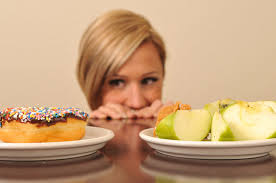
donut vs apple and womanWhen I hear a person say “Saturday is my cheat day” I gotta be honest, it pushes my buttons. To most people it sounds like a harmless thing, but to me it is a red flag. An alarm goes off, triggering this irritating feeling throughout my body. I try not to react, it is a conscious decision on my part to ignore it if I am overhearing a conversation in the elevator of the hospital where I work part time, or somewhere else where there really is not time to get into it. Otherwise, such as a party or other informal gathering where women especially tend to chat about what they are doing to change their bodies…. I always take the opportunity to educate people about Health at Every Size, and how focusing on being healthy verses being thin is a much more sane goal. Then I may ask what they mean by”cheat day”. Inevitably, it means following some type of “healthy” eating plan or dieting throughout the week, then allowing themselves to overeat any of the foods  they have denied themselves during the week on Friday or Saturday, and often again on Sunday.

What bothers me about this approach to eating is that it ignores all of the principles of “mindful” eating, and about “listening to your body” . It gives food so much more power than it deserves. It makes me think of how back in the day (and actually still today unfortunately) food is used as a reward. For example, “if you finish your spinach, you can have the cookie”. What does that message send? It says “something is very wrong with spinach, and something is very special about cookies”. I wish food was never treated this way. If you are really honest with yourself, you have to admit, that sometimes fresh vegetables or a great salad or roasted garlic with asparagus is extremely yummy. And an Oreo cookie could never substitute for that taste. If however, one were to hold that Oreo up as a reward, then it might be different. Over time,we might become conditioned to look at that sweet in a different way, and want it even if we really didn’t want it! If we really were mindful and not conditioned to think some foods were good and some foods were bad (that we could only eat them on a “cheat” day) and REALLY listened to what our bodies wanted, then we would not even need a “cheat” day. We would eat in a mindful way, cooking meals that were healthy and that we enjoyed, because we want to feel good, have energy and live a long and healthy life. But that means enjoying the fun foods too, the ones that are important to us, in our culture, our family traditions or socially. Having a homemade blueberry muffin at Grandma’s house or sharing a favorite dessert when out with our old college roommate,or Grandma Harmon’s favorite cinnamon buns that you only get once in a blue moon. It may not be a Saturday or a “cheat” day, but it may be and should be just part of normal life. Monday, Tuesday, Wednesday, Thursday, Friday, Saturday, Sunday….I hope everyday you listen to your hunger, and fullness, and enjoy healthy eating, have energy, and never miss an opportunity to enjoy a serving of a special food that you enjoy. Heck with “cheat” days. Enjoying life is living, not cheating.

Regarding “Clean” Eating….

mopThis women’s face is how I feel several times per week. Have you fallen for the latest weight loss craze? This is driving me crazy!! It angers me when people are taken advantage of because they are desperate to lose weight. How do you define “clean eating”??? And why does it usually involve some type of juice that you need to purchase?? Anyway, try to find some good long term outcome studies on this diet approach, and please share them with me. I can’t find any. The bottom line is any trick to make you eat A LOT less will make the force of gravity on your body less over time (that means you will weigh less). It won’t last. Most of these diets have you do a juice fast or just fruits and vegetables or maybe a “clean” shake for a certain amount of time. You will lose weight as your body breaks down muscle (sorry but the Krebb Cycle prefers amino acids to keep producing it’s ATP’s for energy, not the fat you are hoping it would use). Not to mention the typical dehydration that occurs when your body is breaking down muscle from starvation (because when you break down muscle you need to get rid of the nitrogen through your kidneys, and your body knows to use water to dilute it otherwise your kidneys would be damaged…unfortunately, that happens to some people anyway). And if you are getting way too little calories, your body may be building up toxins in your blood called ketones….that isn’t too “clean” if you ask me.

Not to mention, don’t you have to eventually eat something? Then what? Have you learned anything about yourself? Have you identified some unhealthy habits you may have had and are you magically now able to change them? Probably not. If I could have a dollar for everyone I knew who lost weight on a plan like this, but then gained it back, I might have retired by now. This latest fad is nothing new, just like the low carbohydrate diets, the low fat diets, the high protein diets, and on and on, it just delays the inevitable work your really need to do.

I’m good with vegetables and fruits in your diet. But this is way too much thinking and that is something we know people can’t sustain over time. Why not simply work on adding in these healthy foods to your diet and continue working on listening to your hunger and fullness, recognizing when you are eating when you are not really hungry, taking time to move your body because it is fun and feels good and also contributes to your health? Stop all the “cognitive restraint” and focus on health. There  is no such thing as clean eating.

Vegetarian Diets….the question is “why”?

veggie burger

Why on earth would a dietitian even question a vegetarian diet when it seems like such a healthy way to eat? Eliminating all that saturated fat in the form of meat from your diet has to be a good thing, right? And when you think of vegetarians, don’t you get a vision of someone munching on a giant salad?

Well, let me give you a reality check. Having been around the block a few times (meaning I have been a dietitian for over 35 years),  I have encountered my share of vegetarians. When someone tells me they are a vegetarian, or a vegan, I do not make any assumptions about their diet or their intentions. But what I have found is that the reasons people become vegetarian are not always clear. I have noticed that people turn to a vegetarian diet for a few different reasons. In fact, I have encountered 3 types of vegetarians over my long career as a nutritionist (my experience only, I can’t speak for everyone). The people I have worked with or have known in my life tend to fall into the following categories:

1. The True Vegetarian: This is the individual who truly has a strong empathy for animals. They just are not comfortable with consuming them.  They may have had meat in their lives but then, they change and make a decision that they do not want to eat meat any longer. There are different types of vegetarians, those who are ok with eating dairy or eggs or fish, but not meat. I remember my daughter as a teenager getting very upset when the rodeo was in town, and she actually joined a group who stood on the corner and protested. This led her to looking into protecting animals and she decided to stop eating meat at the time. I also have a best friend who is vegetarian, is a great cook, and who also is all about protecting animals (it is a passion with many vegetarians I have come to know over the years). They eat everything, just not meat. I have to say, not all of those I have met who are true vegetarians are healthy eaters like my friend. Many people (especially teenagers who love their kid-foods) tend to live on noodles and chips, still vegetarian, but no vegetables involved!

2. The “I want to be healthier” Vegetarians“: These are the people I have encountered who may have developed some health issues such as high cholesterol, and decided they are going to “cut down on” meat consumption. The reason they want to change their diet is because being healthy is important to them. They may have an occasional meal with meat, but otherwise they believe eating less of it is healthy.

3. The “I am pretending to be vegetarian because it is a good excuse to eat less” Vegetarians: Unfortunately, I have worked with many people over the years with eating disorders who start out with “vegetarianism”. They start eliminating foods, and becoming a vegetarian is kind of a good “excuse” for the eating disorder to NOT EAT. This type of “vegetarian” is different in that they typically refuse to eat the normal vegetarian standbys such as peanut butter, nuts, beans, etc. They may say they do not like salad dressing, olive oil, trail mix, granola or nut butters. This is always a “red flag” to me. Most of the “True Vegetarians” I know rely on nuts and peanut butter for protein and have no problem with pasta and rice and beans and all the other food needed to round out their diets. Not to mention delicious Tofutti Ice Cream!

So what is the bottom line? If you or someone you knows decides to become vegetarian, always ask “why?” If it is to be healthier, or because you care about animals, then you can definitely meet your nutritional needs with some guidance. Vegan diets are a bit harder in that you may need supplemental iron, vitamin B-12 and calcium, and also you need to know how to get protein in your diet (I recommend seeing a Registered Dietitian to be sure-check out http://www.eatright.org and “Find a Dietitian”). But if you know someone who just started being a vegetarian, is losing weight, who no longer eats potato chips (those are vegan!) then don’t ignore it. It could be an eating disorder just beginning.

For more information from the Academy of Nutrition and Dietetics, check out: http://vegetariannutrition.net/

Healthy or Thin?

IMG_2637My guess is these two words get different reactions from different people. It has been my experience over the years that in our culture we assume pretty much everyone wants to be “thin”. And most people equate being “healthy” with being “thin”. Most of us assume if we tell someone they look “healthy” it would be a compliment. Or, we assume telling someone they are lucky they are so “thin” is also a compliment.

What I have learned from my patients is for those with eating disorders, being told you are “healthy” is equivalent to being told you are “fat”. For some of the patients I work with who have trouble gaining weight, being told they are “too thin” is very hurtful, as their body image concerns are often interfering with their lives just as the person who is concerned about being “too fat”.

My goal is to help people see that a goal of “healthy” is the smartest goal. The first step for some is working on their “self-talk” around the word “healthy” and eventually accepting it has nothing to do with your size. For others whose goal is being “thin”, instead changing to a goal of being “healthy” because that may be a goal they can actually achieve (not to mention, a goal of being healthy is also mentally healthier!)

I will always remember a teenage patient of mine who had moved from Africa and had lost a few pounds (still a very normal and healthy weight). Dad brought her in because he was very concerned about this. When I asked about his concerns, he said “I want her to be fat. Doesn’t everybody want to be fat?” He was very serious but I couldn’t help but smile inside. I did have to explain to him that we can’t always control that but I wanted to be sure she was “healthy”. He never came back ; )

Is Pizza bad?

pizza

I find it somewhat funny when patients often ask me about a food such as pizza. “Is it bad?” Or maybe pasta, or bagels or potatoes. Why is it that some foods are so confusing to people? Why is there a need to classify foods as “good” or “bad”?

My simple answer is always “if you like it, it is good!”.

I think what people really want to know is “is this food good for me?”. The truth is there is a place for ALL foods in our lives. We all need to have a variety of healthy foods to feel good, stay healthy, and have energy. Yes, we need protein foods, fruits, vegetables, etc. But food plays a much more important role in our lives than just keeping us healthy. I am not a big fan of the slogan “eat to live”, because most of us have wonderful connections to certain foods and great memories around meal time.

For instance, being from an Italian family, holidays always came with specific foods. Easter breakfast had sausage and peppers, fried dough and ricotta pie. Christmas Eve had an assortment of fish dishes and Christmas day was always several gigantic pans of lasagna and eggplant parm. And sometimes, it is just simply wonderful to order a pizza delivered to your door on a Friday night after a long week at work when you are just too exhausted to even think about cooking.

Unfortunately we have been brainwashed to avoid carbs, avoid fat, avoid sugar, and that is why so many people are so confused. The diet industry relies on us to have these concerns, or how else would they be able to sell their products?

So instead of trying to judge if a food is “good” or “bad” why not try to eat healthy most of the time, but enjoy the foods you love, in moderation, listening to your hunger and fullness, eating so that you enjoy it and feel good afterwards;

In the end, you will be both healthy AND happy!

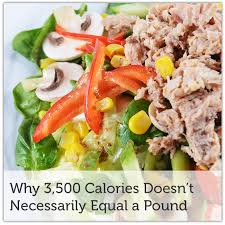
Does 3500 calories equal a pound?

why 3500 calories is not a poundFor all the years that people have been dieting, especially those who count calories, they have followed the golden rule: cut 500 calories a day out of your diet and you will lose a pound a week. That is because 3500 calories is equivalent to one pound of adipose tissue (body fat).

While this is true, it does not follow that if you decrease your intake by that amount of calories over time that you will lose a pound. New research now proves this to be true!  The way your body responds to a calorie deficit is dependent on baseline body composition, age, height, gender, and degree of caloric restriction. The result is a curvilinear pattern of weight loss over time rather than the linear pattern predicted by the 3500 kcal rule.

In other words, no two people are alike. Some have more muscle mass than others, and even at rest, muscle uses more energy (so muscular people, even at the same weight will need more calories). Also, quick weight loss typically results in loss of muscle mass, which then results in your body needing less calories. Finally, your body adjusts to a lower body weight once you do lose weight, so your energy needs change.

If your weight has creeped up higher than your normal weight, instead reflect on any lifestyle changes or eating habit changes that may have occurred over the years. Did you change jobs from a very active one to a sedentary one? Did you start a job at a restaurant where you now get food for free (and so you take it, even when you are not hungry)? Are you going back to school and no longer have time to cook, so eating fast food every day instead? If you focus on ways to shift into a healthier lifestyle, your body will know what weight it wants to be! So stop counting, and start living!