
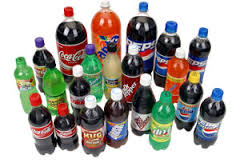
The Truth About Drinks

soda

I remember many years ago going to a Sports Nutrition Conference and never forgetting the message. I heard a researcher named Richard Mattes speak about some cutting edge research he was conducting about how our bodies responded differently to liquid calories. I found the research fascinating. The bottom line message was that when we eat solid food, our brains get the message that we had enough calories and so we feel full and stop eating. His theory was that with liquid calories, we did not get the same message, and so our brain allowed us to keep drinking and take in excessive energy which eventually would result in weight gain.

Recently, I did a search and found that Dr. Mattes has not only been continuing this research, but has strengthened his earlier theory that liquid calories do not register in our brains. What is the important message here? If you fill up on drinks such as juice, soda, beer, wine or lemonade, it will be impossible to listen to your body as far as how much you need to eat. Instead, drink water to quench your thirst (free and healthy!) and limit juices and soda to once in a while instead of daily. Limit alcohol to social occasions and in moderation.

See below if you are interested in the dirty details!

Beverage vs. solid fruits and vegetables: effects on energy intake and body weight.

Obesity

Obesity

Volume 20, Issue 9, pages 1844–1850, September 2012

According to  Elizabeth Garrison  in “A summary of Richard Mattes’ research since 2005: Effects of food form, feeding patterns, and specific nutrients on appetite, satiety, and metabolic responses in humans”:

Differences in food form, beverage versus solid, elicit different appetitive, satiety, and hormonal responses. Solid foods, matched on energy content and macronutrient composition elicited lower levels of hunger and desire to eat. Additionally, solid and liquid meal replacements caused different ghrelin, insulin, and CCK responses, all hormones involved with regulation of food intake and body weight. Specifically and most importantly, beverages cause greater levels of ghrelin, a hormone that initiates hunger and desire to eat, after a meal than solids. Therefore beverage and solid meal replacements should not be used interchangeably for weight control or energy balance.
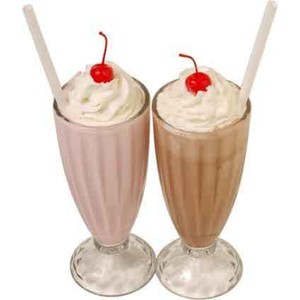

The Milkshake Study

milkshakes

About 40 years ago, a landmark study was conducted that launched the research investigating why diets fail. This important study is sometimes referred to as “The Milkshake Study” (Herman CP, Mack D. Restrained and unrestrained eating. Journal of Personality. 1975;43:647–660). In this experiment the researchers administered a “Restraint Scale” questionnaire to determine who the dieters were (restrainers) and who the normal eaters were. They then had subjects participate in what the subjects believed was an ice cream tasting where they were to rate the ice creams. They were given either one milkshake “pre-load”, two milkshakes pre-loads or no pre-load and then told to eat as much ice cream as they wanted or needed to rate them. What was expected was the more milkshakes a subject consumed before the tasting the less they would probably eat (because they were already full, right?). But that is not what happened!

Instead, the researchers found that those individuals who were highly restrained (dieters) actually ate MORE ice cream with the more milkshakes they had before they started tasting! They hypothesized that dieters who constantly restrain their intake tend to become “disinhibited” after they break their diet boundary (sometimes referred to as the “what the hell” effect). This study triggered many more years of research into “cognitive restraint” and its negative consequences (binge eating being one).

Unfortunately, most people are not aware of this vast body of research, and so the diet industry has been able to continue making its billions. The good news is that finally a “Non-Diet” approach to weight management has been researched and proven to be effective in promoting health. Keep posted for more information and resources to come!!!

Feeling “Full”

boy with cake

Back in the day when I was young, I am guessing it was easier to know if you were “full”. These days I find many of my patients are very confused about this. Now that we know a lot more about the physiological contributors to feeling both hungry and full it is easy to figure out why back then people didn’t struggle as much.

So what are some of the contributors I am referring to? This topic is so complex that I am going to only focus on three:

(1) Balanced Meals: we now know there are messengers that respond to what we eat that communicate to our brain that we got what we needed. For instance, if we do not include adequate protein with our meals, our belly may feel “full” but our brain will tell us we are not satisfied because of a messenger called NPY (Neuropeptide Y). If we do not consume adequate carbohydrate our serotonin levels will fall and likely trigger a craving for something sweet later on. Back in the day, getting “three square meals” a day was the norm (and you were very lucky if you ever got a dessert, and that was probably on holidays and birthdays!). Today, things are different. Family meals barely exist as families tend to be busier, children tend to be glued to computers and video games, and family meals have fallen by the wayside. A typical “meal” for many teens I have seen is a package of Ramen Noodles (not much protein there, more snacking will be needed).

(2) “Sensory Satisfaction”: research has demonstrated that when you eat while distracted (such as while watching the TV or on the computer) you do not get an adequate release of dopamine which tells your brain you are satisfied and can stop eating. Need I say more? With one small TV in the home, 3 channels to choose from, and the remote not invented yet, back then we all ate at the table.

(3) Fitness: studies show that people who are active are more in tune with their hunger and fullness. In other words,one of their fullness messengers (called PYY) works better. Back in the day, there was no choice but to be active. There was nothing to do in the house, so kids played outside. We had to walk 2 miles to school and then back home, etc etc etc.

So, feeling “full”, a very normal physiological function is no longer that easy. Working on having balanced meals, shutting off the TV and sitting at the table sounds like simple advice, but more important than most people realize. And getting outside to play now that spring is here is a good idea too!!

(3)

Warm Weather Dieting Woes


IMG_4090Happy Spring!!

Have  you ever noticed how the start of warmer weather gets people focused on dieting? I have been biting my tongue at work these past few weeks as it seems so many people are talking about the crazy eating plans they are starting. The new buzz seems to be a one or two food diet that is supposed to magically “cleanse” your system in a few weeks (a “kick start” as some people refer to it). I usually keep my mouth shut unless someone notices the dietitian sitting at the computer and dares to ask “what do YOU think?”

I love it.

Today I got asked the question, and I gave my answer. The research has connected dieting (any kind of cognitive restraint where you tune out your body signals) with binge eating. And weight GAIN in the long run. Yes, any trick to make you eat a lot less will of course result in weight loss (that good old “kick start” that is supposed to motivate you). Unfortunately, that short term weight loss ends up frustrating people rather than motivating them. They of course can’t keep up that rate of weight loss (and if they did, the loss would be valuable muscle). They end up feeling bad and usually just go back to their old ways.

Instead, what I shared with my coworkers was that it is smarter to take a non-judgmental look at your lifestyle and eating habits. Do you often eat when not hungry just because food is there? Do you have the habit of watching too much TV or sitting in front of a screen for hours on end? Instead, work on listening to your body. If you are hungry for a snack, and you want a cookie, eat a cookie. It is the non-hunger eating that goes against your body’s needs. Sometimes it is our sedentary lifestyles that prevent us from feeling better about our bodies.

I’ve said it before, and I will say it again! Work on being healthier in every way and forget about dieting!!!! In the long run you just might end up being happier AND healthier.

Healthy or Thin?

IMG_2637My guess is these two words get different reactions from different people. It has been my experience over the years that in our culture we assume pretty much everyone wants to be “thin”. And most people equate being “healthy” with being “thin”. Most of us assume if we tell someone they look “healthy” it would be a compliment. Or, we assume telling someone they are lucky they are so “thin” is also a compliment.

What I have learned from my patients is for those with eating disorders, being told you are “healthy” is equivalent to being told you are “fat”. For some of the patients I work with who have trouble gaining weight, being told they are “too thin” is very hurtful, as their body image concerns are often interfering with their lives just as the person who is concerned about being “too fat”.

My goal is to help people see that a goal of “healthy” is the smartest goal. The first step for some is working on their “self-talk” around the word “healthy” and eventually accepting it has nothing to do with your size. For others whose goal is being “thin”, instead changing to a goal of being “healthy” because that may be a goal they can actually achieve (not to mention, a goal of being healthy is also mentally healthier!)

I will always remember a teenage patient of mine who had moved from Africa and had lost a few pounds (still a very normal and healthy weight). Dad brought her in because he was very concerned about this. When I asked about his concerns, he said “I want her to be fat. Doesn’t everybody want to be fat?” He was very serious but I couldn’t help but smile inside. I did have to explain to him that we can’t always control that but I wanted to be sure she was “healthy”. He never came back ; )