
 Friday morning as I was having my coffee, doing my usual multi-tasking, kind of listening to the news from my bedroom, something I heard made me stop what I was doing and run to the TV. “Indiana Teen refuses to calculate BMI”. What? I am a huge anti-fan of BMI. I was dying to hear this story. In case you have not heard, this young eighth grade athlete has received national attention after her Facebook Post about refusing to calculate her BMI in a class at school. She had been shamed in the past when she was told she was “obese” according to her BMI. Although she says she knows she is a bigger girl, it never had bothered her before but after that incident she felt bad and so the next time, she refused. Instead she wrote an essay about why BMI should not be used to determine health, especially in a middle school where girls are already super body conscious and insecure. Check out just one article Indiana Teen Refuses to Calculate BMI to read more. She went to her doctor who did a complete physical with labs and let her know she was fit and healthy. Her message is simple yet powerful: BMI has nothing to do with health.
An eighth grade kid understands perfectly, yet unfortunately, the medical community still does not get it. Besides falsely labeling larger sized people as unhealthy, people who are very ill but have a “healthy BMI” fall through the cracks. I have story after story of eating disorder patients I have worked with in the past who have been starving themselves, purging in all kinds of dangerous ways, yet when they go for their yearly check up, the doctor responds: “You look great! You lost weight!” Which leaves the poor patient who is suffering in a confused and sometimes angry state. Most of the time the health care provider never asks how the weight was lost. It seems assumptions are made that the weight loss was a result of some healthy eating and exercise, but in these situations it is not the case. As long as that number is where it should be, it seems it does not matter.
The reality is that having a healthy body is not a simple task. Eating a perfect diet or having the correct BMI does not result in a healthy body, and does not negate unhealthy behaviors such as smoking or starving yourself or being stressed out. Genetics play a gigantic role (we all joke about the old man who smokes a pack a day and drinks whiskey and lives to 100). How it is that we have come to rely on some number based on a calculation using height and weight to tell us anything about someone’s health is beyond me. I believe part of the reason could be because it saves time. It is so much quicker to get a height and weight measurement and calculate BMI than it is to ask someone about all of the details of their lifestyle. Most health care practitioners don’t have time for this. In the hospital where I worked as an outpatient dietitian, we moved into a “productivity” based practice, so instead of an hour with a new patient, I was now expected to assess and counsel a patient and family in 30 minutes. If they were 10 minutes late, I was in trouble. It was heartbreaking to me. How could I even start to help a family with so little time to even find out about who they were? I left that job because of it, but I imagine that office is not unlike many others. Time is money.
So, it you ask me, you definitely should NOT worry about your BMI. Instead, you should worry if your health care providers give you advice without ever asking you about your lifestyle. Oh boy, does it make my blood boil when I hear stories from both friends and patients alike about the assumptions made based on weight or body size. It is prejudice, plain and simple, and it is wrong.
Forget the numbers, and keep it simple. How do you feel? What things run in your family that you need to be aware of? Look at all aspects of your life, both physical and mental (which is why I left that job, the stress was affecting my health). What you eat does matter but just to a degree. For instance, if you don’t drink enough to stay hydrated, you just won’t feel good and it can hurt you, especially in hot weather. If you live on sweets, you will likely not feel good either. If you don’t consume any calcium your bones may eventually be at risk. If you don’t eat any fruits or veggies, you may experience constipation which is not fun. So yes, nutrition matters, over time. You can eat brown foods for a week with no repercussions. You can eat sugar every day and have no ill effects. It is all in the big picture, with all aspects of your life having an impact on your health. Food, sleep, stress, movement, fun, family, friends, all of it.
So when someone brings up your BMI, tell them you want to talk about your health, not some dumb number that is meaningless.



 The other day another co-worker emailed me a link to her new eating plan. She wanted my opinion. This is where it gets hard for me, because I just want to say “please don’t waste your time or money” but that is not what I said. As a dietitian who has researched dieting, and wrote my Master’s Thesis on restrained eating back in 1996 I clearly remember how blown away I was by the proof I found about the failure of dieting, feeling outraged that this never made headlines. Well, now, when people talk about dieting, I keep my mouth shut……at first. I have learned that people will tune you out if you hit them all at once with the truth. I have learned that most dieters are very hopeful and truly think they can do it “this time”. Instead, I share my experience with my patients. So I may say “can I tell you what I have seen happen?” If they say “yes” that opens the door. I warn of “all-or-nothing” thinking, how going “on” something means you eventually will go “off”. And on and on and on.
 “Flatter by Friday! One Week to Shrink Your Stomach!”…… and Dr. Oz will tell you how. That was the quick blip I heard when I turned on the television while loading the dishwasher yesterday.
 I will call her Jessica. She was one tough cookie, starting from the day her mom brought her in for her first visit with the dietitian. She was 16 years old and referred by her pediatrician for weight loss and a possible eating disorder. I could tell from Jessica’s demeanor and angry face that she would rather be having her toenails pulled out than be here. I met with mom first (I have learned that having both parent and teenager in together almost always turned my otherwise very pleasant counseling room into a war zone). Anyway, Jessica’s mom filled me in on the fact that her daughter did not want to come today. Mom wanted to prepare me for a very bad visit. I let her tell the story of why she was there, and just as with many parents I have seen, the feelings transitioned from anger to sadness and eventually tears. A newly diagnosed eating disordered teenager is ….well…..so difficult for me to even put into words, because I just can’t imagine how painful it is to watch your son or daughter fading before your eyes. I also know it is scary for a teenager when they are being taken over by this deadly disease. So when a parent finds out their teenage child has an issue with their eating, what they do can be critical.
 They need to learn to swim before they can let go. But there is so much to look forward to, like the beautiful sunset in the distance. They will get there.
 Did you ever experience something that affects you so much that you remember if forever? I remember Nancy (not her real name), a sweet middle aged mother who had come to me for help with binge eating (and she wanted to lose weight). If you saw her, you would never know she had any eating or weight concerns. She certainly did not look like she needed to lose weight. She had always been a yo-yo dieter, gaining and losing some weight over the years, but bigger troubles emerged after starting Weight Watchers. She would basically restrict herself before her “weigh ins” when she went to her meetings, which meant eating even less than the diet called for. All she thought about was the reaction she got after stepping on that scale. She just had to get through that minute. If the number did not go down, she felt like a failure (the fact that they let her into a weight loss program with her weight scared me, but maybe it is different now?). Anyway, Nancy would leave her meeting with relief, proceed to the grocery store or fast food place and binge eat. All day. Because she did not have to be weighed for another week. And then she would purge, feel terrible, depressed and like a failure. But she would be back on track again a day or two later, just to repeat the process. She was stuck in the Weight Watcher’s trap, hold, spell, whatever you want to call it. Unfortunately, Nancy was not the only WW casualty I encountered in my private practice. There were many more. Not all of them developed the eating disorder bulimia, but they all never learned how to eat healthily and happily. Some would lose weight, but then have no idea how to transition to a “real life” without “points”. It was the counting of the points that drove my patients to a place that was not good. After losing weight (by eating less, points, calories, counting carbs, it is all the same) there was no where to turn. What next? The patients I saw did not know and so either gained weight or transitioned into an eating disorder. Not all people who diet or follow Weight Watchers or count points develop eating disorders. I have known many friends and acquaintances who absolutely love the program. “It works!” they say. Every year, even after they have regained the weight again. Some people even maintain their weight loss for longer. But inevitably (in my experience, with the people I know), the weight is regained, there is a period of living “Outside of diet jail”-how I refer to it. Diet Jail is when someone is following a diet. When they can’t do it anymore, they break out, eat what they want, forget about it for awhile. They eventually remember the “success” (????) with Weight Watchers. They DID lose weight and they felt great. So they start again. I think people believe each time they restart the diet that it will be different. What I have seen (and I can only speak for myself, my experience with patients and others in my life) is that if fails them. They do not learn about themselves in any meaningful way.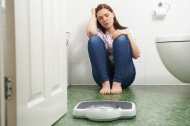
 Joanne Arena MS, RD