Does Your Child Have Avoidant Restrictive Food Intake Disorder (ARFID)?

picky eater

This article is a must-read for any parent of a young child with “picky eating”. Although it is normal for a toddler to go through phases of being fussy about food, it is wise to pay attention if it continues. I work on a “Feeding Team” at a children’s hospital and before this diagnosis was introduced, we referred to these kids as having “Feeding Difficulties” however now we understand how complex the issue can be! We refer many of these children for outpatient “feeding therapy” to help them overcome their issues. It is sad when physicians and parents don’t worry just because a child is growing well. In time, the result is a teenager who only eats a small variety of foods and whose growth as well as social life has been compromised. And it all could have been prevented with early intervention.

http://www.sciencedaily.com/releases/2015/06/150618073222.htm

The War on “Big Food”-should you eat “organic”?

more natural foodsEarly this morning my husband handed me his Fortune Magazine (June 1st issue) opened up to an article entitled “The War on Big Food” and said “you should write about this!” So I read the article and thought “wow”. Just as in the world of “weight management” and “dieting”, the world of big food manufacturers is undergoing a paradigm shift.

The article goes on to describe how big food industries are “like a melting iceberg…every year they become a little less relevant”. Who are they referring to? Think Smuckers, Campbell’s, Hershey, The article points out that the idea of “processing” started with the ancient idea of salting and curing to the “modern arsenal of artificial preservatives”  which arose to make sure the food we ate did not make us sick. Now we worry that it is the processed food itself that is making us unhealthy. Consumers are responding and big food industries are losing out, or forced to make changes.

In fact, big food companies are paying attention and making changes since organic food sales has more than tripled over the past decade with an increase of 11% in the last decade alone. Consumers want to buy foods with ingredients they can understand (flour, wheat, yeast, sugar, etc) instead of words they can’t even pronounce. The simpler the label, the better. The article describes a “new language” around health that has emerged which includes terms such as “natural”, “organic” and gluten-free”. Interestingly, anything having to do with “dieting” is out! Products with the words “diet”, “light”, “low” or “reduced” experienced an 11% drop in sales in 2013.  Even Lean Cuisine is rolling out a new product called “Marketplace” line which will offer gluten-free, organic, high-protein or extra-veggie options.

What does this mean to you? Well, I admit to feeling conflicted. I believe in a non-diet and intuitive approach to eating which involves “listening” to your body, and working toward honoring and respecting your body’s signals of hunger and fullness. This also involves truly enjoying the food you eat. At the same time, taking care of your health and your body by getting the nutrition that your body needs to feel good and have energy. We are all different in that we all need to learn what we like and how much we need to feel good and have energy. Is it too restrictive to read every label and avoid any artificial ingredients altogether? I can only speak for myself and feel everyone has to make their own decisions about what to eat. I may not have the energy to worry about every single item that crosses my lips however may prefer to make all my own foods from fresh ingredients because I love food that way (but yes, I will eat whatever anyone serves me and not really worry about it).

I think it is smart to educate yourself and use the freshest and least processed foods you can afford. However, if you find yourself expending too much time and energy reading labels, and use it as an excuse NOT to eat foods on a regular basis, then it could mean you may be focusing on eating “natural” and “organic” as a way to distract yourself from something else. Remember, eating healthy most of the time and having a mostly healthy lifestyle will promote health. Having a “perfect” diet or striving for a “perfect” lifestyle is kind of stressful! And that is not healthy at all!!! For more information, check out the article yourself- Fortune Magazine, June 1,2015, Volume 171 Number 7.

Dieting and Weight: A New Way to Think

healthy lifeI struggled with what to title this post even though I know exactly what I want to say. Sometimes I notice things or patterns or trends about people, eating, food, or whatever and say to myself “I need to write about that”. Especially when it is something I see over and over again. To me it may be glaringly obvious how ridiculous it is yet so many wise and wonderful people are still doing the same dumb things (I don’t mean to be insulting to anyone as they are not “dumb” at all, which is why it is so baffling they might make the same mistakes over and over, even after many years).

I am referring to dieting, specifically spending money to go on the same diet program they may have been “successful” on 2 years ago. Lately I have bumped into old friends or acquaintances who last time I saw them looked a whole lot different. It could go either way, either they may have gained a lot of weight or lost a lot of weight. Following the same “program”. Or not.

It seems they have so much faith in their diet program because after all, it did “work”. If only they could have stayed with it, had more willpower. So this next time should be the last. But it never is and the reason is because nothing has really changed except the number on the scale (down, then up). You have heard it before, from me and others, why dieting and focusing on your weight is not the answer to feeling good or being healthy…..you know that any new diet book hooks you in because it gives a false sense of hope.

Instead, my hope is you might be open to stopping for just a few minutes to reflect on this. Do you have a goal stuck in your brain that you absolutely will not give up until you reach a certain size or weight? Then I am asking you for just a few minutes to let go of that thought and think about all of the things you have done over the past months or years to change your body. If you have spent months or years working on this and are still in the same place, would you consider something different? You could go another few years repeating the cycle and many people do. And you should not be hard on yourself if you have, because that is the only way to learn (and learning what does not work is equally important as learning what does work). Just like with dating, you have to kiss a lot of frogs!

Anyway, my suggestion is putting on a “detective” hat instead. Instead of judging and commanding yourself, could you first of all try to stay neutral and nonjudgmental? What are some of the unhealthy habits you may have fallen into that you wish you could change? For instance, are you stopping for fast food on the way home from work on a daily basis? Do you plop on the couch the minute you get home? Do you notice you drink too much when you go out with certain friends or overeat when you have sweets in your house? How about considering some simple “health” goals and making a mental list of some of the healthy things you would like to incorporate in your life? Someone once told me, or maybe I read it somewhere, that you are either moving forward, backward, or staying still. It is ok to stay still sometimes. And we learn from going backwards too. But why not take some simple steps to “move forward” instead of starting that same old diet plan or program (or a new one) that will leave you in the same place a year from now? You may decide to pick just one day where you don’t stop for fast food and cook instead. You may just decide to collect some of those healthy recipes you actually did enjoy from that diet plan and cook dinner (even if you are not “on” the diet, if you found healthy meals you liked, that could be useful!). Or maybe you may decide to take just ten minutes after work to walk before you settled in to watch TV. Even just one day a week. It is all positive action and all with a good goal: to move into a healthier lifestyle. Yes, you can stop for fast food, overeat with your friends, drink too much sometimes, and decide to spend the entire day on the couch if that is what you need. It is finding the balance that leads to a healthy body and mind. In the end, you will probably find that a year from now, for once, you will be in a better place, both physically and mentally (and financially!).

So consider putting on that detective hat, think about YOUR unique lifestyle and habits, and YOU decide what you may want to start with to move FORWARD. One step at a time…..
What I learned about food and eating in Italy

IMG_5635 I recently returned from an almost three week vacation in Italy. It was an amazing trip in many ways, mostly because it truly validated who I am and why I like the foods I do, (and why I love dancing). I felt very connected to my roots. Growing up in an Italian family with a grandfather who spoke broken English and a grandmother who did not speak a work of English created many wonderful memories. Family was the center of our lives and meals and gatherings that centered around cooking and eating were just a part of life. I remember going to my grandmother’s house who did not speak English, and she would take chunks of aged Parmesan cheese and melt them on a gas stove as a snack on the end of a fork. Every Sunday was pasta and meatballs and fresh Italian bread.

In Italy I loved the way everyone was never in a hurry. Meals took a long time! If we went to a restaurant, the bread always came out with the olive oil first. Then the liter of homemade red wine which was cheaper than the water! and tasted better : ) And then the “first course” would come which was your pasta, pesto or sauce or whatever and it was always homemade. Then came the meat or fish, chicken was rare to find on a menu. And salad was last, always simple and always olive oil and vinegar. Dessert was offered but the funny thing was that every single breakfast we had at every hotel or B and B consisted of beautiful homemade cakes and croissants and pastry as well as some type of cheese and ham. We joked at the end of the vacation that we did not want to see another slice of ham or salami for awhile! Italians love their ham and prosciutto and salami! and the olives were out of this world. In fact, if you stopped in anywhere for just a drink you were always given a platter of food that usually consisted of cheese, ham, bread, nuts, olives and/or potato chips….I was in heaven.

What I loved the most was the feeling of never being rushed. Italians will never bring the check until you ask for it. They do not seem to care if you sit for three hours over the same plate…..they understand the importance of savoring a delicious meal and a glass of wine and spending time with friends talking. It was absolutely wonderful. Oh, and I had real gelato for the first time…in a word, YUM! But they have not learned about super-sizing…the cups were tiny….but just enough. It did not strike me that Italians wanted quantity, they were more into quality and deliciousness.

I hope to continue to take the time to enjoy and savor all that meal times represent. It is more than just eating. It is savoring and enjoying and connecting over traditions. Whether you are Italian or Polish or Asian or French or Hispanic, whatever your culture and your food traditions, take the time to learn about them, learn how to prepare them and cherish your heritage.

But it is good to be home!!!

Restrained Eating: is it ever good?

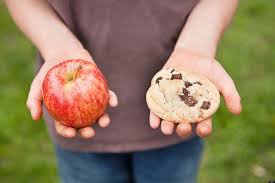
cookie and apple in handDecades of research indicate that “cognitively restraining” your food intake often leads to binge eating and/or disordered eating. Cognitive restraint means using your head to determine what to eat instead of listening to your body. Most people who restrain their eating do it in order to lose weight. They may follow a specific diet and try not to sway from the diet. They may count calories or avoid certain foods altogether (see “Are You In Diet Jail”). They typically weigh themselves regularly. There is actually a “Restraint Scale” consisting of several questions that evaluate the degree of restrained eating.

You may have already heard about this research. I think this can be confusing for many who may say “then does that mean we should not pay attention to what we eat? Aren’t we supposed to try to eat healthy?”

The answer is yes, it is good to care about your health, but that does not mean avoiding any foods or counting calories or weighing yourself. Instead it means using your head to make healthy choices WITHOUT being overly restrictive.  What the research also has revealed is that certain types of “restrained” eating may not lead to problems but may actually be helpful. This type of eating is referred to as “flexible” restraint verses “rigid”. Flexible means just that. You may love the bread sticks at a certain restaurant, however you may also love the entree you just ordered….so you decide you are going to eat one bread stick to save room for what you really love! If you were to “listen to your body” and you were really hungry, theoretically you could eat 5 bread sticks! But then you would ruin your appetite! Is that restrained eating? Well, yes, in a way, however it is also flexible. You are making a decision because you know your body and you want to honor it and feel good. Another example may be planning ahead of time to cook for the week. This does not mean you will not allow yourself to stop for a burger at the drive through, however you also may not want to waste the money, and if you plan ahead and have healthy and yummy foods in your home, you are again being healthy but not rigidly restrictive.

The bottom line is that it is ok to want to be healthy, eat healthy, and yes, you do have to use your head! But being flexible is what is important. Being rigid does not contribute to health, just food obsession, disordered eating and a that is certainly not healthy.


Should you worry about a picky eater?

picky eater cartoon

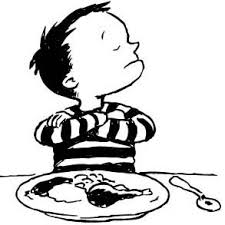
Growing up in an Italian family where food was a big part of most celebrations and meal time an important time for families to be together, I have no memory of anyone who suffered from picky eating. So when I started to work on the “Feeding Team” at a children’s hospital, I was very surprised by the children that were brought in to be evaluated. The team consists of a Psychologist, Occupational Therapist, Speech and Language Pathologist and Dietitian who all play a role in evaluating the patient. The team evaluates issues with chewing or swallowing, texture and sensory issues, behavioral issues and of course nutritional deficits and growth adequacy. A common scenario is the toddler whose parents are concerned because he only eats 5 foods. These limited food choices vary from child to child however we do see many children refusing most meats (except for chicken nuggets!), all vegetables, most fruits and sometimes even dairy. Of course every child is different, and the reasons for the picky eating and food refusal are different also. It could be a sensory issue the child was born with, or maybe a choking incident which left the child fearful of eating some foods, or a history of reflux and feeling bad after eating. Whatever the reason, the parent’s reaction is often predictable: pressure the child to eat! It feels like the thing to do if you care about your child, they need to grow, right? How can they be healthy if they don’t eat?

Sometimes parents are so afraid for their child they may actually force feed them! You can imagine the child’s reaction. This does not lead to a pleasant feeding experience! It is more likely the child will dig in his heels and become even more resistant. The affect on health if left untreated (and if parents do not learn appropriate ways to deal with this problem) is the child may grow up to continue to eat just starches, no fiber, inadequate protein, vitamins and minerals and end up not having the healthiest body they could have had. Even worse, their relationship to eating and food can develop into a disordered one.

What should you do instead of forcing? First, tell your pediatrician or doctor about any extremes in your child’s eating. They should be able to refer you to a specialist for an evaluation (such as an Occupational Therapist who specializes in feeding issues, or psychologist or feeding team). Or, you can educate yourself as there are plenty of great books on the topic. One of my favorites is by Kate Samela, MS, RD, CSP who is an expert on the topic. Check out her book “Give Peas a Chance: Give Peas a Chance by Kate Samela, MS, RD, CSP

Another expert, Anne London, MS,RD has a wonderful website with great resources. Check it out at: PetiteNutrition

Finally, check out Ellyn Satter’s Website which is filled with great information on helping your child develop a healthy relationship to food and eating.

So if you child won’t eat his vegetables, don’t worry. It is most likely a phase. But if he starts to eliminate more and more foods over time and eventually entire food groups, don’t ignore it! You can help your child be the healthiest he can be!!

Body Image: Ten Steps to Loving Your Body

daisy feet

A wonderful organization that does so much to support people struggling with eating disorders is the National Eating Disorders Association. On their website, they have a wonderful page on body image that lists “Ten Steps to Loving Your Body“. If you or anyone you know is struggling with body image or eating concerns, check out NEDA and check out this inspirational page: https://www.nationaleatingdisorders.org/10-steps-positive-body-image. Spread the positive thinking!!! or click on the link: NEDA

When Exercise Isn’t Fun Anymore

kids on monkey bars Remember back in the day when you had recess in elementary school? It was always the highlight of the day, the time where you could run free outside, swing on the swings, play tag, or climb the monkey bars. Then after school, if you were lucky, you were allowed to play kickball outside with your friends until it got dark. Before you ever thought about being active or needing to exercise to be healthy, you were already doing it. But you were having fun!!

Things have changed. It seems to me there are few adults that I know who do fun active things because, well, they are just FUN. Most adults, especially those with body image or weight concerns appear to be “forcing” themselves to “exercise” with the intention of losing weight and/or changing their body. Not to be stronger, feel better or have more energy. This typically organized movement (aka exercise) sometimes involves a gym, a treadmill, a video or some other activity that the person does not look forward to (not like the monkey bars back in the day). Yes, there are many people who actually really love to going to the gym and actually have a blast doing their Zumba class. These are not the people I am referring to.

In her book “Body Wars: Making Peace with Women’s Bodies”, Dr. Margo Maine explains that particularly if you exercise excessively it could be a symptom of an underlying psychological condition. If you are not able to solve the issue yourself you may need the support of a therapist. She describes the following behaviors that may indicate a problem:

  • you judge a day as “good” or “bad” based on how much you exercised
  • you base your self-worth on how much you exercise
  • you never take a break from exercise no matter how you feel or how inconvenient it is
  • you exercise even though you are injured
  • you arrange work or social obligations around exercise
  • you cancel family or social engagements to exercise
  • you become angry, anxious or agitated when something interferes with your exercise
  • you sometimes wish you could stop but are unable to
  • you know others are worried about how much you exercise but don’t listen to them
  • you always have to do more (laps, miles, weights) and rarely feel satisfied with what you have done
  • you count how many calories you burn while exercising
  • you exercise to compensate from overeating

So, if any of these description ring true for you, just being aware is the first step. For more information on Dr. Maine’s book which includes many great resources for those struggling with body image concerns, check out this link:Body Wars

And remember, it is never too late to start going to the playground again!!!

What HAES® is Not

I loved this post and had to share it….

Glenys Oyston's avatarDare to Not Diet

HAES graphicThere are a lot of misconceptions about Health at Every Size®, even among people who know that dieting is futile. I want to talk about them here and why they are just plain wrong.

Misconception #1: HAES® is just an excuse to overeat all the time.
Why it’s wrong: You might have missed it, but “health” happens to be the first word in Health at Every Size®. Is constantly overeating healthy? I think most of us can agree it is not. The opposite of restrictive eating is not overeating, it is freedom to eat, which is a very different thing than overeating. In fact, many studies on restrictive eating show a strong association with overeating, which means that you are more likely to frequently binge-eat while on a diet than you are not on a diet at all. HAES® emphasizes getting in tune with internal signals of hunger and fullness…

View original post 505 more words