Routines vs Spontaneity: Lessons Learned from a Mountain Road Trip

13012841_1399130246779755_6786660702991710477_nThe plans were all set. I would catch a very early 6 am flight from Hartford to Albuquerque so we could be on the road before noon. My good friend Debra and I had planned every last detail as far as what hotel we would stay at, how long we would stay at each place, and even which restaurants we would eat at (even made reservations ahead of time). She is my “road trip” sister. Ever since she and her family moved from Connecticut back to their home state of New Mexico, she has gotten me to do some crazy road trips which,before meeting her, I would never do. She is an adventurous spirit, horse rescuer, true cow girl and I am pretty much the opposite. Anyway, since my son moved out to Nederland, Colorado several years ago she has been urging me to fly out and take a road trip up there to visit him. She goes to Colorado all the time to ride her horses and it would be fun….so she says.

Well, I missed my son so much and needed to see where he lived and needed to understand what it was about the place that made him never move home back east. Between two mothers, we had the plans made in no time. She would pick me up in her giant white truck at the airport and we would be in Sante Fe, New Mexico before noon. I would be sitting in the sun, sipping a margarita on the rooftop deck at the Coyote Cafe by lunch time. I could almost feel the sun and taste that yummy lime. But almost as soon as I landed in sunny New Mexico, my son sends me a text “you might want to get here as soon as you can. We are supposed to get a lot of snow”. But that was not in the plan.

When Debra pulled up in that giant white truck, after being shocked at the size of this monster (aka Bertha), we hugged and laughed and started on our adventure. All I can say is thank goodness Bertha is a big strong girl.

I immediately told Debra about my text. Since Sante Fe is less than an hour away, we needed to make a decision quick as to what to do. Should we cancel our night there and head straight to beautiful Boulder (which was supposed to be where we went the day after our wonderful day of shopping in Sante Fe). We thought it would be easier to drive the almost 500 miles on a Saturday, missing rush hour in Denver and still getting enough time in Boulder. The problem was that sometimes the main road going up gets shut down due to snow, and we did not want that to happen. Debra was worried I would be too exhausted to go straight to Boulder since I had woken up that morning at 3:30 am to get to the airport by 4:00 am. But I was on a mission, and as much as I wanted to have my moment in the sun in Sante Fe, I even more so wanted to get to my son.

I said, “Let’s go for it!” And so we did. It took over 7 hours to reach what was to be our 2nd destination in Boulder due to some traffic when we hit Denver. But the ride was beautiful, and we could see storms brewing out to the west of us and also to the east (if you have never been to the southwest, you can often see for miles and miles). The hotel in Sante Fe did not charge us to cancel and the hotel in Boulder had a room for us a day early. After we checked in, it started to lightly rain, but we both were starving (Debra stocked her car with munchies but pistachios, chips and grapes only go so far). So we walked around the beautiful town of Boulder in the drizzle and found a great place to eat and sip a glass of well-earned wine. I was starting to feel a little funny, a bit dizzy and just contributed it to the altitude and lack of sleep. I had been out west before, and I remember the effect on breathing in the higher elevation, and it was no big deal. But I had not been to Nederland which was a bit higher (like a few thousand feet).

Morning came, and the original plan was to take the day and shop in sunny beautiful Boulder (I was really looking forward to this as I never saw Boulder, and my older daughter absolutely loved the town when she visited). It was now Saturday, and the plan was to go Sunday up to Nederland which was less than 20 miles away. We had rented a house up there instead of a hotel, because I really wanted to cook for my son and have a place to hang out. So Saturday morning we made our way to a wonderful little breakfast place to try to decide what to do. It was starting to snow. My son’s girlfriend texted me “we are supposed to get 3-4 feet of snow, you might want to get here as soon as you can. A foot has dropped already and is just starting to stick”. This was not the plan, it was supposed to be sunny and warm! We decided to check our options. Yes, there were hotels that had rooms up in Nederland, and even better, we would be able to check into the VRBO house we rented a day early. Again, we decided “let’s just do it! Let’s get there!”

The hotel again let us cancel without charge and we made our way up the mountain. It was only 9:30 am. The road was just wet in Boulder, but as we made our way up the mountain and got closer, the snow started sticking. When I checked out this road on google maps, it did not look this curvy, and I certainly did not even realize it went up and up and up……and up. Debra was clinging to the steering wheel, going nice and slow, staying away from the edges when it got a bit hairy. My body was reeling from a mix of excitement and anxiety, but also (now I have learned) from a case of “Mountain Sickness”. Like I said, I knew the altitude can affect your breathing, but I had never heard of the illness before. Apparently, it can be very serious for some people, and even result in death. I just felt nauseous, exhausted, like I could not take a deep breath and like I needed to curl up in a ball. Some people get bad headaches, I did not.

Anyway, we finally get to the tiny sweet town of Nederland which is 2 feet deep in snow by now (with more to come) and we head straight to the grocery store. I huddled under a huge winter coat as my sweet friend trudges through the snow to get the groceries. I was shivering, even with the heat on. This was not the plan!

Debra finally emerges with the groceries, I text the owner of the home to see if we can check in early. He needs a payment apparently, so, I see a coffee shop and we walk (well, not walk, but trudge though the 2 feet of snow, that is the only word that works, trudge) get to the tiny restaurant, log on to their internet and make the payment. Finally, we find the house, I drag myself in, immediately take off the wet cold clothes, take a long hot shower, put on PJ’s, grab a big fluffy throw and curl up in front of the fire. Again, not what I had in my mind as to how it would be when I got here. We were supposed to be sipping wine in front of this fire, celebrating, and getting ready to go out to see my son. Instead I could not move and was clinging on to my can of instant oxygen (don’t laugh, and be sure to get one if you ever visit Colorado), and sipping my herbal tea.

Once the snow stopped and I felt better, the rest of the trip was wonderful! The moment I first hugged my son, I was so happy Debra and I had the ability to be spontaneous. And brave. I was thankful for my health and that I had the stamina to get up at 3:30 am, fly a few thousand miles and still be able to drive 500 miles (and enjoy it). We were ok with things “not going as planned”and we both laughed at how much we loved the craziness of it all.

The rest of the week was spent with my son and his girlfriend, meeting his great friends, eating at the eclectic restaurants there and driving around the mountain roads to see even more lovely majestic mountains. It seemed to me the people there were different. Nobody dressed up, no high heels, not much make up, no fanciness at all. The children ran free and played with each other, with no tablet or video game to be seen. People worked hard and cherished their time with friends and family. Even with the 4 feet of snow, people were laughing and smiling, everyone was so kind. There were many artists and interesting characters in this tiny town. As it finally was time to drive down that mountain to head home, it all made sense to me. Why my son never left once he found this tiny community in the mountains. The experience also made me think of how most of us live out here in the faster-paced east coast. The trip made me think of what a gift it is to be able to change your plans and be spontaneous. Some people I know are definitely not ok with this. Some of us do the same things every single day, get up, make the coffee, get dressed, go to work, go home, do it all again the next day. Some people are very picky with food, and might have struggled with the unpredictability of what and when you could eat. There were no gyms to be found up there in the mountains, although lots of outdoor activity like snow boarding, mountain biking, hiking and skiing. The drive down the mountain was much different than the snowy drive up. The sun was shining, it was warm out, the views were crystal clear. We got our walk in around Boulder, window shopping and finally a goodbye toast. Debra dropped me off at the airport and drove off in Bertha (who went from covered in snow to covered in mud, and finally cleaned at the car wash and back to herself). I got in to Connecticut late (almost 1:00 am) and woke to sunshine and blooming tulips, it seems everything woke up when I was gone.

This road trip to the mountains of Colorado taught me a few things, and reminded me of a few things, too.

  • Don’t go visit a high altitude destination and assume you are going to be ok. Research “mountain sickness” and take precautions. Drink a lot of water, rest, and the best thing is to get there gradually if you can so your body can get adjusted
  • Try to stay in touch with your body even when you travel. If you are going from one time zone to another, it does have an affect on your appetite and hunger. It can be confusing. Most of us have environmental triggers to remind us to eat (“it’s lunchtime!”) but when you are traveling and there is no “lunchtime” and you start to feel tired and grouchy, you are most likely hungry. Bring food with you to keep you going. There is not always a restaurant on the way (especially out west where you can travel for miles and see absolutely nothing but the mountains and sky).
  • ALWAYS carry lots of water. I learned that most people die of dehydration in the spring and fall, and not the summer when they are in the mountains. It is because you don’t feel hot and don’t feel sweat, but the air is so dry, you lose more water from your body even if you are not sweating.
  • It is a gift to be spontaneous. Can you deal with a change of plans? Do you have “expectations” as to how things will be when you plan something, so that you end up being totally disappointed when they don’t turn out that way? Maybe change it up a bit, even in your simple daily life. Skip the gym and work in the garden. Heck with the meat, potato, vegetable, pick up some random ethnic food and try it. Mix it up, life it short.
  • People look at the world with different glasses. When Debra and I woke up to 4 feet of snow covering Bertha, we could not stop taking pictures. To us, it added to a wonderful adventure. It was beautiful. To some of my friends back east, it triggered nausea! My husband, who hates the snow, would not have been happy. What is wrong with us? Both Debra and I were ecstatic to be there with a fire blazing, reading, relaxing and enjoying this fluke spring snow storm. Maybe it is a matter of choice? Maybe you can look at many situations as good or bad, depending on what glasses you choose….
  • Life is kind of nice without TV
  • Having fancy clothes, perfect hair, an expensive car and manicured nails does not bring smiles to people’s faces. Human connections do. Seeing a small community where my son lives care about each other so much, helping each other, laughing together, simply playing and eating and connecting seems healthier to me than the things we seem to focus on.
  • It may not be easy for restrictive eaters or dieters or picky eaters to go with the flow when you travel, but part of the fun to me was trying different foods and dishes. I don’t eat steak much, mostly because I don’t know how to cook it well. This week I had steak a few times and it was yummy. One dish had “mixed vegetables” made of corn and peppers and onions and a few other things, and it was so good, I asked the cook (who my son knew well) how she made it. “Bacon fat” she said. I wondered why I felt so unbelievably full. It was worth it. There is one thing I won’t try and that is Colorado Rocky Mountain Oysters because they are not fish. Anyway, if you have the opportunity to experience something new, don’t let “food rules” ruin your life experiences. You may not get another chance.
  • We all deserve to nurture our family and friend relationships. Give yourself time with your children, parents, brothers, sisters and your friends. I know I often feel guilty when I don’t accomplish what I think I am supposed to (like not writing a post last week….it was one thing I just could not accomplish before I left). We can’t always “do it all”. Be thankful if you have children, parents, friends and relatives to visit and enjoy. These are the important things in life (if you ask me). This road trip confirmed that in so many ways. It was so good to see Debra and words can’t describe the joy of seeing my son.                                                                                                                                                                       But for now, it is just good to be home, seeing the flowers starting to bloom, and not a snow flake in sight. Back to reality.


Should You Care About Your BMI?

hips-don-t-lie-1324351Friday morning as I was having my coffee, doing my usual multi-tasking, kind of listening to the news from my bedroom, something I heard made me stop what I was doing and run to the TV. “Indiana Teen refuses to calculate BMI”. What? I am a huge anti-fan of BMI. I was dying to hear this story. In case you have not heard, this young eighth grade athlete has received national attention after her Facebook Post about refusing to calculate her BMI in a class at school. She had been shamed in the past when she was told she was “obese” according to her BMI. Although she says she knows she is a bigger girl, it never had bothered her before but after that incident she felt bad and so the next time, she refused. Instead she wrote an essay about why BMI should not be used to determine health, especially in a middle school where girls are already super body conscious and insecure. Check out just one article  Indiana Teen Refuses to Calculate BMI to read more. She went to her doctor who did a complete physical with labs and let her know she was fit and healthy. Her message is simple yet powerful: BMI has nothing to do with health.

An eighth grade kid understands perfectly, yet unfortunately, the medical community still does not get it. Besides falsely labeling larger sized people as unhealthy, people who are very ill but have a “healthy BMI” fall through the cracks. I have story after story of eating disorder patients I have worked with in the past who have been starving themselves, purging in all kinds of dangerous ways, yet when they go for their yearly check up, the doctor responds: “You look great! You lost weight!” Which leaves the poor patient who is suffering in a confused and sometimes angry state. Most of the time the health care provider never asks how the weight was lost. It seems assumptions are made that the weight loss was a result of some healthy eating and exercise, but in these situations it is not the case. As long as that number is where it should be, it seems it does not matter.

The reality is that having a healthy  body  is not a simple task. Eating a perfect diet or having the correct BMI does not result in a healthy body, and does not negate unhealthy behaviors such as smoking or starving yourself or being stressed out. Genetics play a gigantic role (we all joke about the old man who smokes a pack a day and drinks whiskey and lives to 100). How it is that we have come to rely on some number based on a calculation using height and weight to tell us anything about someone’s health is beyond me. I believe part of the reason could be because it saves time. It is so much quicker to get a height and weight measurement and calculate BMI than it is to ask someone about all of the details of their lifestyle. Most health care practitioners don’t have time for this. In the hospital where I worked as an outpatient dietitian, we moved into a “productivity” based practice, so instead of an hour with a new patient, I was now expected to assess and counsel a patient and family in 30 minutes. If they were 10 minutes late, I was in trouble. It was heartbreaking to me. How could I even start to help a family with so little time to even find out about who they were? I left that job because of it, but I imagine that office is not unlike many others. Time is money.

So, it you ask me, you definitely should NOT worry about your BMI. Instead, you should worry if your health care providers give you advice without ever asking you about your lifestyle. Oh boy, does it make my blood boil when I hear stories from both friends and patients alike about the assumptions made based on weight or body size. It is prejudice, plain and simple, and it is wrong.

Forget the numbers, and keep it simple. How do you feel? What things run in your family that you need to be aware of? Look at all aspects of your life, both physical and mental (which is why I left that job, the stress was affecting my health). What you eat does matter but just to a degree. For instance, if you don’t drink enough to stay hydrated, you just won’t feel good and it can hurt you, especially in hot weather. If you live on sweets, you will likely not feel good either. If you don’t consume any calcium your bones may eventually be at risk. If you don’t eat any fruits or veggies, you may experience constipation which is not fun. So yes, nutrition matters, over time. You can eat brown foods for a week with no repercussions. You can eat sugar every day and have no ill effects. It is all in the big picture, with all aspects of your life having an impact on your health. Food, sleep, stress, movement, fun, family, friends, all of it.

So when someone brings up your BMI, tell them you want to talk about your health, not some dumb number that is meaningless.


Some Thoughts on Feeling Guilty: Women, Food and Life in General

10484130_925401544152630_2143898387989742773_n
Having a Bloody Mary on a Saturday Morning on the Connecticut River….should I feel guilty?

Yesterday I didn’t brush my teeth until almost 4 pm. That was right after I finally got the energy to get off the couch to take a shower. I did something I have not done in years. I called in sick. I tormented over the decision the night before because I just hate letting anyone down. Also, it was  Autism Awareness Day (a big day for the school where I work on Friday) and everyone was going to wear blue. But I had been feeling abnormally exhausted and people at work had been ill and it had lasted days, and I did not want to get it (worse than I already had). Plus, I just needed to be constantly near a bathroom, and well, that means staying home. I pretty much stayed in my PJ’s until noon, sat on the couch and watched the 2 hour episode of American Idol that I recorded. I got up to heat up leftover cheesy scalloped potatoes, which was about the only thing I felt like eating. It was dreary out, a perfect day to sit on the couch if you have to. But instead of totally allowing myself to relax, I kept checking my email to be sure I got back to who I needed to at the school. Finally, it hit me, why do I always feel guilty about things like this? All I was doing was taking care of myself. But there are other things too, and I know it is not just me. Many wonderful women that I know and love also feel guilty about things they probably should not. What is it about women in particular?

After looking into it a little bit, I actually came upon an article in Psychology Today. It explained that “guilt is a way we have of recognizing that we have not lived up to our own values and standards. At its best, it is an opportunity to acknowledge and rectify mistakes. But often guilt bleeds into shame, and then it becomes another story”. I felt a bit better in that shame was not what I was feeling. The article goes on to describe how Brené Brown puts it : “adaptive and helpful – it’s holding something we’ve done or failed to do up against our values and feeling psychological discomfort.” Shame, on the other hand, she says is “the intensely painful feeling or experience of believing that we are flawed and therefore unworthy of love and belonging – something we’ve experienced, done, or failed to do makes us unworthy of connection.”

It seems to me sometimes that women feel guiltier than men. When a man forgets to call his wife to tell her he may be home late, he wonders why she is not too happy when he gets home. If, on the other hand the wife decides to run out shopping with a friend, leaving the husband home to care for the baby, well, most women I know feel guilty about this (not all, of course, but in my experience with MY friends, well, we tend to have all kinds of guilt when it comes to our children).

Low and behold, according to one  Study reported in the NY Daily News there is actually a physiological reason why women may feel more guilt than men. The article mentions  Cambridge University neuroscientist Simon Baron-Cohen  and his book “The Essential Difference.”  Apparently, “The female brain is predominately hard-wired for empathy. The male brain is predominately hard-wired for understanding and building systems.” In the study that was conducted in Spain, both adolescent females and woman age 25-33 showed higher levels of expected guilt than men of the same age. In the older age groups however, guilt levels were similar between men and women. It may be related to changing hormone levels according to the article. When men get older and settle down,  “their testosterone levels decrease and their oxytocin levels rise, making them more prone to empathy, which goes hand in hand with guilt”.

Interesting. Reading this made me reflect back on all of the things besides calling in sick that I have felt guilty about. Never going down to visit my daughter when she lived in Austin. Not visiting my son in Colorado (but going to do this in a few weeks, so that will help, I can’t wait).  Not visiting my parents enough. Forgetting almost everyone’s birthday (except people on Facebook, thank goodness, the one great thing about wasting your time on there). Not doing weights. Not doing yoga. Missing my yearly check up. I did feel guilty about not flossing my teeth enough, and out of fear alone (of the repercussions) I was diligent for an entire year. It felt great to go to the dentist and FOR ONCE have him say I was good. One less thing to feel guilty about!

My friends and I often think back about when our kids were young and some of the things we wish we did differently. More guilt. But, we realize, they have all turned into wonderful human beings and so, maybe we were meant to make those mistakes after all.

And then there is food. And eating. The patients I have worked with in the past have showed me a whole different way people look at food and eating that is filled with guilt. Eating “bad” food. Eating too much. Eating sweets. Eating fried food. Not eating enough vegetables. And on and on.Recovery Warriors share a great post that talks about the disordered thoughts people have when it comes to eating and guilt, and most importantly, how to change these thoughts. People with guilt about eating actually may be displacing their feelings. They focus on food instead of real feelings. It is important to  work on becoming aware of when you are demeaning yourself and using food and eating as an excuse. Instead, they suggest ” when the guilt pops up in your mind during or after eating, take a moment to step back and try to realize “Oh there is guilt, it’s going to make me feel bad, but you know what, I’m not.”

It is not easy to take care of yourself. We all want to be caring, empathetic and good human beings. When I get confused as to what is wrong or right, I think about the simple but wise advice my mom gave me. Growing up, she always would say: Dig down deep in your gut. What is the answer? What pops up first? Yes or no?

Yesterday, the answer was YES. Stay home. It is ok.

So, next time you feel guilty, or are confused about something you think you should or should not do, it is not simple, but dig down deep, and take care of yourself. You probably have the answer.


Food: More Than Just Something to Eat

20160326_115016
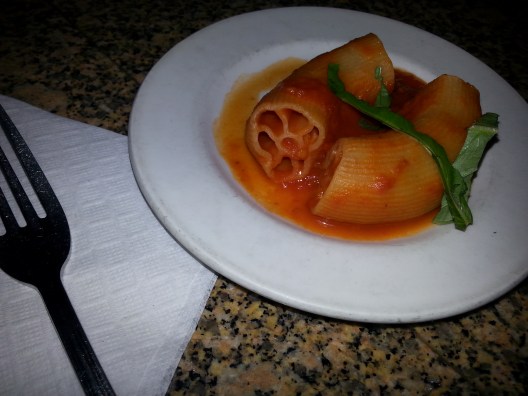
Wagon Wheel Pasta inside a Rigatoni: How to Maximize Sauce in Every Bite!

This weekend it really struck me what a blessing it is to be a  (somewhat) normal eater. We all know food is more than just fuel, or something to eat. And I am not talking about food as medicine, or food as as (emotional) pain reliever, but rather how complex our relationship to food is merely because of our history with food and eating. I am talking culture, your upbringing, the food you were raised eating. Usually, I learn about a patient’s history with dieting, or body image concerns, or how their parents wanted them to lose weight, and how it affected their eating, etc. It is sad that in our culture what we eat mostly has evolved into what affect it is going to have on our bodies. Yes, we need to care about that (if we want to have energy, feel good, increase our chances of living a long and healthy life). But what about the pure joy of eating, especially based on our (early, hopefully happy) memories of food?

This weekend I was treated to a wonderful birthday trip to Boston, and it was such an interesting experience, especially when it came to food, that I felt the need to share. The first night we stayed in the theater district, and had tickets to see the Blue Man Group (awesome!). We had a short time to find a place to grab a quick dinner, and most of the nice restaurants had long waits. So we took a short off-the-beaten-path side street and found a funky tiny cozy half-empty bar/bistro and grabbed a seat. I got crab cakes which were giant and yummy, my husband got a fish platter (we were in Boston, you gotta get fish!). It was fast and wonderful.

The next two nights were spent in the North end of Boston, which is the Italian section, Boston’s “Little Italy”. My husband had rented an apartment right in the center of it all, right off of Hanover Street (the famous main drag of Little Italy). It felt like we lived there! The second surprise I received was a ticket to a walking “food tour” called “Off the Eaten Path” which was a 3 hour tour of restaurants, hidden bakeries, wine cellar, sweet shop, coffee shop and tiny grocery shops where locals get their meats and cheeses. The tour guide was wonderful and our groups was small (10 people).See Boston Food Tour for more information.

Being Italian, and growing up with some great Italian food, I felt right at home. So many things brought back so many memories. Memories of my grandmother and her sauce, helping my mom grate the Parmesan cheese (nothing but the real stuff, and to this day, I still only use the best). Those giant platters of cookies at weddings, the salami and other meats, the smell of strong coffee, REAL Italian bread. I remember the giant cans of olive oil and the constant aroma of garlic. And of course there was the wine! Even the smell of the gas stove where we stayed brought back memories of both of my grandmother’s who spoke Italian and hated electric stoves because you could not control the heat. They cooked with gas (unless we were on the “farm” on the weekend, where our families gathered just to cook and eat and run around while the older people would play cards and laugh). At the farm they cooked over fire.

Anyway, on this tour, the first stop was for pizza at a place that brought back a giant pizza oven from Naples, Italy which cooked at super high heat and produced the best pizza around. After visiting Italy this past spring, I can tell you the pizza was the same. Very thin crust with spare but wonderful toppings of prosciutto on one and fresh mozzarella and basil on the other. After pizza, we stopped in to a restaurant that perfected pasta to hold the most sauce in every bite (see picture above), then off to the wine cellar (100 years old, in a dark basement, with a tasting of red and rose). We heard about how wine was made and after that I really wished I could always afford the good stuff. Next came a visit to a tiny hidden bakery, down an alley way, then down stairs where they made bread from yeast that was smuggled in from Italy over 300 years ago. After our bread tasting we stopped at a home made chocolate shop, and 2 tiny shops which again brought me back just because of the smells and aromas. Finally, we stopped at a local coffee shop for expresso, cannoli and the only home made gelato in Boston. Here are some pictures:

We walked and talked and sampled, and I was so thankful for my culture, and the way I was brought up when it comes to food and eating.

The next day we spent lots of time walking around the Boston Farmer’s Market. If you have never gone, and you live in the area, you need to go. As you walk among the tents and farmers, you hear so many languages spoken, witness funny interactions and bargaining for fruits and vegetables, as well as fish, and feel like you are in some movie, or in a different country. I love it! To me, that is what food and eating are about. Culture. If you love cooking, you know what I mean. In America we have some good food (all I can think of is cheeseburgers right now, but there is also New England Clam Chowder). There is so much to learn from other cultures about cooking and food and spices and eating that it seems most of us just never think about. This weekend, wandering through the North End, as well as the Farmer’s Market, I was reminded of the beauty and wonderfulness of all of it. Here are some pictures of the market:

All in all, it was a great weekend filled with lots of great meals, lots of walking, lots of laughter, but most of all, an important reminder: don’t go through life forgetting to embrace your culture. When is the last time you had your favorite dish growing up? Is there something your family used to make that is from your culture that you have not had in a long time? Is it because you think it may be unhealthy, or make you gain weight? After this (BIG) birthday, it motivated me even more to “live life to the fullest” Joie de vivre!!! as the French might say……

now off to make my puttanesca sauce!

Forward, Backward or Standing Still: Where Do You Stand?

DSCN2664 The other day another co-worker emailed me a link to her new eating plan. She wanted my opinion. This is where it gets hard for me, because I just want to say “please don’t waste your time or money” but that is not what I said. As a dietitian who has researched dieting, and wrote my Master’s Thesis on restrained eating back in 1996 I clearly remember how blown away I was by the proof I found about the failure of dieting, feeling outraged that this never made headlines. Well, now, when people talk about dieting,  I keep my mouth shut……at first. I have learned that people will tune you out if you hit them all at once with the truth. I have learned that most dieters are very hopeful and truly think they can do it “this time”. Instead, I share my experience with my patients. So I may say “can I tell you what I have seen happen?” If they say “yes” that opens the door. I warn of “all-or-nothing” thinking, how going “on” something means you eventually will go “off”. And on and on and on.

What struck me the other day after chatting with this woman about her diet was a realization that when it comes to health, we are all either going backward, going forward, or staying still. This is not about losing weight (although that is the goal for so many people) but about your lifestyle in general, what is health-promoting about it or not health-promoting about it. Clearly, we all have things we do that we regret at times and swear to change. It could be trying to get to bed earlier (because you feel like crap the next day but can’t peel yourself away from CNN). Or maybe it is trying to drink less wine because although it is good for your health in moderation, you drink a bit more than one 5 oz glass, and you want to preserve your liver. Maybe heart disease runs in your family, or your blood pressure has creeped up over the years, and you really need to cut down on salt. You are getting to the age when being active is more important than ever, both for a healthy heart but also to preserve bone mass.

Anybody trying to change knows it is not an easy task. When someone goes on a diet to lose weight, and the diet seems to work at first, they feel as though they are moving toward their goal. But when the diet ends, most people slowly start gaining again. Frustration eventually sets in and the thinking goes like this “I can’t do this, it’s too hard”. When someone decides to start exercising, goes all out, gets shin splints, the thinking is the same: I can’t do this.  The person who is trying to stop drinking breaks down and has a drink. Again, “I can’t do this”. The person with an eating disorder and doing well with taking care of their bodies encounters a trigger, starts to restrict, or purges. The immediate feeling is the same. I can’t do this. It seems to me people tend to be harsh on themselves and feel that either they need to be doing it all, or not at all.

Instead, why not accept that sometimes we are moving forward, sometimes backwards, and sometimes just sitting still.

Ask yourself:

Are there certain unhealthy behaviors that you think about often, and have wanted to change? Instead of thinking “all or nothing” why not try to take a non-judgmental look at where you are? Here’s how:

  1. Try to identify the behavior first, and be sure it is something that really matters. Bounce it off of your partner, friends or even a health professional to see if you are being reasonable and are not distorted in your thinking. For instance, if you think snacking is unhealthy, maybe you need a reality check. Pretty much everyone I know who is a normal eater needs a boost in between meals. Are you hungry? If, on the other hand, you are munching out of boredom or because you have some excessive stress in your life and are doing some emotional eating (completely normal unless excessive and interfering with your life), well, if it is preventing you from dealing with the real issues then seeking help from a therapist would be wise. Taking a step to getting help is definitely “moving forward”.
  2. Think about the things you have done in the past to change the behavior. Where has it led you? If you are the person who got shin splints from overexercising and this turned you off for good, you could be simply “standing still”. It does not mean you are a failure or can’t do it. It just means overdoing it did not work. Could you think of some other fun things that won’t hurt you? I sometimes wonder why even going for a simple, short but enjoyable walk “does not count”. The idea is to move in a direction of health, not become a marathon runner. People who have a gentle approach to moving more tend to feel really good about even the small accomplishments and these small moves in the right direction really do add up to a healthier body and life. As for people who are bent on starting another diet, it often leads to binge eating. This is “going backwards” in that it typically makes people feel even worse about themselves than they did before starting the darn diet. Instead, just “staying still” and taking the time to reflect on the past diets you have tried and the affect they have had on you in the long run is a good thing.  People often tell me “it worked before”, and you know my answer to that one. Someone wrote (sorry can’t remember where I read it) that Weight Watchers was a successful business because it really does NOT work…..and so people have to keep coming back. Starting another diet is going backwards. Unless you are one of the few people who actually learns some positive things (such as great healthy recipes, getting in touch with hunger and fullness, etc.) and transitions well into normal eating, I just don’t ever recommend diets. The repercussions are almost always bad, it is truly risky business.
  3. Try to project and think about a year from today. If you truly have examined yourself and your past behaviors and where it has led you, could you just this once try thinking about simply “moving forward”? This means taking small but doable steps to accomplish your goal of being the healthiest you can be. Perhaps instead of starting a diet, you could make a positive change in your eating. For instance, if you waste money by buying lunch every day could you plan to bring your own next week? This means making a grocery list and planning your menu. If you can’t resist the peer pressure to go to happy hour every day after work, could you make a plan to start skipping a day? If you stay up too late and feel exhausted the next day (and this happens every day), could you start with just one day to get to bed early? Eventually you can add more early bedtime days as you get used to it. Feeling good the next morning will start to become the motivation for repeating the positive behavior. This is moving in the right direction. It is not about “all or nothing”. Eventually, you will find the right balance for you, where your body feels better yet you get to enjoy life, too.
  4. Don’t beat yourself up when you do indeed “go backwards”. Instead, these backwards steps are priceless teachers, and we need to be thankful for them. Can you instead ask “wow, I thought I had that habit licked! let me figure out why I did it”. When you find out your triggers, or barriers, you can come up with a better plan the next time. Nothing lost, and lots gained. Even from mistakes.

So for today, ask yourself if there is anything you have been thinking about regularly as far as health is concerned. Take the time to reflect on where you have been, where you are now and where you want to go. Remember, deciding to “stand still” is a much wiser decision, and better for your health than “going backwards”. Skip that crazy diet that promises fast weight loss. Stand still and reflect, then move forward. Every step counts.


Why Dr.Oz Gets on My Nerves

face-extreme-1554895 “Flatter by Friday! One Week to Shrink Your Stomach!”…… and Dr. Oz will tell you how. That was the quick blip I heard when I turned on the television while loading the dishwasher yesterday.

I had to watch. I imagine a million other women watched too. What magical solution to our obsession with our bellies is Dr. Oz sharing that I need to be aware of, and ready to answer questions about to the many people in my life both personally and professionally who have body image concerns? When it comes to throwing out the right hook to grab an audience, Dr. Oz is the best there is (although Donald Trump is right up there with him, no politics on this blog, but you catch the drift).

So I watched the show, and to my amazement he talked about the flat belly topic first (I figured it would be at the end, that is usually how shows get you to watch the whole thing). The segment was shared with Chris Powell, a “core expert”. Anyway, he likes to use visuals, and that makes it more fun for the live audience. So as he spelled out each reason our tummies get bloated, he demonstrated it. It was actually pretty funny. We were told to imagine that our bodies are a “house” and explained that we get visitors. The first visitor to walk in the door is “water”, then “Bloat” and finally  “Fat”. This animated cartoon demonstration was followed by the recommendation to eliminate alcohol, processed foods and sugar (just for a week, you know, to get that flat tummy).

They never really discussed bloat (except to say it was from gas produced in the digestive tract) but did talk about water retention and how to help your body avoid it. They demonstrated how eating a donut causes your body to hold onto a cup of water. They had a bunch of water soaked sponges on a table, each representing different high carbohydrate foods and how much water they cause you to retain (demonstrated by squeezing the water out of the sponges to produce the visual). They went over a specific diet plan and the reasons for every food (for example, the asparagus you are supposed to eat at dinner is supposedly a natural diuretic). It was pretty much a low calorie and low carbohydrate diet plan. The funniest part was when they had different women from the audience come up and try the special smoothies that are supposed to substitute for the foods you really are craving in between meals (such as chocolate, chips, coffee drinks). The first woman who tried a shake made from blended greens and fruit made the funniest face that made you know it was disgusting. It was too funny! Nothing against smoothies, I know lots of people who love them and they can be healthy. Personally, if it takes pulling out a blender to make a snack, it won’t happen. I only go to that trouble if I am cooking something special (like a pumpkin soup I made once three years ago).

So was there any new information that can transform your tummy and make it flat in just 7 days? While it is true that a low carb diet will tend to cause your body to lose water, and yes, losing water weight might make your tummy feel smaller, just as with any quick weight loss restrictive diet, your body will re-hydrate once you start eating normally again. Decreasing processed foods is good advice, but it is the context of the recommendation that bothers me. Why does it always have to be focused on the stomach as a reason to make a healthy change? Why bother to try to get rid of some water weight just to fit into some dress for just one occasion? Especially because the person going through this type of fast weight loss plan for this reason is likely obsessing about something that just is not there. We are talking about a tiny change in a body part that I can guarantee you, nobody is looking at except the person dieting. Who can say they really care about another person’s belly fat or bloat or water retention, or that you would even notice any change? Why put your body (and even worse, your mind) through the stress of following such a restrictive diet for even one week, for something that will not last? Why can’t we focus on helping each other become healthier? I enjoyed part of the show where experts answered some random questions about health (for instance, did you know you don’t have to wash your face with soap? a dermatologist on the show explained why, now that was interesting…). Learning new healthy recipes, how to break bad habits, how to build fitness, now that might be helpful.

Oh, and as for reducing bloat (gas) I think it is a good idea to avoid foods that cause you gas. Not because it makes your tummy look less flat, but because it makes you feel better. Broccoli is not my friend and I avoid it like the plague.

So the next time you get drawn in by some advertisement or commercial or anything else that throws out the “hook” of resolving your concerns about your tummy, remember, there is no fast solution, and never will be for any quick fix for any of our body image issues. That is why caring about health and feeling good is a wiser focus for your precious energy. When you want a quick fix for looking better, do what I do. Go see your hairdresser!


Teens and Eating Disorders: 5 Mistakes To Avoid if You Are a Parent

cropped-img_1418.jpgI will call her Jessica. She was one tough cookie, starting from the day her mom brought her in for her first visit with the dietitian. She was 16 years old and referred by her pediatrician for weight loss and a possible eating disorder. I could tell from Jessica’s demeanor and angry face that she would rather be having her toenails pulled out than be here. I met with mom first (I have learned that having both parent and teenager in together almost always turned my otherwise very pleasant counseling room into a war zone). Anyway, Jessica’s mom filled me in on the fact that her daughter did not want to come today. Mom wanted to prepare me for a very bad visit. I let her tell the story of why she was there, and just as with many parents I have seen, the feelings  transitioned from anger to sadness and eventually tears. A newly diagnosed eating disordered teenager is ….well…..so difficult for me to even put into words, because I just can’t imagine how painful it is to watch your son or daughter fading before your eyes. I also know it is scary  for a teenager when they are being taken over by this deadly disease. So when a parent finds out their teenage child has an issue with their eating, what they do can be critical.

With today being the very last day of February, Eating Disorder’s Awareness Month, I thought it might be helpful to share my experiences with the intent to help parents understand just a little bit about what is happening when their teenager seems to be falling into the grip of disordered eating. Let me make it clear that from my experience, every single parent I have ever met who has brought their teen to come see me for help are always caring parents who love their children and only want the best for them. But most of them don’t understand what is going on, and their reactions to their teenagers behavior are often not helpful.

So here are just 5 things I wanted to bring to the attention of any parent who may have to struggle through this with their teenager:

  1. Do not ignore weight loss.

You know how it is when you see someone everyday….sometimes small changes go unnoticed. Sometimes, when teenagers are wearing baggie clothing (which is very common in people with body image concerns) we just don’t realize a significant weight loss has occurred. And sometimes, if a teen is a bit on the larger size, she may get attention for losing weight. Parents sometimes feel happy and proud when weight is lost. They don’t want their daughter to be overweight, the importance of avoiding obesity is all over the media, why wouldn’t they be happy? The problem is (and I see this all the time, when people don’t stop to think) sometimes weight is lost in a way that is not healthy at all, and even dangerous. Sometimes kids skip meals, teenagers stop menstruating (a huge red flag) or even may suffer from dizzy spells and fainting. Parents need to investigate when a teen loses weight, not condone it, not praise it, but find out why. If someone cuts out soda, or takes up a healthy sport and is enjoying life, still eating with the family and eating normally, then there may be no issue at all (but PLEASE don’t give too much attention to the weight loss, instead support the healthy lifestyle as that is a good thing, and has nothing to do with weight). Be sure to take your teenager for regular doctor’s visits and ask to see the growth chart. Ask your doctor to explain it, and if your teen is falling off the growth chart, or not gaining weight, find out why. If your daughter stops having a period, or starts skipping periods, tell the doctor. But do not ever ignore weight loss in a teenager.

2. Do not make the dinner table a war zone.

If your teenager used to love your mashed potatoes and now does not want them, don’t make an issue out of it (at first). But if you notice they no longer want other foods they used to love, and insist on only grilled chicken and salad, don’t ignore it, however don’t start pressuring them at the table. The dinner table needs to be a happy place for everyone in the family. Plus, it will not work, and will most likely cause your teenager to avoid the dinner table altogether. Instead, seek out the help of a professional. Tell your pediatrician about the sudden food refusal and ask for some references for therapists who deal with eating disorders. Tell your teenager that you are worried about her eating and that she does not eat the way she used to. I explain it as an “assessment” so that is sounds less threatening. It is just to be sure everything is ok. Or, you can start with a dietitian to be sure your teenager is getting what she needs nutritionally. Sometimes, kids go through phases when they want to eat healthy, or experiment with vegetarianism, etc. and they just need a professional (and not their mother) to explain why it is ok to eat pizza or potatoes, or ice cream, or whatever because it all contributes nutrition. I have had many teens show a sign of relief that someone who “knows” gave them permission to eat ice cream again! They happily go back to mom’s potatoes. But if they don’t, typically the dietitian can also help along with the pediatrician in finding a therapist who has expertise in eating disorders.

3. Do not ignore your instincts.

Besides refusing foods they used to like, are you getting a feeling that something is just not right? Do you catch your teenager in telling little “fibs”that may not seem significant, but make you think something is up? For instance, your son says he is going to eat with his friends at the pizza joint after school, yet when you see his friends later that week, you hear them ask where he was….is he finagling his way out of meals? Or, has your daughter started a new routine, where for some reason, after eating she always has to run to the bathroom? Could she be vomiting after meals? Or have you caught your teen checking out their tummy in the mirror? Of course this can be totally normal, but if it is coupled with other “red-flag” behaviors such as food refusal, and your instincts are telling you something is wrong, don’t ignore it. Ask questions. Let your teenager know you have concerns and are wondering what is up.

4. Do not think your teenager is purposefully trying to drive you crazy.

One of the first things I always say to a parent whose teenager is newly diagnosed with an eating disorder is “they are not doing this on purpose”. Parents get very angry (at first) when their previously happy eat-you-out-of-house-and-home teenager no longer will even sit at the dinner table. Teenage years are not always the easiest as it is (having had 3 of these I can say from experience). The purple hair, the pierced eyebrows, the roller blades, loud music, protesting the rodeo……teenage years are a time of transition, so throwing in body image issues and disordered eating into the mix certainly has the potential to create some explosive scenarios.  But when it comes to an eating disorder, trust me, no one, not even a teenager, wishes the torturing mindset that comes with the disease upon themselves. What has helped me tremendously in understanding what those with eating disorders are going through is the concept of “ED”. ED is what I imagine as a monstrous little creature sitting on your teenager’s shoulder, muttering the most horrible and distorted demands into their heads that they just can’t ignore. “Don’t eat that! It will make you fat!” “Don’t listen to her, she wants to make you fat!” ” You need to skip dinner, you ate lunch, or you will get fat!” “You don’t deserve that, you were bad all week” And on and on and on. All day. Every meal. After every bite. So when your teenager has a fit, and gets mad at you, and yells and swears, just know it is not her or him. They are under the influence of something very powerful and not in their control. Not yet, until they get help. Which brings me to the last point….

5, Do not think you can go it alone.

It really is hard to commit yourself to doing what you need to do to get help. These days, we are all so busy. Both parents work, and there are more single parent households relying on only one income. Teenagers are involved in sports, getting their driving permits, there are proms to go to, it is endless. But, if ED gets control, none of that will matter in the long run because he can get such a grip on a person’s life that it will only get harder and harder to shake him off. Not only health,but lives are at risk.  No matter what it takes, rearranging work time, finding a therapist who has evening hours, getting into a program, the sooner you get help, the better. Check out the National Eating Disorders and Awareness site at NEDA for more information on eating disorders. Your teenager does not have power or control over what is going on with their eating or their body image. But you CAN help your teen by getting them help. Trust your instinct as a parent. If you think something is wrong, you are probably right.

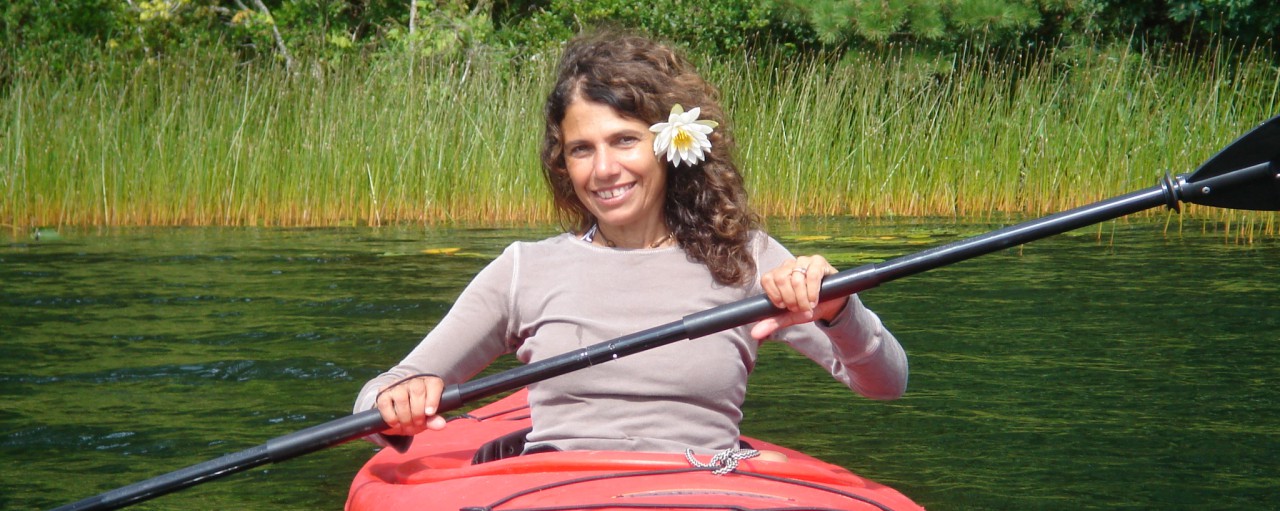
You might wonder why I chose the beautiful photo at the beginning of this post. It is from a kayak trip down the Connecticut River, off the town of Essex. To me it symbolizes what I have learned an eating disorder is to many patients: it is something they turn to in order to deal with something else in their lives. It is a “life preserver” such as those thrown into a river when someone can’t swim.They need to learn to swim before they can let go. But there is so much to look forward to, like the beautiful sunset in the distance. They will get there.

Weight Watchers: The Good, The Bad and The Ugly

torpedo-1240955Did you ever experience something that affects you so much that  you remember if forever?  I remember Nancy (not her real name), a sweet middle aged mother who had come to me for help with binge eating (and she wanted to lose weight). If you saw her, you would never know she had any eating or weight concerns. She certainly did not look like she needed to lose weight. She had always been a yo-yo dieter, gaining and losing some weight over the years, but bigger troubles emerged after starting Weight Watchers. She would basically restrict herself before her “weigh ins” when she went to her meetings, which meant eating even less than the diet called for.  All she thought about was the reaction she got after stepping on that scale. She just had to get through that minute. If the number did not go down, she felt like a failure (the fact that they let her into a weight loss program with her weight scared me, but maybe it is different now?). Anyway, Nancy would leave her meeting with relief, proceed to the grocery store or fast food place and binge eat. All day. Because she did not have to be weighed for another week. And then she would purge, feel terrible, depressed and like a failure. But she would be back on track again a day or two later, just to repeat the process. She was stuck in the Weight Watcher’s trap, hold, spell, whatever you want to call it. Unfortunately, Nancy was not the only WW casualty I encountered in my private practice. There were many more. Not all of them developed the eating disorder bulimia, but they all never learned how to eat healthily and happily. Some would lose weight, but then have no idea how to transition to a “real life” without “points”. It was the counting of the points that drove my patients to a place that was not good. After losing weight (by eating less, points, calories, counting carbs, it is all the same) there was no where to turn. What next? The patients I saw did not know and so either gained weight or transitioned into an eating disorder.  Not all people who diet or follow Weight Watchers or count points develop eating disorders. I have known many friends and acquaintances who absolutely love the program. “It works!” they say. Every year, even after they have regained the weight again. Some people even maintain their weight loss for longer. But inevitably (in my experience, with the people I know), the weight is regained, there is a period of living “Outside of diet jail”-how I refer to it. Diet Jail is when someone is following a diet. When they can’t do it anymore, they break out, eat what they want, forget about it for awhile. They eventually remember the “success” (????) with Weight Watchers. They DID lose weight and they felt great. So they start again. I think people believe each time they restart the diet that it will be different. What I have seen (and I can only speak for myself, my experience with patients and others in my life) is that if fails them. They do not learn about themselves in any meaningful way.

Which brings me to something that I really wanted to share with you before you might read it in the news.

You are going to be hearing about a new study on  Weight Watchers  which was published on line in the American Journal of Public Health on February 18th. As with most studies, when they are publicized in the news (usually one dramatic blurb that catches your attention, such as “wine is good for you! chocolate is good for you! Caffeine is good for you!”) we believe it. Because we want to. Most people don’t have any inclination to doubt “research”, it sounds so scientific, it has to be right. So with Weight Watchers, I wanted to fill you in a bit (yes, as you probably noticed, that program leaves a real bad taste in my mouth). The Nancys of the world are the reason I am not a fan. But for now, let’s talk briefly about the study.

The study was conducted by researchers at Indiana University School of Medicine. The objective was to compare WW with another program to find out if it was as effective in promoting weight loss and improvements in metabolic outcomes such as Hemoglobin A1c. It was comprised of 225 subjects (with prediabetes) and was a randomized controlled study (that part is good). The results were good for WW in that their groups had better weight loss and metabolic improvements that were maintained for 6 and 12 months compared to the other program. The negative part (and what people don’t always know) is that the study was funded by Weight Watchers, according to this LA Times Article . The abstract of the research article is available at the link to the Study , and although the entire article is not available unless you are a member or you pay for it, you can clearly see (if you check out the Study link) that two of the researchers are from Weight Watchers. Most would consider this a conflict of interest, and this happens sometimes, but it is ok as long as it is spelled out (and it is). You can make up your own mind, but to me, if a company who is selling a product is involved in the research evaluation the product, as well as the way the article is written, it just bothers me. In this case, the researchers from the university are clearly respected and that helps, but to me, it would have been better if WW were not involved in any way.

The second thing that bothers me is the sample size and length of follow up. Yes, the results were “significant” statistically, but in the real world, 225 people from Indiana is just a start. The study needs to be replicated over and over to really mean anything. And the 12 month follow up is really NOT a long time in the world of weight management. True story: when I was doing some research for a PhD back in the day my adviser would not approve my project unless I did a 2 year follow up. As it turned out, the program that I was a part of was discontinued and I was going to have to start over (ugh). I ended up going back to my normal job and never finishing due to the fact that I just did not have another 2 years. But is always stayed with me, the length of time truly needed for weight management results to mean much (to me anyway, and to many others). It is good news that diet and lifestyle changes can help prevent diabetes and reverse prediabetes. You just don’t need to spend time and money on a program to do it.

Another thing that bothers me about the study is the motivation. According to the LA Times article (link above) Weight Watchers  “was trying to get its system of counseling and motivational goals certified as a diabetes prevention regime by the government, which meant it had to develop data”. I am a little conflicted about this because on a positive note it would be more likely for insurance to cover the program if it is approved, but on the other hand, I hate the thought of even more people counting points.

Which brings me to the real reasons I am not a fan of the program. Years ago, the Weight Watchers program was different,and the issues were different. It was focused on the number on the scale, and labeling food as “legal” or “Illegal”or something to that affect. It instilled guilt with foods, and feelings of failure (especially at weekly weigh ins). But at least back then it was a simple and balanced “diet”, not too overwhelming, and perhaps some people learned they needed to eat three meals a day with all of the food groups included. But now, this point system is just plain overwhelming. I am good at math, but when it comes to food and eating, who can sustain figuring out some mathematical system of adding up points for very long? Yikes. Another REALLY bad consequence is the way the point system contributes to binge eating.  I believe people who count points know they are supposed to spread out their points over meals and snacks. Do you really think a typical dieter or person who tends to overeat or even binge is not going to be tempted to “save up” points when they are going to a party so they can eat more? What does this teach? It is the same bad habit many dieters have: restricting during the day and then overeating later. Does this teach a healthy lifestyle? Do you really think this is going to help someone to get more in tune with their hunger and fullness so they actually learn to prevent overeating and binge eating by just eating “normally”? No. Counting points is just like counting calories (just a bit trickier, a new gimmick, and dieters love gimmicks). It is a form of “cognitive restraint” which I have talked about before. When you use your “head” to figure out how much to eat, you get disconnected from your true body signals. Those signals that help you be the weight you are supposed to be (yes, there are those who are prone to binge eating especially on foods high in fat and sugar, but I am referring to the typical dieter who only became obsessed with food after dieting).

So when the weight is lost, then what? A normal “healthy thinking” person is NOT going to be able to keep counting points. They are not left with much else to transition to. Any person I have ever known who has been successful with weight management has taken the time to really reflect on what has changed in their lives to make them gain weight beyond what is normal for them. It is different for everyone. For some, they gave up a sport when they started working. For others, they started making money and going out to eat and drink more often. Or maybe they took on a new job and stopped going to the gym. Maybe they went through a divorce and became depressed. Or they moved out of their parents home and started to stop for fast food because they don’t know how to cook. It could be mindless eating they have gotten into the habit of (eating in front of the TV or at the computer). It could be a million things that affect our bodies and our health. Counting points, or calories, or even following the Hot Dog Diet will result in weight loss. But that does not mean it “works”or fixes anything permanently. What “works” is taking the time to reflect on your lifestyle, then making the tough decisions as to what changes you want to make depending on what unhealthy habits or lifestyle patterns you have fallen into. You might want to seek out professional help from a Registered Dietitian or even a therapist if your eating issues are rooted in a psychological or emotional issue. You may not see the fast results a diet or diet program can offer. But a year from now, or two years from now, you will be happier and healthier.

In case you did not notice, Weight Watchers recently came out with a television ad with Oprah as the new face of WW. This helped boost the stock at first but just like dieting according the the LA Times article, it did not last long. Check out Dare Not To Diet for some great insight by the experts on Oprah and Weight Watchers.

Anyway, I covered the “bad” and the “ugly, so what about the “good”? I actually think Weight Watchers has some pretty good recipes (I have friends who have brought over yummy healthy dishes, and they were happy to brag “weight watchers recipe!”). I wish anyone who decides to go on the program and count points figures out how to take the good things (like healthy cooking) from the program and leave the rest.  Everyone is different, and if someone loves Weight Watchers, I just wish them luck. We all need to learn from our own experiences.

But please think about it. If you did it before, and regained the weight you lost, did it really “work”?