Weight verses Health

scaleYesterday a co-worker told me about her husband who just found out he had high cholesterol as well as high blood pressure. She said he had gained about 20 pounds over the past 2 years and she wondered if that was the reason he was now having health issues. The stigma against body size verses health is one that can be very confusing. When we talk about a “health at every size” approach to weight, people often react and think we are crazy. Of course weight affects health, they say. To help clarify this confusion, I wanted to share this great post from Dare Not To Diet (dietitian GlenysO). As for my friend’s husband, he was told to start to exercise and to eat more fruits and vegetables. It sounded like his lifestyle was not too healthy, and the bottom line is even if his weight had not changed at all, he probably would have had his health issues due to the way he was living his life. If you are working toward being the healthiest you can be, but confused about the weight issue, be sure to check out this post! See link below:

What exactly does Health at Every Size® mean for my weight?

Source: Am I Healthy at Any Weight?

Normal Eating, Dieting and Weight:Finding Your Way Through the Jungle

Finding peace with eating may take time, just like finding the perfect sea shell….but it is worth it

“Don’t listen to this Joanne” one of the teachers said as she walked into the office at work the other day. I knew immediately what the story was going to be. I knew it would be about food. I was right…..she proceeded to tell my co-worker about the peanut butter cheesecake she made for a baby shower. As well as she knows me, how could she still think of ME as the food police? But after I thought about it, I realized it is not about me, but about all of the cultural confusion about food and eating, and what normal is. Despite the increase in awareness that dieting does not work and intuitive eating is better, it is a mighty task to find a way to stand up to the utter illness in our society when it comes to food, bodies, weight and eating. This may sound extreme, but after you have been around for as long as I have I can say that (recently celebrating a BIG birthday to prove it…born in 1956, if you do the math, you will agree!).I have also spent years struggling to help those with eating disorders fight against the barrage of unhealthy messages coming at them from all directions each and every day.

Think about this scenario: Jessie is in her last year of college, but after losing too much weight and developing an eating disorder she has to take a leave of absence from school in order to get better. She attends a day program where she has group therapy, meals and snacks and also sees me for nutrition counseling. Jessie seems to get it that she needs to gain weight and eat more because she feels awful, is obsessed with food, is always hungry and now it has affected her life, having been forced to leave school. Although she is working through her issues, she is very confused about why she needs to gain all this weight back. Everyone she knows is dieting so why is it ok for them and not her? She lists some famous actresses along with their heights and weights (which are horrifying) and again wonders why it is ok for them? Plus, both her mother and her grandmother are on a low carb diet because they are trying to lose weight. On top of this, she watched Dr. Oz and learned some random things about certain foods and so now did not want to eat those anymore. Oh, and on the radio in the car the DJ was talking about some place that actually can sculpt your body to get ready for swim suit season….why can’t she do that?

How is this poor girl going to block all those unhealthy messages coming at her from all directions? There is such a thing as “normative discontent” which is just what it sounds like. It is pretty normal if you have something about your body that you just don’t love (great roots, for instance, curly hair, short legs, big ears, bulging tummy, you name it, we all have something probably). But we live with it, and don’t think about it that much and certainly don’t starve ourselves to change it. It seems to me we have become immune to what is happening in our world when it comes to food and eating and bodies, and slowly over the years it has become “normal” to talk about bodies, and avoid certain foods and exercise to lose weight (not for fun, not to feel good, but solely to change the body). It has become normal to praise people for body parts (either natural, genetic endowments-“she has such beautiful long legs”, or changes resulting from some drastic measure-“your legs look great since you’ve been going to the gym nine million hours a week”). It drives me nuts. Everywhere I go, every single day, it strikes me. In the car, on the radio, on TV, visiting friends or family, inevitable the talk turns to eating and weight and bodies and body parts.

So here I am, along with many other intuitive eating, “listen to your body”supporters, trying to help people live a life focused on what actually IS important, and it is very difficult. I feel like the odd man out most of the time. Even my own husband sometimes looks at me like I am a weirdo when I talk about this stuff. He does not understand why you would not want to compliment someone on achieving a weight loss. Unless you know a person well, it is dangerous to do this because we never know how the weight was lost, it could be through very unhealthy means and I for one do not want to compliment or reinforce anyone’s eating disorder. If, on the other hand, someone has done a lot of work to change an unhealthy lifestyle and now eating healthier and loving it (and maybe has lost weight) complimenting healthy changes feels ok to me. As a dietitian that is what I like to see if it is the goal of an individual to be healthier, and they are happy with what they are doing and it serves them well both physically and psychologically, that is different. But focusing on the body size alone is what most people tend to do, and that is the mistake.

As far as eating, I can totally understand why my mom calls me at least once a week to ask some pretty funny question about food. She watches Dr. Oz sometimes, and the news and so I often have to clarify. She also asks funny questions about what she cooked and if she can still eat it. “I made this beef stew on Sunday, is it still good? I hope so because I ate it!”Those questions I don’t mind : ) But sometimes she is triggered to start reading every label (lately, it is all about corn syrup…”that’s bad, right? But why? My gluten free crackers have it, does that mean they have gluten?”). Ugh.

And then there is the low carb craze that never seems to go away. You know what I mean, I bet if you go out on the street and ask every random stranger you meet if carbs are good or bad, you will see how we have been brain washed. Our culture just seems to love labeling foods. Is it good? Is it bad? I get that question all the time. “Joanne, kale is good, right? Potatoes are bad, right? White bread is bad, right? Is rye bread good? Are cheerios good? Are Froot Loops bad? It is 100% fruit juice, so that’s good, right? It is gluten free, so that is good right? ” You get the picture. No wonder we are all confused, the messages we get every single day are hard to ignore.

How do you see the forest through the trees? How do you know what to believe, and more importantly, what kind of relationship do you currently have with eating and food and your body, are you happy with it and content, or do you want to move in a different (and happier) direction? Then here is some advice:

  1. Remember, you are unique. Your eating style and lifestyle is a complicated matter that is unique to YOU. Your environment, habits and emotions all play a role. It may take time to unravel how each affects you. That is why one diet or another is not the answer. We are not all the same.
  2. Be kind to yourself as you go through your exploration of how you want to eat. You may feel that our culture judges you (trust me, every time I am spotted with a non-healthy food item in my hand, I get a comment, “your’re eating THAT! Aren’t you a dietitian???”). Remember, they are the crazy ones, not you!
  3. Be aware of the messages coming out of the mouths over everyone around you either on the radio, on TV, at work or even at home. Realize that you are being bombarded by messages you should question (and even stand up to if you have the inclination). On Facebook the other day someone shared how McDonald’s labeling of all of the calories was actually not helpful at all to those with eating issues, and many people agreed.
  4. Educate yourself about health and nutrition from reliable sources.I recommend even one consultation with a registered dietitian (preferably a Health at Every Size RD). There are some good websites such as Choose My Plate, but unfortunately, even reliable sources are slanted toward weight control, so be sure to put your own filter on it and ignore that focus. Stick with learning about what you need to have energy and feel good.
  5. One of my favorite definitions of “normal eating” is from Ellyn Satter. Check it out at What Is Normal Eating?  The important message is that it is not perfect : )
  6. If you are not able to get out of a rut of dieting and weight gain, or find yourself getting depressed about your body or weight or eating, get help. Ask your doctor about a referral to a therapist who specializes in eating issues. The sooner you get help, the better.

The bottom line is that eating and dealing with our bodies and weight can be a very complicated matter because of our cultural focus on dieting and weight and eating perfectly. Don’t accept everything you hear. Be aware of the amount of bombardment of these messages you get on a daily basis. In the end, you are the expert of your own life, and you get to decide how you want to live it.

As for that peanut butter cheesecake, I will share the recipe once I get it!!

Some Thoughts on Feeling Guilty: Women, Food and Life in General

10484130_925401544152630_2143898387989742773_n
Having a Bloody Mary on a Saturday Morning on the Connecticut River….should I feel guilty?

Yesterday I didn’t brush my teeth until almost 4 pm. That was right after I finally got the energy to get off the couch to take a shower. I did something I have not done in years. I called in sick. I tormented over the decision the night before because I just hate letting anyone down. Also, it was  Autism Awareness Day (a big day for the school where I work on Friday) and everyone was going to wear blue. But I had been feeling abnormally exhausted and people at work had been ill and it had lasted days, and I did not want to get it (worse than I already had). Plus, I just needed to be constantly near a bathroom, and well, that means staying home. I pretty much stayed in my PJ’s until noon, sat on the couch and watched the 2 hour episode of American Idol that I recorded. I got up to heat up leftover cheesy scalloped potatoes, which was about the only thing I felt like eating. It was dreary out, a perfect day to sit on the couch if you have to. But instead of totally allowing myself to relax, I kept checking my email to be sure I got back to who I needed to at the school. Finally, it hit me, why do I always feel guilty about things like this? All I was doing was taking care of myself. But there are other things too, and I know it is not just me. Many wonderful women that I know and love also feel guilty about things they probably should not. What is it about women in particular?

After looking into it a little bit, I actually came upon an article in Psychology Today. It explained that “guilt is a way we have of recognizing that we have not lived up to our own values and standards. At its best, it is an opportunity to acknowledge and rectify mistakes. But often guilt bleeds into shame, and then it becomes another story”. I felt a bit better in that shame was not what I was feeling. The article goes on to describe how Brené Brown puts it : “adaptive and helpful – it’s holding something we’ve done or failed to do up against our values and feeling psychological discomfort.” Shame, on the other hand, she says is “the intensely painful feeling or experience of believing that we are flawed and therefore unworthy of love and belonging – something we’ve experienced, done, or failed to do makes us unworthy of connection.”

It seems to me sometimes that women feel guiltier than men. When a man forgets to call his wife to tell her he may be home late, he wonders why she is not too happy when he gets home. If, on the other hand the wife decides to run out shopping with a friend, leaving the husband home to care for the baby, well, most women I know feel guilty about this (not all, of course, but in my experience with MY friends, well, we tend to have all kinds of guilt when it comes to our children).

Low and behold, according to one  Study reported in the NY Daily News there is actually a physiological reason why women may feel more guilt than men. The article mentions  Cambridge University neuroscientist Simon Baron-Cohen  and his book “The Essential Difference.”  Apparently, “The female brain is predominately hard-wired for empathy. The male brain is predominately hard-wired for understanding and building systems.” In the study that was conducted in Spain, both adolescent females and woman age 25-33 showed higher levels of expected guilt than men of the same age. In the older age groups however, guilt levels were similar between men and women. It may be related to changing hormone levels according to the article. When men get older and settle down,  “their testosterone levels decrease and their oxytocin levels rise, making them more prone to empathy, which goes hand in hand with guilt”.

Interesting. Reading this made me reflect back on all of the things besides calling in sick that I have felt guilty about. Never going down to visit my daughter when she lived in Austin. Not visiting my son in Colorado (but going to do this in a few weeks, so that will help, I can’t wait).  Not visiting my parents enough. Forgetting almost everyone’s birthday (except people on Facebook, thank goodness, the one great thing about wasting your time on there). Not doing weights. Not doing yoga. Missing my yearly check up. I did feel guilty about not flossing my teeth enough, and out of fear alone (of the repercussions) I was diligent for an entire year. It felt great to go to the dentist and FOR ONCE have him say I was good. One less thing to feel guilty about!

My friends and I often think back about when our kids were young and some of the things we wish we did differently. More guilt. But, we realize, they have all turned into wonderful human beings and so, maybe we were meant to make those mistakes after all.

And then there is food. And eating. The patients I have worked with in the past have showed me a whole different way people look at food and eating that is filled with guilt. Eating “bad” food. Eating too much. Eating sweets. Eating fried food. Not eating enough vegetables. And on and on.Recovery Warriors share a great post that talks about the disordered thoughts people have when it comes to eating and guilt, and most importantly, how to change these thoughts. People with guilt about eating actually may be displacing their feelings. They focus on food instead of real feelings. It is important to  work on becoming aware of when you are demeaning yourself and using food and eating as an excuse. Instead, they suggest ” when the guilt pops up in your mind during or after eating, take a moment to step back and try to realize “Oh there is guilt, it’s going to make me feel bad, but you know what, I’m not.”

It is not easy to take care of yourself. We all want to be caring, empathetic and good human beings. When I get confused as to what is wrong or right, I think about the simple but wise advice my mom gave me. Growing up, she always would say: Dig down deep in your gut. What is the answer? What pops up first? Yes or no?

Yesterday, the answer was YES. Stay home. It is ok.

So, next time you feel guilty, or are confused about something you think you should or should not do, it is not simple, but dig down deep, and take care of yourself. You probably have the answer.


Food: More Than Just Something to Eat

20160326_115016
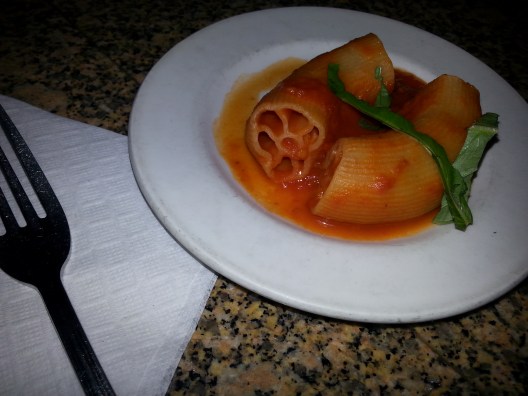
Wagon Wheel Pasta inside a Rigatoni: How to Maximize Sauce in Every Bite!

This weekend it really struck me what a blessing it is to be a  (somewhat) normal eater. We all know food is more than just fuel, or something to eat. And I am not talking about food as medicine, or food as as (emotional) pain reliever, but rather how complex our relationship to food is merely because of our history with food and eating. I am talking culture, your upbringing, the food you were raised eating. Usually, I learn about a patient’s history with dieting, or body image concerns, or how their parents wanted them to lose weight, and how it affected their eating, etc. It is sad that in our culture what we eat mostly has evolved into what affect it is going to have on our bodies. Yes, we need to care about that (if we want to have energy, feel good, increase our chances of living a long and healthy life). But what about the pure joy of eating, especially based on our (early, hopefully happy) memories of food?

This weekend I was treated to a wonderful birthday trip to Boston, and it was such an interesting experience, especially when it came to food, that I felt the need to share. The first night we stayed in the theater district, and had tickets to see the Blue Man Group (awesome!). We had a short time to find a place to grab a quick dinner, and most of the nice restaurants had long waits. So we took a short off-the-beaten-path side street and found a funky tiny cozy half-empty bar/bistro and grabbed a seat. I got crab cakes which were giant and yummy, my husband got a fish platter (we were in Boston, you gotta get fish!). It was fast and wonderful.

The next two nights were spent in the North end of Boston, which is the Italian section, Boston’s “Little Italy”. My husband had rented an apartment right in the center of it all, right off of Hanover Street (the famous main drag of Little Italy). It felt like we lived there! The second surprise I received was a ticket to a walking “food tour” called “Off the Eaten Path” which was a 3 hour tour of restaurants, hidden bakeries, wine cellar, sweet shop, coffee shop and tiny grocery shops where locals get their meats and cheeses. The tour guide was wonderful and our groups was small (10 people).See Boston Food Tour for more information.

Being Italian, and growing up with some great Italian food, I felt right at home. So many things brought back so many memories. Memories of my grandmother and her sauce, helping my mom grate the Parmesan cheese (nothing but the real stuff, and to this day, I still only use the best). Those giant platters of cookies at weddings, the salami and other meats, the smell of strong coffee, REAL Italian bread. I remember the giant cans of olive oil and the constant aroma of garlic. And of course there was the wine! Even the smell of the gas stove where we stayed brought back memories of both of my grandmother’s who spoke Italian and hated electric stoves because you could not control the heat. They cooked with gas (unless we were on the “farm” on the weekend, where our families gathered just to cook and eat and run around while the older people would play cards and laugh). At the farm they cooked over fire.

Anyway, on this tour, the first stop was for pizza at a place that brought back a giant pizza oven from Naples, Italy which cooked at super high heat and produced the best pizza around. After visiting Italy this past spring, I can tell you the pizza was the same. Very thin crust with spare but wonderful toppings of prosciutto on one and fresh mozzarella and basil on the other. After pizza, we stopped in to a restaurant that perfected pasta to hold the most sauce in every bite (see picture above), then off to the wine cellar (100 years old, in a dark basement, with a tasting of red and rose). We heard about how wine was made and after that I really wished I could always afford the good stuff. Next came a visit to a tiny hidden bakery, down an alley way, then down stairs where they made bread from yeast that was smuggled in from Italy over 300 years ago. After our bread tasting we stopped at a home made chocolate shop, and 2 tiny shops which again brought me back just because of the smells and aromas. Finally, we stopped at a local coffee shop for expresso, cannoli and the only home made gelato in Boston. Here are some pictures:

We walked and talked and sampled, and I was so thankful for my culture, and the way I was brought up when it comes to food and eating.

The next day we spent lots of time walking around the Boston Farmer’s Market. If you have never gone, and you live in the area, you need to go. As you walk among the tents and farmers, you hear so many languages spoken, witness funny interactions and bargaining for fruits and vegetables, as well as fish, and feel like you are in some movie, or in a different country. I love it! To me, that is what food and eating are about. Culture. If you love cooking, you know what I mean. In America we have some good food (all I can think of is cheeseburgers right now, but there is also New England Clam Chowder). There is so much to learn from other cultures about cooking and food and spices and eating that it seems most of us just never think about. This weekend, wandering through the North End, as well as the Farmer’s Market, I was reminded of the beauty and wonderfulness of all of it. Here are some pictures of the market:

All in all, it was a great weekend filled with lots of great meals, lots of walking, lots of laughter, but most of all, an important reminder: don’t go through life forgetting to embrace your culture. When is the last time you had your favorite dish growing up? Is there something your family used to make that is from your culture that you have not had in a long time? Is it because you think it may be unhealthy, or make you gain weight? After this (BIG) birthday, it motivated me even more to “live life to the fullest” Joie de vivre!!! as the French might say……

now off to make my puttanesca sauce!

Forward, Backward or Standing Still: Where Do You Stand?

DSCN2664 The other day another co-worker emailed me a link to her new eating plan. She wanted my opinion. This is where it gets hard for me, because I just want to say “please don’t waste your time or money” but that is not what I said. As a dietitian who has researched dieting, and wrote my Master’s Thesis on restrained eating back in 1996 I clearly remember how blown away I was by the proof I found about the failure of dieting, feeling outraged that this never made headlines. Well, now, when people talk about dieting,  I keep my mouth shut……at first. I have learned that people will tune you out if you hit them all at once with the truth. I have learned that most dieters are very hopeful and truly think they can do it “this time”. Instead, I share my experience with my patients. So I may say “can I tell you what I have seen happen?” If they say “yes” that opens the door. I warn of “all-or-nothing” thinking, how going “on” something means you eventually will go “off”. And on and on and on.

What struck me the other day after chatting with this woman about her diet was a realization that when it comes to health, we are all either going backward, going forward, or staying still. This is not about losing weight (although that is the goal for so many people) but about your lifestyle in general, what is health-promoting about it or not health-promoting about it. Clearly, we all have things we do that we regret at times and swear to change. It could be trying to get to bed earlier (because you feel like crap the next day but can’t peel yourself away from CNN). Or maybe it is trying to drink less wine because although it is good for your health in moderation, you drink a bit more than one 5 oz glass, and you want to preserve your liver. Maybe heart disease runs in your family, or your blood pressure has creeped up over the years, and you really need to cut down on salt. You are getting to the age when being active is more important than ever, both for a healthy heart but also to preserve bone mass.

Anybody trying to change knows it is not an easy task. When someone goes on a diet to lose weight, and the diet seems to work at first, they feel as though they are moving toward their goal. But when the diet ends, most people slowly start gaining again. Frustration eventually sets in and the thinking goes like this “I can’t do this, it’s too hard”. When someone decides to start exercising, goes all out, gets shin splints, the thinking is the same: I can’t do this.  The person who is trying to stop drinking breaks down and has a drink. Again, “I can’t do this”. The person with an eating disorder and doing well with taking care of their bodies encounters a trigger, starts to restrict, or purges. The immediate feeling is the same. I can’t do this. It seems to me people tend to be harsh on themselves and feel that either they need to be doing it all, or not at all.

Instead, why not accept that sometimes we are moving forward, sometimes backwards, and sometimes just sitting still.

Ask yourself:

Are there certain unhealthy behaviors that you think about often, and have wanted to change? Instead of thinking “all or nothing” why not try to take a non-judgmental look at where you are? Here’s how:

  1. Try to identify the behavior first, and be sure it is something that really matters. Bounce it off of your partner, friends or even a health professional to see if you are being reasonable and are not distorted in your thinking. For instance, if you think snacking is unhealthy, maybe you need a reality check. Pretty much everyone I know who is a normal eater needs a boost in between meals. Are you hungry? If, on the other hand, you are munching out of boredom or because you have some excessive stress in your life and are doing some emotional eating (completely normal unless excessive and interfering with your life), well, if it is preventing you from dealing with the real issues then seeking help from a therapist would be wise. Taking a step to getting help is definitely “moving forward”.
  2. Think about the things you have done in the past to change the behavior. Where has it led you? If you are the person who got shin splints from overexercising and this turned you off for good, you could be simply “standing still”. It does not mean you are a failure or can’t do it. It just means overdoing it did not work. Could you think of some other fun things that won’t hurt you? I sometimes wonder why even going for a simple, short but enjoyable walk “does not count”. The idea is to move in a direction of health, not become a marathon runner. People who have a gentle approach to moving more tend to feel really good about even the small accomplishments and these small moves in the right direction really do add up to a healthier body and life. As for people who are bent on starting another diet, it often leads to binge eating. This is “going backwards” in that it typically makes people feel even worse about themselves than they did before starting the darn diet. Instead, just “staying still” and taking the time to reflect on the past diets you have tried and the affect they have had on you in the long run is a good thing.  People often tell me “it worked before”, and you know my answer to that one. Someone wrote (sorry can’t remember where I read it) that Weight Watchers was a successful business because it really does NOT work…..and so people have to keep coming back. Starting another diet is going backwards. Unless you are one of the few people who actually learns some positive things (such as great healthy recipes, getting in touch with hunger and fullness, etc.) and transitions well into normal eating, I just don’t ever recommend diets. The repercussions are almost always bad, it is truly risky business.
  3. Try to project and think about a year from today. If you truly have examined yourself and your past behaviors and where it has led you, could you just this once try thinking about simply “moving forward”? This means taking small but doable steps to accomplish your goal of being the healthiest you can be. Perhaps instead of starting a diet, you could make a positive change in your eating. For instance, if you waste money by buying lunch every day could you plan to bring your own next week? This means making a grocery list and planning your menu. If you can’t resist the peer pressure to go to happy hour every day after work, could you make a plan to start skipping a day? If you stay up too late and feel exhausted the next day (and this happens every day), could you start with just one day to get to bed early? Eventually you can add more early bedtime days as you get used to it. Feeling good the next morning will start to become the motivation for repeating the positive behavior. This is moving in the right direction. It is not about “all or nothing”. Eventually, you will find the right balance for you, where your body feels better yet you get to enjoy life, too.
  4. Don’t beat yourself up when you do indeed “go backwards”. Instead, these backwards steps are priceless teachers, and we need to be thankful for them. Can you instead ask “wow, I thought I had that habit licked! let me figure out why I did it”. When you find out your triggers, or barriers, you can come up with a better plan the next time. Nothing lost, and lots gained. Even from mistakes.

So for today, ask yourself if there is anything you have been thinking about regularly as far as health is concerned. Take the time to reflect on where you have been, where you are now and where you want to go. Remember, deciding to “stand still” is a much wiser decision, and better for your health than “going backwards”. Skip that crazy diet that promises fast weight loss. Stand still and reflect, then move forward. Every step counts.


Weight Watchers: The Good, The Bad and The Ugly

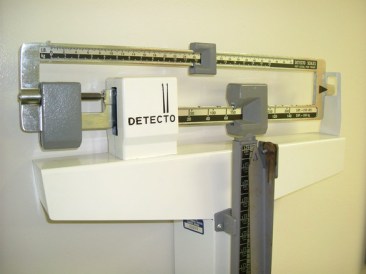
torpedo-1240955Did you ever experience something that affects you so much that  you remember if forever?  I remember Nancy (not her real name), a sweet middle aged mother who had come to me for help with binge eating (and she wanted to lose weight). If you saw her, you would never know she had any eating or weight concerns. She certainly did not look like she needed to lose weight. She had always been a yo-yo dieter, gaining and losing some weight over the years, but bigger troubles emerged after starting Weight Watchers. She would basically restrict herself before her “weigh ins” when she went to her meetings, which meant eating even less than the diet called for.  All she thought about was the reaction she got after stepping on that scale. She just had to get through that minute. If the number did not go down, she felt like a failure (the fact that they let her into a weight loss program with her weight scared me, but maybe it is different now?). Anyway, Nancy would leave her meeting with relief, proceed to the grocery store or fast food place and binge eat. All day. Because she did not have to be weighed for another week. And then she would purge, feel terrible, depressed and like a failure. But she would be back on track again a day or two later, just to repeat the process. She was stuck in the Weight Watcher’s trap, hold, spell, whatever you want to call it. Unfortunately, Nancy was not the only WW casualty I encountered in my private practice. There were many more. Not all of them developed the eating disorder bulimia, but they all never learned how to eat healthily and happily. Some would lose weight, but then have no idea how to transition to a “real life” without “points”. It was the counting of the points that drove my patients to a place that was not good. After losing weight (by eating less, points, calories, counting carbs, it is all the same) there was no where to turn. What next? The patients I saw did not know and so either gained weight or transitioned into an eating disorder.  Not all people who diet or follow Weight Watchers or count points develop eating disorders. I have known many friends and acquaintances who absolutely love the program. “It works!” they say. Every year, even after they have regained the weight again. Some people even maintain their weight loss for longer. But inevitably (in my experience, with the people I know), the weight is regained, there is a period of living “Outside of diet jail”-how I refer to it. Diet Jail is when someone is following a diet. When they can’t do it anymore, they break out, eat what they want, forget about it for awhile. They eventually remember the “success” (????) with Weight Watchers. They DID lose weight and they felt great. So they start again. I think people believe each time they restart the diet that it will be different. What I have seen (and I can only speak for myself, my experience with patients and others in my life) is that if fails them. They do not learn about themselves in any meaningful way.
Which brings me to something that I really wanted to share with you before you might read it in the news.

You are going to be hearing about a new study on  Weight Watchers  which was published on line in the American Journal of Public Health on February 18th. As with most studies, when they are publicized in the news (usually one dramatic blurb that catches your attention, such as “wine is good for you! chocolate is good for you! Caffeine is good for you!”) we believe it. Because we want to. Most people don’t have any inclination to doubt “research”, it sounds so scientific, it has to be right. So with Weight Watchers, I wanted to fill you in a bit (yes, as you probably noticed, that program leaves a real bad taste in my mouth). The Nancys of the world are the reason I am not a fan. But for now, let’s talk briefly about the study.

The study was conducted by researchers at Indiana University School of Medicine. The objective was to compare WW with another program to find out if it was as effective in promoting weight loss and improvements in metabolic outcomes such as Hemoglobin A1c. It was comprised of 225 subjects (with prediabetes) and was a randomized controlled study (that part is good). The results were good for WW in that their groups had better weight loss and metabolic improvements that were maintained for 6 and 12 months compared to the other program. The negative part (and what people don’t always know) is that the study was funded by Weight Watchers, according to this LA Times Article . The abstract of the research article is available at the link to the Study , and although the entire article is not available unless you are a member or you pay for it, you can clearly see (if you check out the Study link) that two of the researchers are from Weight Watchers. Most would consider this a conflict of interest, and this happens sometimes, but it is ok as long as it is spelled out (and it is). You can make up your own mind, but to me, if a company who is selling a product is involved in the research evaluation the product, as well as the way the article is written, it just bothers me. In this case, the researchers from the university are clearly respected and that helps, but to me, it would have been better if WW were not involved in any way.

The second thing that bothers me is the sample size and length of follow up. Yes, the results were “significant” statistically, but in the real world, 225 people from Indiana is just a start. The study needs to be replicated over and over to really mean anything. And the 12 month follow up is really NOT a long time in the world of weight management. True story: when I was doing some research for a PhD back in the day my adviser would not approve my project unless I did a 2 year follow up. As it turned out, the program that I was a part of was discontinued and I was going to have to start over (ugh). I ended up going back to my normal job and never finishing due to the fact that I just did not have another 2 years. But is always stayed with me, the length of time truly needed for weight management results to mean much (to me anyway, and to many others). It is good news that diet and lifestyle changes can help prevent diabetes and reverse prediabetes. You just don’t need to spend time and money on a program to do it.

Another thing that bothers me about the study is the motivation. According to the LA Times article (link above) Weight Watchers  “was trying to get its system of counseling and motivational goals certified as a diabetes prevention regime by the government, which meant it had to develop data”. I am a little conflicted about this because on a positive note it would be more likely for insurance to cover the program if it is approved, but on the other hand, I hate the thought of even more people counting points.

Which brings me to the real reasons I am not a fan of the program. Years ago, the Weight Watchers program was different,and the issues were different. It was focused on the number on the scale, and labeling food as “legal” or “Illegal”or something to that affect. It instilled guilt with foods, and feelings of failure (especially at weekly weigh ins). But at least back then it was a simple and balanced “diet”, not too overwhelming, and perhaps some people learned they needed to eat three meals a day with all of the food groups included. But now, this point system is just plain overwhelming. I am good at math, but when it comes to food and eating, who can sustain figuring out some mathematical system of adding up points for very long? Yikes. Another REALLY bad consequence is the way the point system contributes to binge eating.  I believe people who count points know they are supposed to spread out their points over meals and snacks. Do you really think a typical dieter or person who tends to overeat or even binge is not going to be tempted to “save up” points when they are going to a party so they can eat more? What does this teach? It is the same bad habit many dieters have: restricting during the day and then overeating later. Does this teach a healthy lifestyle? Do you really think this is going to help someone to get more in tune with their hunger and fullness so they actually learn to prevent overeating and binge eating by just eating “normally”? No. Counting points is just like counting calories (just a bit trickier, a new gimmick, and dieters love gimmicks). It is a form of “cognitive restraint” which I have talked about before. When you use your “head” to figure out how much to eat, you get disconnected from your true body signals. Those signals that help you be the weight you are supposed to be (yes, there are those who are prone to binge eating especially on foods high in fat and sugar, but I am referring to the typical dieter who only became obsessed with food after dieting).

So when the weight is lost, then what? A normal “healthy thinking” person is NOT going to be able to keep counting points. They are not left with much else to transition to. Any person I have ever known who has been successful with weight management has taken the time to really reflect on what has changed in their lives to make them gain weight beyond what is normal for them. It is different for everyone. For some, they gave up a sport when they started working. For others, they started making money and going out to eat and drink more often. Or maybe they took on a new job and stopped going to the gym. Maybe they went through a divorce and became depressed. Or they moved out of their parents home and started to stop for fast food because they don’t know how to cook. It could be mindless eating they have gotten into the habit of (eating in front of the TV or at the computer). It could be a million things that affect our bodies and our health. Counting points, or calories, or even following the Hot Dog Diet will result in weight loss. But that does not mean it “works”or fixes anything permanently. What “works” is taking the time to reflect on your lifestyle, then making the tough decisions as to what changes you want to make depending on what unhealthy habits or lifestyle patterns you have fallen into. You might want to seek out professional help from a Registered Dietitian or even a therapist if your eating issues are rooted in a psychological or emotional issue. You may not see the fast results a diet or diet program can offer. But a year from now, or two years from now, you will be happier and healthier.

In case you did not notice, Weight Watchers recently came out with a television ad with Oprah as the new face of WW. This helped boost the stock at first but just like dieting according the the LA Times article, it did not last long. Check out Dare Not To Diet for some great insight by the experts on Oprah and Weight Watchers.

Anyway, I covered the “bad” and the “ugly, so what about the “good”? I actually think Weight Watchers has some pretty good recipes (I have friends who have brought over yummy healthy dishes, and they were happy to brag “weight watchers recipe!”). I wish anyone who decides to go on the program and count points figures out how to take the good things (like healthy cooking) from the program and leave the rest.  Everyone is different, and if someone loves Weight Watchers, I just wish them luck. We all need to learn from our own experiences.

But please think about it. If you did it before, and regained the weight you lost, did it really “work”?


The Academy of Nutrition and Dietetics (AND) New Position Paper on Interventions for the Treatment of Overweight and Obesity in Adults

scales-1536960I like to share the most recent news regarding anything to do with weight loss or dieting. Every month I receive the Journal of the Academy of Nutrition and Dietetics (AND) which used to be the American Dietetic Association (ADA). It was hard for me to get used to the new name as I am an older dietitian and for a few decades it has been ADA to me. Anyway, the journal always comes because I pay my fees and it has lots of articles, mostly research (not always interesting to me, I have to admit). But I just love when they publish a new Position Paper because many dietitians have reviewed years of research (not the most fun thing to do) and then let us know how we should do our job. As a Registered Dietitian, I don’t have time to do that ( FYI a Registered Dietitian is an RD or RDN, Registered Dietitian Nutritionist, a newer designation I think recently added because people like the word “nutritionist” better than dietitian, and anyone, yes anyone, can call themselves a nutritionist, but only those of us who have gone through 4 years of college as well as a clinical training or internship and then passing a national exam can then call ourselves a “dietitian”). So when you are seeking advice about nutrition you really need to talk to an RD or RDN.

So I love Position Papers because it saves me all that reading of research which I do enjoy but takes time. Anyway, the new Position Paper on treating obesity that just came out was to update the last one of 2009. I wanted to share with you the important points just so that you know what the research says. For many of the questions there is not enough research to prove anything. So I am going to briefly summarize what I think you may want to know. I am a bit disappointed because the non-diet approach was not addressed. I also do not like that weight loss was the focus and we all know that an “obese” BMI (Body Mass Index) does not mean someone is unhealthy. This is where I think it gets hairy. There are so many other factors that are so much more important such as lifestyle, genetics, etc. that affect health. So I just hate that everyone thinks a certain BMI indicates a problem.  What I have seen is that people tend to have a normal weight for them but sometimes their lifestyle and habits change, they may yo-yo diet, or become sedentary, have unhealthy lifestyles, gain weight above what their bodies really want to naturally be, and then yes, there may be health consequences. Dieting is not the answer but identifying those unhealthy lifestyle changes and working on those is the answer. Weight slowly will return to what is normal for them, and then health parameters typically return to normal too. For example, I have seen adults who maintained a certain weight for most of their lives, gone through some life change where they became more sedentary, gained weight, and had an increase in cholesterol level. When they added back their normal activities, eventually they would lose the small amount of unnatural weight gain and blood levels returned to normal.

Anyway, here is the take home messages I think people might want to know:

  1. Reducing sugar sweetened beverages (SSB) does result in weight loss. I am all for decreasing soda in your diet because it really does not add anything. On occasion, fine. But as a daily thing (and I have had patients who get in the habit of drinking a liter a day) well, that is just a bad habit. Have a soda on occasion if you love it, but if it is a habit, it may be a good one to break.
  2. Very Low Calorie Diets (VLCD) did not produce any better weight loss in the long term compared to the typical low calorie diet. I do not promote counting calories at all, or any restrictive diet. However, I know people do it and so I want to be sure you know that going below 1200-1600 calories is never a good idea.
  3. It does not matter if you focus on fat or carbohydrates or anything else. “Macronutrients” are protein, carbohydrate and fat. Many diets focus on restricting “carbs”, or fat or focus on protein. None of these extreme diets work better than just focusing on being healthy. Yes, some of these diets may have some beneficial health benefits (the Mediterranean Diet was mentioned and that it may improve cardiovascular risk factors such as blood pressure, blood glucose and lipids) but that more research was needed.
  4. Eating frequency and timing of eating: as it turns out, there just is not enough research to demonstrate that eating more frequently promotes weight loss. However, there is evidence that eating most of your calories earlier in the day improves weight loss outcomes. And although there is not enough research on breakfast consumption and weight, it does seem to be clear that if you want to be your most healthy weight then you need to eat more during the day. Think about it. I know I have seen many patients who try to restrict all day long and then only end up overeating at night. It makes sense. So eat a good breakfast, enjoy a great lunch, have a snack in the afternoon and then, when you are ready for dinner, you won’t be starving. The research proves this is the best way to have a healthy body.
  5.  Physical activity  was another intervention mentioned, and a very important one. I loved that the paper stated that “physical activity interventions may assist in weight management via mechanisms that are not well understood”. In other words, it is not all about “burning calories” which is one of my pet peeves. I just hate when people are doing something really fun and then say something regarding the calories they are burning. Doing fun things like hiking or swimming or biking or just walking with a friend are so good for you in so may ways. I just want people to embrace the pure joy of moving and how good it feels. Yes, your body will get stronger and you will feel better with more moving in your life. And yes, you may like the way you look when your body gets stronger. But it is so much more than that. The Position Paper did mention some specifics. The recommendation was to encourage 150 to 420 minutes of physical activity a week (depending on intensity and medical contraindications). So that just means 30 minutes, 5 times a week (also mentioned was that 10 minute increments were acceptable), or if you are going for the upper limit, 420 minutes translates into an hour a day. That sounds like a lot to me and I am pretty antsy. My advice: start where you are. Do what makes you happy and feel good.
  6. Reducing “sedentary behaviors” was addressed. This means decreasing things like “screen time” or TV, videos, computer, etc. It appears there is insufficient research to show if this is something we should focus on. From my experience, I like the general recommendations, especially for kids, to limit this to 2 hours a day. I think all of the great technology (which we all love) does make it easier to sit…and sit….and sit…So being aware of how much sitting you are doing is a smart thing. For instance, tonight is the first American Idol of the season. I am taping it. I could easily get addicted ( I love that show!) But I do not want to be tied to the TV and so by recording it I will be able to watch it while doing other things (like folding my laundry this weekend) and can fast forward through the commercials. Enjoy your screens but it is smart to be aware.
  7. Computer based and e-health interventions: the use of the Smart phone was addressed, and the fact that there are many apps that can be helpful in eating healthy. Also, many dietitians are starting to do coaching over the phone or skype or facetime, etc because people really do want the one-on-one individual help but don’t have the time to travel to an appointment. It is the future of healthcare, and dietitians have joined in providing this service. Research is needed to see how effective e-health interventions will be.
  8. It is important to use other interventions such as Cognitive Behavioral Therapy (CBT) as well as increasing mindfulness when it comes to promoting healthy eating. The paper addresses a variety of behavioral and psychological interventions that are helpful and makes it clear that merely prescribing a “diet” is not enough. We need to do more to help our patients.
  9. Medications and Surgery: the paper does address some medications as well as bariatric surgery (gastric bypass, sleeve, gastric banding) and reviews some of the side effects of both. The point is made that dietitians need to work with a multidisciplinary team to support the patient. Medications and surgery are not for everyone. I have to admit to being very opinionated when it came to both of these interventions. I am not a fan. However, after working in this field for so many years, and especially learning more about individuals with metabolic and genetic disorders, I have changed my opinion. I believe everyone is different and we should never judge. I have learned that reputable bariatric programs promote healthy eating and lifestyles first. Surgery is not a magic answer and it is not an easy road. People have to make really hard lifestyle changes.  They can’t have surgery if they don’t make the changes. It is not easy. Anyway, only your doctor knows if you are a candidate for any of these pretty drastic measures. I promote a healthy lifestyle to be the best you can be. But sometimes, people are successful with making changes and it is not enough and they still have health issues that can’t be resolved. Please don’t be judgmental of anyone with weight issues who are just doing the best they can.

The Position Paper also discusses policy level interventions as well as the scope of the dietitian and the importance of working with other professionals to support our patients (such as psychologists, physicians, therapists, school systems, etc.). The bottom line message to me was that we still have a lot to learn. Our health behaviors are very complex and depend on our environment, habits and psychological make up. Our bodies and lives are all different, and YOU are the expert on your own life. Being healthy and feeling your best are good goals to have, but there is no “one size fits all” when it comes to eating.

For more information, visit the Academy of Nutrition and Dietetics website at http://www.eatright.org


Blood Sugar and Willpower: Taking A New Look at New Year’s Resolutions

cheers-1443534 First of all, I need to be honest, I don’t believe in New Year’s Resolutions (for myself anyway). But I know that a majority of people make them (over 75 percent of Americans) and most people, after a few months or so tend to give up (if you have ever belonged to a gym, you know what I am talking about). The resolutions some people choose are never that easy to keep. Since most of them focus on health issues or eating/weight loss and exercise behavior, I felt obligated to share my opinion (and experiences).

There are many reasons people are not successful with their resolutions, and there is disagreement as to what makes some people more successful. It has nothing to do with “willpower”, a word I don’t use because it insinuates some of us are “better” than others while others are “less than”. When it comes to behavior around eating, some individuals, due to their genetic make-up (the way they were born) get full fast, and consequently don’t tend to overeat (nothing to do with their character). Others just do not get that message to their brains (again, due to their genes, and not because they are weak or have no willpower) and so may need to eat more to feel satisfied. Other factors affect eating behavior of course, but that is one example of why willpower is not my favorite word. For more details, check a previous post for a review of  Willpower

Anyway, while researching the topic of resolutions, I stumbled upon an article published in the Journal of Personality and Social Psychology (2007, Volume 92, No.2, 325-336), “Self-Control Relies on Glucose as Limited Energy Source: Willpower More Than A Metaphor”. The researchers investigated an important point that most people aren’t aware of: self-control processes act as if they depend on “some type of a limited energy resource”. The article reviewed previous research providing evidence that a single act of self-control (for instance, resisting dessert) uses up a limited energy source that makes it difficult to be successful at any other attempt at self-control.

The researchers hypothesized that glucose was the energy source that our brains have a limited supply of, and that the brain uses more energy (glucose, or blood sugar) with an act of self-control verses performing cognitive tasks. Participants in the research were college students, and nine different experiments were performed with different groups to test out various conditions (specifically, “the major goals of this investigation were (a) to establish that blood glucose levels are reduced from before to after performing an initial self-control task and (b) to show that low levels of glucose after a first self-control task predict behavioral deficits on a second self-control task”). In other words, when your are trying to resist something, you use up a lot of brain energy, and if you try a second time to resist something else, it gets harder and harder due to the fact that you have no energy left.

The experiments that were conducted challenged subjects in different ways. For instance, in just one part of the study subjects were asked to watch a video of a woman talking with words appearing under the video which the participants were supposed to use “self-control” and avoid reading. Challenges such as this were then followed by different challenges, with glucose levels monitored. In other parts of the study, glucose was provided in the form of a sweetened beverage (with a placebo of an artificially sweetened drink) to see if this had any affect.

Findings from this study supported the hypothesis that self-control depends on glucose. As reported in the article: “First, measurements of blood glucose showed significant drops following acts of self-control, primarily among participants who worked hardest. Second, low glucose after an initial self-control task (e.g., emotion regulation) was linked to poor self-control on a subsequent task. Third, experimental manipulations of glucose reduced or eliminated self-control decrements stemming from an initial self-control task”.

What does all this have to do with your New Year’s Resolution?  The bottom line is that expecting yourself to have enough “willpower” or self-control to accomplish a bunch of resolutions is not only psychologically challenging, but probably physiologically impossible. The fact that it takes more energy (glucose) to use self-control means that you easily become depleted if you take on too much.  And this is just one of the issues why making too many resolutions is not a good idea. Instead, if you insist on making a new year’s resolution,here is some simple advice. Some you may have heard before, but well worth repeating:

  1. Don’t set yourself up for failure. Instead of biting off more than you can chew (“I am never eating junk food again!”) pick just one thing that has been gnawing at you. For example, do you always complain about lack of sleep? Or eating fast food because you don’t know how to cook? Or do you truly live off of fast food and have the indigestion to prove it? Instead of making an “all-or-nothing” decision which I can almost promise will set you up for failure (not good for either physical or psychological health), start small. Make it doable. Cooking a healthy meal even one night a week is a success that you will feel good about.
  2. Keep it positive. Don’t use “negative” words. Instead of “I am NOT eating this or doing that, how about “I am going to……add a fruit to my lunch. Take a karate lesson. Walk to work. Taking away too much is not only negative, it tends to make you feel deprived and makes you want the forbidden whatever even more.
  3. Don’t talk about it. Many people will disagree with me. Some people feel that if you tell everyone (or someone) that you have a goal that you are more likely to feel accountable. Really? It doesn’t sound right to me (and would not feel right to me anyway) to care about what anyone thinks of me or my health habits or lifestyle. I want to sleep better because it makes ME feel better. Plus, if you tell someone, or make a big deal about it, what if you don’t accomplish what you set out to do? Even the people you share with will feel uncomfortable. They likely don’t want you living up to their expectations either. Do what you want to do because you want to do it. On the other hand, there are some people who truly do love and need the support of others. This is different. If you are happy sharing, then do it. And if you need support, and have good friends or family who truly are supportive, go for it. Having healthy and supportive people around us can be inspiring.
  4. No numbers. I just hate numbers when it comes to health. People get all wrapped up in numbers and I just don’t think that is healthy at all. It takes all the fun out of some really healthy things. Take physical activity for example. It can be really enjoyable to go for a walk, or a hike in the woods, or even to jog slowly around a track and daydream. When you have to count the laps, or measure the miles, or time your speed, yuck. It just is not fun.Yes, there are exceptions, those people who just love numbers. Some people thrive on competition and all of that. Those aren’t the people I am talking about. It is the people who start something but then stop because they can’t accomplish the number. Yes, a “smart goal” is specific, but that can mean making a goal of getting outside twice a week. It does not have to be something ridiculous. The same holds true with eating. It takes the joy out of meals and food, and disconnects you from what your body needs. The number on the scale is also pretty useless when it comes to health. I have known many individuals who have succeeded in bringing down blood pressure, glucose levels, and others who have taken up a sport and gotten fit, but then stopped just because the number on the scale stopped moving down. Why not skip the number goal and just focus on the health aspect?
  5. Pretend it is not January 1st. Really. Yes, it is great to reflect on your life and health and want to make changes that move you in a better direction. But you can do that any time. June, September, your birthday. Actually, our lives change more than once a year in one way or another, and it is important to readjust sometimes. Getting into the habit of even just caring about your health is much more important than picking some unrealistic and extreme resolution on January 1.

So there you have it. No resolutions for me! As I get older, and my life (and body) change, my focus on figuring out how I can feel my best, be my healthiest (physically AND mentally) and live the longest fun life really doesn’t change. I hope you consider a focus on health too.

Here’s to a Happy Healthy New Year!!!!!!

Can YOU Make the Pledge? No Diet Talk for the Next 2 Weeks

IMG_3720The month of December is typically a time of joyful craziness. Young parents are scrambling to get everything on a child’s Christmas list, co-workers are organizing cookie swaps, friends are wanting to get together to make a holiday toast, toy drives and food drives are happening, the malls are insane, and on and on.

But something else is also occurring at this time of year. People are thinking about their “New Year’s Resolution”and at the top of the list is anything to do with losing weight and/or getting fit. Besides all the energy given to the fun stuff, some people are spending a lot of time thinking about and talking about how they want to change their bodies. Sometimes, the talk occurs because of a recent medical diagnosis, such as newly discovered diabetes or hypertension, or even elevated liver enzymes where it is important to make dietary changes. This is not what I am referring to. I am talking about those people who have spent much of their lives focusing on their weight and body size.

The things I hear come out of people’s mouths at social gatherings probably irritate me more than most (such as my husband) because of my work experience with individuals suffering from eating disorders, especially teenagers. Our culture’s focus on bodies has made it acceptable to promote disordered behavior around eating and exercise. Conversations  abound regarding how to lose weight, diet products, and even how to supposedly mold specific body parts into your dream “whatever”.  When young people hear adults (especially parents) discussing these things,  it becomes clear that trying to achieve weight loss and a certain body size is a good life goal indeed. Is this really what we want our children to grow up with as an ideal that is important enough to take up all that time and energy?  It makes me so uncomfortable when an adult is talking about their own body or dieting in front of young adults or children. I typically change the subject, or at lest try to. And it is not just children who are affected by this type of talk. Adults struggling with eating issues and weight are also affected in ways you may not be able to understand. One of the big struggles some of my patients experienced was having to convince themselves to stay on track with their recovery despite what felt like the entire world was doing around them. Why was it important for them to continue eating their meals and snacks when clearly it was alright for everyone else in their lives to restrict and diet? It would take a lot of work to help a patient get grounded again and fight the eating disorder voice that tortured them.

Besides focusing on their own dieting and weight goals, another topic of discussion is OTHER people’s bodies. My husband does not get it (he is an engineer and not at all familiar with a non-diet approach or the great divide in the professional world of weight management). Why would you not tell someone how great they look if you have not seen them in a long time and they lost a lot of weight? Won’t that make them feel good?

The problem is, you don’t know what they did to lose that weight. I have known countless patients who dread the holidays because of the focus on them and their bodies. Again, it gets confusing. For example, a young woman I worked with had finally been successful with gaining enough weight to stay out of an inpatient facility. She had stopped purging for several months but did not gain enough weight yet to restore herself back to her normal weight and was not menstruating. At her holiday family party, those who did not know what she had been through (and was continuing to work on) made the usual comments about how great she looked. Those who knew she had gained weight with much hard work complimented her on that too (also not good as this almost always makes someone who is recovering feel “fat”). Those who knew nothing of her ordeal told her she looked great with all that weight loss and “how did you do it?!”. Ugh. After the holidays and all of these conflicting messages, the work is never easy to get back on track.

With that said, you may know someone who you know for sure had been working hard to change habits and get healthy. Doing things like quitting smoking, taking up physical activity, eating more vegetables and learning how to cook healthier does result in weight loss for some. Instead of focusing too much on their bodies, giving praise or positive feedback for the healthy changes is different (“You must feel so good! You have so much more energy, that is great! Your blood sugar is back to normal, yay!)

So this is what I am asking you to do: Make a pledge.

  • Please pledge to try to recognize dieting and body talk.
  • Pledge to catch yourself doing it.
  • Pledge to stop doing it in front of children or young people.
  • Pledge to try to stop doing it constantly even with close friends.
  • Pledge to (try to) change the topic when others are doing it.
  • Pledge to avoid commenting on anyone’s body, especially someone you don’t know well because you will never know what they are going through and how it will affect them.

Thank you! Here’s to a wonderful holiday season and remembering what the season is about……


My Tips for Holiday Happiness

IMG_8074
New Tradition: The Funky Tree

I remember way back in the day when I was a child visiting my old Italian Grandmother at Christmas time. She had this tiny fake table top tree on a coffee table. Yes, it was lovely, but I thought to myself “how can anyone settle for such a small fake tree? I will never do that!”

But now I understand. I love traditions, but as time passes by, children grow up, time is short and priorities change, so do traditions. Sometimes these are hard to give up. The tradition when I was growing up was for my mom and her sister and two brothers and all of their kids to go to Great Grandma’s (small) home and have Christmas (25 people in addition to random great aunts and uncles and cousins who might stop in). There was always a gigantic fruit tray covered with dates and figs, nuts and chocolate along with all varieties of Italian food. We kids would be all over the place, climbing on couches and under tables, eating and laughing. As the years went on, Great Grandma passed away, and new traditions evolved.

After I had three children and a home of my own, I took it upon myself to have a gigantic family “Open House” the Saturday before Christmas. This way, my siblings (who also had children) and I could be home with our families Christmas Eve (easier for Santa Clause).  Because most of us were struggling financially, we totally eliminated buying gifts for each other and instead, for this party, everyone bought a 10 dollar gift for their children, wrapped it and stuck it in a Santa Clause bag that was kept hidden. After much talking, eating and holiday music Santa would arrive with fanfare! He would be loud with his HO HO HO (since he was a professional who my aunt was able to get due to the fact she hired them for the malls…one year even I was almost fooled). Santa would take out the gifts one by one as each child would go and sit on his lap. We would gather around, the adults almost as excited as the kids. Since everyone brought a dish or dessert, and no one needed to bring gifts except for their own child, it was a simple yet wonderful night filled with all of the important things: family, fun and love.   Since then, our children have all grown up . Many of them are in their 30’s with children of their own. Some have moved out of state and can’t afford to fly home every Christmas. Yes, times have changed. And so have the traditions.

I continued to have open houses however not everyone could attend. One year we decided to look for a retirement home in Naples, Florida (not that we are ready to retire, but prices were low at the time). We ended up purchasing a lovely condo with a “Lazy River”Pool that is fantastic. We are able to rent out the condo for all of the winter months, but for the last 3 years have gone down for 2 weeks over the holidays. At first it was hard because I felt guilty leaving the one daughter who still lived home in CT as well as missing seeing my parents and siblings who still get together at Christmas. Because I still had my “Open House” or at least a family holiday dinner the week before we left, I still had that feeling of connecting with family that I needed….just not on the exact day of Christmas.

Now, I count down the days to fly away! Last year two of our daughters were able to join us and that was wonderful. Thank goodness for Skype and Face-time because I was able to “see” my son in Colorado and my parents and family at home.

Even with all of the ways we have changed, and even simplified the holidays, this time of year can still be draining. Besides accepting that traditions are bound to change a bit, there are other things that interfere with enjoying this season that I think we all struggle with. These are my top issues and how I have learned to deal with them:

  1. Making everyone happy. I remember when my daughter was about 7 years old and wanted this walking barking toy dog. They were all the rage….and no where to be found.  My friend asked me if I wanted to drive to the next state because she found two there in some store. I declined. Where do you draw the line? If she does not get the walking barking fake dog, will it really ruin her Christmas? Instead, Santa left a note that he ran out but he would send some money to buy one if she still wanted one. A week went by, she got to see her friend’s walking barking fake dog…came home and said “I’m glad he ran out. I don’t want one”. What makes your family happy? YOUR happiness : )
  2. Baking the traditional cookies for everyone so they will be happy. This may only be my issues (probably because making the same traditional cookies allows me to reconnect with my family, and all of those great memories). The fact is, I do not like baking. It has to be cold and dark, and maybe with a candle or two lit. Snowing is better, and conducive to baking enjoyment. It rarely snows when I have to bake. I need to send out my cookies to Colorado and Austin and South Carolina, so I need to get them done. I have learned to compromise. I no longer bake every single cookie. I no longer make 92 dozen. One small container per person will do. I need to fight my Italian instinct that more is better when it comes to giving people food. They truly don’t care. It is the thought that counts.
  3. Getting gifts for important people in your life to show you care, when you don’t have extra money lying around. My close friends and I no longer exchange gifts. Instead, we go to Happy Hour. There are still people however that means something to you, maybe a special co-worker or even just the mail man, or your hair dresser. Yes, I may give a cash gift (especially if it is your hair dresser who you have known before your hair turned gray). Otherwise, I like to make what I call “White Chocolate Crunch”. This is a yummy mix that can be wrapped in those small cellophane holiday gift bags, tied with a ribbon, and good to go. A batch might make ten gifts. Here is the recipe that I found in a newspaper while waiting for my snow tires to be put on a few years ago: Melt 3 (12 oz) bags of white chocolate chips on low. Stir in 3 cups of cheerios, 3 cups of rice or corn chex, 3 cups of pretzel sticks (thin), 2 cups of raisins, 2 cups of peanuts, and a large bag of M and M’s. Mix well. You can add more or less of whatever you want. Spread on wax paper and cool completely. It is the best.
  4. Parties. Happy Hours. Too many social events with people that you want to see but you don’t always have the energy for. Don’t get me wrong, I love parties and happy hours, talking and sipping wine and catching up. But not when I am exhausted. Unfortunately, I have had to decline a few happy hours, and had to leave one of my favorite annual holiday parties early because I am fighting a cold. It just is not worth it. So, my advice is, as usual “listen to your body”. Just say no. Your good friends and the people that matter will be just as happy getting together in January.
  5. Taking care of your health (sleep, eating, fun moving, etc) when time is flying. Even though our schedule is busier, with more to do than usual, our bodies still need to be nourished with food, sleep and movement. Our diets don’t need to be perfect, we may not get our usual sleep, and our exercise/physical activity patterns may change for a month. It really does not matter much unless it is extreme. Are you missing meals or living off of cookies? are you drinking too much Wassail punch and not enough water? Are you staying up to the wee hours so all those packages can be wrapped perfectly? It is wise to look ahead at your week and weekends and be prepared. Plan to get to events early so you can leave on time and get to bed at a reasonable hour. Bring water or other non-alcoholic drinks to parties so you can stay in balance (or just know your limits). Don’t forget to buy your usual lunch food for work, food for dinner (even if you have to buy ready made food such as a rotisserie chicken) so that you don’t miss meals for the simple fact that you were so busy getting stuff done you forgot to buy food. Maybe you have too much to do and can’t get to your Zumba class, but you still deserve a break such as going for a leisurely walk on a weekend when you may have more time. On the other hand, if you have been shopping and cooking and cleaning all day, don’t try to get in visit to the gym just because you feel that you should. Listen to your body if it is exhausted. If is it not going to be rejuvenating, but will only serve to exhaust you more then skip it.
  6. Christmas Cards. I know there is some kind of rule that you only need to send holiday cards out to people who send them to you. I love getting the cards from old friends and others, but I just honestly don’t love doing cards. I love making calendars though from the hundreds of funny pictures I collect throughout the year. So I may make a funny calendar for someone, or a funny card….or not. I used to feel like it was a job, an obligation, but not anymore. I don’t think people care. I know I don’t care if  you send me a card. I just want everyone to have a happy and healthy holiday. But like I said, I may send a funny calendar, it just might not be on Christmas…                                                                                                                                                                                                                              So, that Funky Tree you see at the beginning of this post…..our new tradition started several years ago. Since we now go to Florida we can no longer have a real tree, so we purchased the funky tree which, you guessed it, stands on the table. Whenever we travel we keep our eyes open for the silliest funkiest ornament we can find (hippo on skies, Santa on a Hammock, etc). Each ornament carries a special memory….we love our little tree and everyone else has grown to love it too. So yes, traditions change, holidays are stressful, but, if you take the time to keep it simple, this time of year can be as special and meaningful as it was meant to be. Happy Holidays!
  7. IMG_8078
    Santa Clause……