
How Many Calories Do You Burn with Exercise? And Why it is a Waste of Time to Think About it.

IMG_7743That’s my bike. My husband was away for a week, and with nothing much to do after work, I decided to take advantage of a half day, warm weather, and Fall in New England. I planned to take a spin on my bike on a great bike trail near where we live in Connecticut. I packed my camera and a water bottle, threw my bike in the back of my Subaru, drove a few towns over, parked, and started my adventure. Because it was a weekday and early afternoon, I was alone on the trail. The trail winds through several rural towns with corn fields and rolling hills with trees bursting with color everywhere I looked. I was beside myself with joy. I was out there for 2 hours, but had stopped a dozen times to snap pictures. One of a duck on a pond where the reflection of him and the trees around looked like a mirror. Another of hay rolled up alongside a field where a farmer was working. It all was absolutely magnificent.

Back in the day, I used to bike very differently. I use to wear those black padded shorts and have bike shoes (I still have them) that clipped onto the pedals so that you could be more efficient and pull your pedal up as well as push down (easier to cover more miles that way). I would do a route during the week that was 20 or 30 miles, with weekend rides that were 50 to 100 miles. It was actually pretty fun, and very meditative.

But now, things have changed. My husband loves the bike trails, and loves to be active, but the first time I biked with him, we stopped many times for tag sales, ice cream, wine tasting, you name it. With those bike shoes clipped onto the pedal, I almost killed myself! I finally put on regular pedals and wear sneakers. I transitioned into a typical biker who just has fun. I love it, too.

To me, except for that extreme road biking where destinations far away were the goal, I have always looked at exercise in a different way than the “diet mentality” would have you look at it. Actually, even with the biking, I really enjoyed myself. It was fun. There was never any connection to eating (although, when I ran out of energy, I often stopped for ice cream, which is a great and fast way to refuel when you are on the road like that).

Today, what I see is treadmills and stationary bicycles in gyms that tell you how many calories you are burning (FYI-do you really think a machine can predict that? Even if it knows your sex and weight, it does not know your dieting history, or your muscle mass, which greatly affects your metabolism). I hear people talk about how they can eat something because they are going to “burn it up” at the gym. At work, when I look for nutrition education materials, I cringe. Just today, I was looking for a colorful and simple handout to teach about healthy drinks for a class I was teaching this morning, and what I found was a handout on the sugar content of certain drinks (ok to educate yourself). BUT it then spelled out how many minutes of walking it would take to burn up the calories! Seriously? I did not use it.

Did you know that exercising after eating with the specific goal to burn the calories is sometimes referred to as “purging with exercise’? It is not psychologically healthy. It is a disordered way of looking at what should be something you do because it is good for your body and also enjoyable.

Are you someone who looks at calories and then tries to figure out what you have to do to burn it up? That is so NOT FUN and also not helpful when it comes to the real reasons we exercise.

First of all, I want to ditch the word “exercise” because people have negative feelings toward that word (I know because I have asked every person who has attended any weight management class I have ever taught). When I ask what the first thing they think when they hear the word “exercise” people say: pain, tired, boring, hate it…..So instead, I like “physical activity”. Or PA for short. PA can be anything and that is why I like it. It can be walking with a friend, it can be going out dancing. It can be hoola hooping. It can be cleaning all day long or mowing the lawn or moving furniture.

We all need PA on a regular basis because that is what our bodies like and need to not only feel good but also to work better. When we move daily we sleep better, we are better able to regulate our appetites (our chemical messengers work better), we release endorphins so our mood is better, and it is easier to deal with stress. We get stronger so that if we fall down, it is easier to get up (or we can help move things, like furniture).  We are more likely to have a normal blood pressure, our “good” cholesterol (HDL-high density lipoprotein) is more likely to be high (which is what we want since HDL is protective). We get skills (such as being good at volleyball or basketball, or being the best dancer, or the best hoola-hooper like I am) and being good at something is very good for your self-esteem.

So, yes, being active is very important for our health, how we feel about ourselves, and our energy level. But, there is absolutely no benefit to knowing how many calories you burn. In fact, if that is what you are focusing on, your are likely to be miserable and eventually hate physical activity. I have found that people who do this (focus on burning calories to lose weight) tend to give up. They tend to stop “exercising” at the same time they “blow their diet”. So if you link physical activity with calories or dieting, you will miss out on all the fun things in life that keep both your mind and body healthy.

Do you think you can let go for even one day of thinking about moving as a way to burn calories? You don’t have to make an “all-or-nothing” decision. Instead, why not experiment with looking at moving in a fun way (something you enjoy) instead of a way to burn calories or lose weight, even for one day (maybe a Saturday when you might have more time?). See how you feel. Then the next time you go to a gym, or look at some device that tells you how many calories you are burning, just say “You don’t know me!” And go enjoy a fun day of moving….IMG_7748 IMG_7738 IMG_7707

Having Your Cake and Eating it too….what to do about “junk food” for you and your family

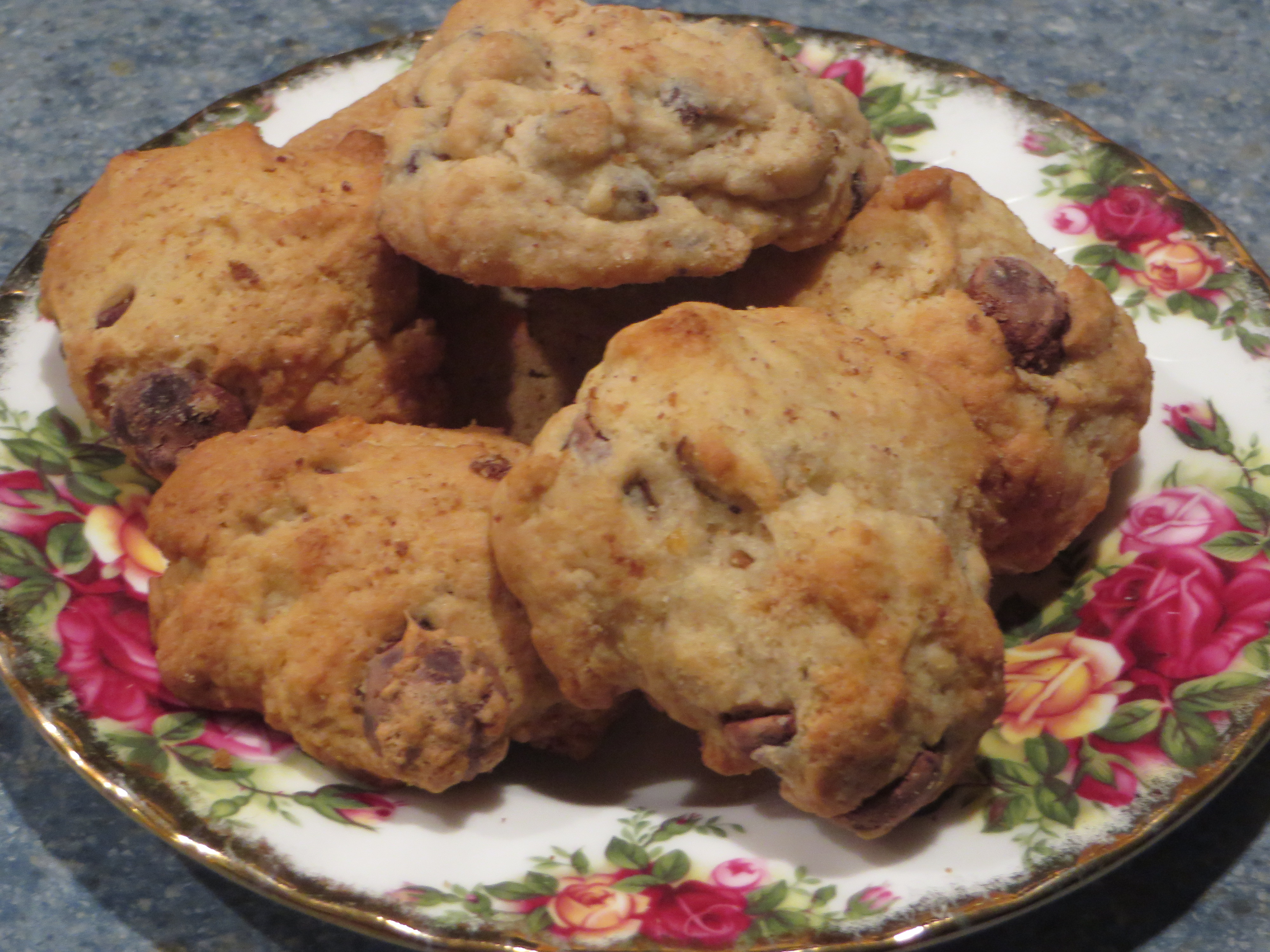
IMG_7692Let’s face it. Do you really and truly think you should live the rest of your life without having a good old homemade chocolate chip cookie? The cookies pictured here were baked by my mother-in-law for a recent family gathering. I was fortunate to grab some that I packed away in a freezer bag for later cookie cravings. Anyway, after a recent post about childhood obesity and the damaging repercussions about an unhealthy food environment, I got some feedback about how children should not be restricted as this will likely contribute to binge eating, and an increased focus on food.

While I totally agree with the principles of hunger-motivated eating and “intuitive” principles of eating, I also know that it is not as simple as it sounds. My husband has always joked when I have said “listen to your body” because his body says to eat the entire bag of Lay’s! Of course this is not exactly true, and I have never seen him consume an entire gigantic bag of chips, however this is an issue that comes up often when “intuitive eating” and “listening to your body”is promoted. What is a parent to do when a child does appear obsessed with whatever sweets are in the home and can’t wait until he or she can get a hold of it? What is an adult supposed to do when they are dieting and truly craving something sweet? or salty such as chips?

We are a culture of “all or nothing” thinking. You have heard it before….the dangers of being “on” a diet, then “off” a diet. People follow the craziest and most restrictive diets for a variety of reasons, but when, inevitably, they can’t maintain the restriction (usually due to a powerful physiological response to starvation coupled with an environmental trigger, such as exposure to a particular food), well, after they break the diet, everything changes.

After having that cookie, or eating a handful of those chips, total mind games take over. The “all or nothing” mindset kicks in and people lose control (who wouldn’t?)

The problem is that if we want to encourage our children to eat healthy, but also don’t want them focused too much on eating and food, then we need to be careful about the messages we send. We want them to make healthy choices, however, we don’t want them to feel guilty about having a cookie. What is the best advice to promote a healthy relationship to eating and especially, to “fun food”? Here are my 5 Tips for Having Your Cake and Eating It Too….

  1. Never withhold food from a child, especially a sweet or dessert, until they have finished the main meal. This serves to reward them with sweets and teach them that something is very wrong with the food they are being served and something is very special about the sweet they are being rewarded for. Instead, let them have the sweet right along with their meal. This bothers many parents because they were brought up back in the day when sweets were used as reward, or withheld for punishment. Many of those brought up this way tend to continue to reward themselves with sweets when they are finally adults and can do what they want. I remember one patient I saw for binge eating. She had gained and lost hundreds of pounds over the years. Her mom used to restrict her to make her lose weight, so when she finally was out on her own, she was all about getting back at her mom and started to use food (sweets especially) as a reward for almost everything. Now as an adult, her mom still made comments about her weight and eating, and it bothered her, even though she was 50 years old.  I remember her telling me after her mom passed away that she still was feeling restricted and it was hard for her to accept now that her mom was no longer alive, she did not have to sneak or get back at her. It still was hard for her as she had been doing this for so long (binge eating sweets). So the message is, beware of restricting sweets or making them special as it will likely mess up your child’s relationship with eating (or if YOU have been restricted, maybe it is time to think about sweets in a different way?)
  2. Pay attention to your child’s reaction around food (and pay attention to your own feelings when food is around). Accept that everyone is different. You may discover that your child has little interest in eating (I see these kinds of kids all the time in the Feeding Team, where children are referred for feeding issues). Or maybe the opposite is true, and your child seems obsessed with food. This sometimes is due to a child’s food intake being restricted, or too much attention placed on a child’s eating or weight. Other times, I have seen it just be that the child simply enjoys food and eating.  Even as an adult, some people seem to be bored with eating (“eat to live”) while others are somewhat obsessed with it, love cooking, love eating, and spend lots of time on it. This is not a bad thing necessarily, however if it is due to previous restriction, or dieting as an adult, then this kind of eating and food obsession tends to come with guilt, not pleasure and enjoyment.  The bottom line is you need to pay attention and accept that everyone is different. If you have a child obsessed with eating for whatever reason, or if you are for whatever reason, then it is important to create an environment where everyone is able to enjoy food and eating, but not be triggered into binge eating. This means having those fun foods on a regular basis because you enjoy them, but not going to Costco’s to buy the mega cookie tray to leave on the counter where there is a child who is not going to be able to stop. Or do what I do, and put them in zip lock freezer bags so you can take out what you want when you want it. No one is deprived and no one is triggered. Yes, I have had patients who are not able to do this as they will binge on them frozen. Know yourself, and do what you need to do to have balance in your eating.
  3. Again, I have said it before and I will say it again. Don’t treat children (or adults for that matter) differently when it comes to sweets, or what foods you allow them to eat. If you want to make sweets or some other fun food (chips, fries) a part of a meal, let everyone, no matter what their weight or body size have it. Don’t make comments like “that is enough”. Let everyone have what they want and need. Encourage listening to your “tummy”. How do you feel? Do you feel satisfied, stuffed, still want more? It is important to help children, and also important for adults to learn how to eat ALL foods in amounts that make them feel good. Not stuffed, not uncomfortable, but good. Satisfied. The only way to do this is to have these foods on the menu.
  4. Talk about being healthy, and not about how “good” or “bad” a food is. I personally think it is ok to educate even children a bit about nutrition. It is ok to say “milk makes your bones strong!” or “this broccoli has lots of vitamins and makes us feel good” or “that has a lot of sugar in it, so we need to brush our teeth so we don’t get a cavity”. But is it not ok to talk about food and weight. Don’t say “cookies are bad for you! If you eat too many you will get fat!” Instead, have cookies as a part of a meal that provides some good nutrition (such as a dinner with meat, vegetables, grains, a glass of milk). It is really amazing how children will not devour all the cookies first as you would expect when they are given in a neutral manner, without judgement along with the rest of a healthy meal. Yes, if you have been restricting sweets, kids will go to them first. But after awhile, they won’t be special anymore. This will work for you, too. Although if you have been dieting or restricting excessively, you may need the help of a dietitian and therapist to guide you. Don’t feel bad if this sounds impossible. For many who struggle with eating disorders, it is. That is why knowing when you need help is important.
  5. Realize as a parent or as an adult, you make the decision about what your food environment will be. You go to the grocery store and you bring home whatever you buy. It is not restrictive or wrong to decide to predominantly have healthy foods in your home. If you know how to cook, healthy meals are really yummy! You are the one to decide if food is left on counters or in cabinets where children can help themselves. Don’t villainize the food, but instead, have it be a part of your normal healthy meals when you really feel it fits (and you want it). We all have our family favorites. When I grew up, ice cream was our thing. We would go every Sunday on long drives in the country and eventually stop at the same farm where they made their own ice cream. We all got what we wanted (I always asked for the green ice cream, also known as pistachio…still my favorite). In my husband’s family it was Grandma Harmon’s cinnamon buns. They are a pain to make, but when my husband does, he makes a lot, and we freeze them. We make them last!

So the bottom line is that it is smart to normalize “fun foods” so they are not so special after all. There is less need to be obsessed with them when they are treated neutrally, and when we get to have them. At the same time, we want to feel good. Therefore, it is smart to have our favorite fun foods as part of our normal healthy meal. It does not mean we need to have these fun foods at every meal. It could be once a day or a few times a week, or even a few times a day. As long as everyone gets the nutritious foods we all need to survive, that is what matters.

Also, it is imperative that we don’t talk about any foods in harmful ways (“this will make you fat”). Instead, talk about how yummy it is and enjoy it. With a focus on a healthy lifestyle (adequate sleep, fun physical activity, balanced healthy eating, relaxation) a normal amount of sweets, chips or other fun foods is fine.

So what is YOUR family traditional fun food?

5 Things You Should Never Do if Your Doctor Tells You Your Child is Overweight


little-girl-1430293
We all have heard it a thousand times. We have an obesity epidemic among our children and we need to do something. Back in July of 2013 when the American Medical Association declared obesity a “disease”, pediatricians took action. If a child’s Body Mass Index (BMI) was equal to or greater than the 95th percentile on a growth chart the child would be labeled “obese”. If the BMI was equal to or greater than the 85th percentile then they were “overweight”. Parents needed to be informed so they could do something about it.

There is lots of controversy about using BMI as a criteria to determine health. To calculate BMI all you need is a height and weight. Unfortunately, although this is what pediatricians use to diagnose and label “obesity”, BMI has little to do with health. Check out this BMI article for some great scientific background on why BMI is not a useful tool.  Anyway, if you are a parent, and you take your child for a yearly check up, you may be informed of your child’s BMI (especially if your child is out of range according to the Center for Disease Control (CDC) growth charts) See CDC Growth Charts.

What should you do if your pediatrician tells you your child is overweight or obese? Here is my advice on what you should NOT do:

  1. Never assume your pediatrician is correct to have any concerns about your child’s health due to his or her BMI. Instead, ask to see your child’s growth chart. Typically, children tend to follow along a curve. So, if your child has always plotted around the 50th percentile for weight, that is their “norm”. If they have always plotted along the 95th percentile for weight, then that is their “norm”. If their length or height has always plotted along a certain curve, the same holds true. Therefore, if a child happens to genetically be on the lower side for height and on the higher side for weight, their BMI may fall into a range that is above normal for BMI. Does that mean something is wrong? No! In fact, I have had several children come to see me who were referred for “overweight” who were actually very healthy and growing normally. One case I clearly remember is a little boy, about 10 years old I will call Johnny. Poor Johnny looked terrified when he came into my office. When I asked what brought them here, he blurted out “The doctor said I am overweight! Am I going to die? Am I too fat?” It was sad to me how frightened he appeared. When I looked at his growth chart, it was clear he was one of those kids who was a bit shorter and a bit higher on the weight chart. He was an athlete who played several sports and appeared very muscular and was definitely very fit and healthy. I had to tell him “your doctor made a mistake! He forgot to look at your growth chart! You are growing perfectly! But let’s go over what you eat anyway so I can be sure you are getting everything you need, ok?” He showed a visual sign of relief as he let out a big breath and sighed. I thought, this is so wrong. This athletic young boy should never have to worry about his weight. The doctor should have looked at the growth chart and known that this kid will probably never have a BMI that falls in the “normal” range and that his healthy lifestyle was what mattered. So the bottom line is be sure to ask your doctor to see your child’s growth chart. If, on the other hand, your child has veered off of his or her normal growth that may be a different story. Sometimes when there are big changes in lifestyle (that are not conducive to health, such as getting a new video game and discontinuing playing outside everyday to sit on the couch and play videos), well, weight can increase in a way that is not normal for the child. In that case, working on decreasing screen time and going back to healthy outdoor play is what is important. Again, working on having a healthy lifestyle is what matters, not the number on the scale, and certainly not a child’s BMI.
  2. Putting your child on a diet. Yes, after getting the news your child is overweight, a good parent wants to fix it. Often, a parent will come to me and ask for a “diet” for the child. Because of all of the cultural emphasis on dieting to lose weight, parents fail to stop and think that these are children, not adults we are talking about. And, the ironic thing is that research has proven that even adults are not able to diet successfully. Dieting leads to binge eating. Why would we think children can do it?Don’t you think if an adult ends up sneak eating and binge eating after restricting that the same thing will happen to children? It will.  Diets don’t work, not for adults and definitely not for children.
  3. Expecting your child to do something you can’t or don’t do. Do you expect your child to eat vegetables and fruits and salad, yet you don’t eat them? Do you drink soda yet expect your child to just drink water? Do you sit for hours in front of the TV yet expect your child to go exercise on the treadmill? Children do as we do. You can talk until you are blue in the face about the benefits of eating fruits and vegetables, and about how good exercise if for your body, but if you have an unhealthy lifestyle, glued to the TV, bringing home fast food every day, then your child is likely to be just like you. If, on the other hand, you have a healthy approach to eating and moving, with a focus on being healthy, then your child will likely adopt the same healthy attitude and lifestyle. This does not mean living on health food and driving yourself into the ground with exercise. It means using a healthy guide such as My Plate to help make your meals healthier. It means taking your child to the park to run around and have fun instead of handing them a video game to sit in front of a screen for 4 hours. It means planning some outdoor play and limiting the use of screens (TV, cell phones, video games) to less than 2 hours a day (yes, it is easier when they are occupied in front of a screen, but not healthy for their bodies if it is excessive). So work on this instead of thinking your child is going to be able to diet.
  4. Treating children differently when it comes to food depending on their body size. This is a pet peeve of mine. When a family says they have cookies in the house, or chips, or soda, because “her brother is skinny, he needs it”, this drives me crazy! What typically happens is the child who is overweight sits there in my office looking guilty. Their head is down, no eye contact. The mom goes on to say how little Cindy is sneaking her brother’s cookies. Mom also caught her sneaking some of her brother’s Doritos. Could I please tell her that she does not need them? Maybe she will listen to the dietitian! So what do you imagine my response is? I whisper (loudly), and look straight at the sneaky little criminal “you know what? I would be sneaking those chips too!” Now at this point, the mom usually looks at me like I am crazy, until I explain. How would you feel if your very favorite food were in the home and yet you were the only one who could not have it? It simply is not fair. Instead, I believe in trying to have a healthy food environment. This means having healthy snacks in the home, not having soda around (since most kids might fill up on it and say heck with the milk). Have soda when you go to parties, don’t restrict it, however be smart about it. The same goes for chips. Make them a part of a meal with other healthy foods (like a tuna sandwich, you really do need a few chips with that). Just because brother Johnny is skinny does not mean he does not deserve to be healthy too. He should also be eating fruit and vegetables and not filling up on soda. Everyone needs to care about health. It has nothing to do with body size. So stop treating children differently depending on their weight. It does not help anyone and it only serves to make the labeled child feel bad. It also usually increases a focus on food and sneaking. This is not a way to move toward healthy eating.
  5. Talk about weight at all. Your child’s weight, your weight, your friends weight. Just stop talking about it. In fact, I would also recommend you have a talk with your pediatrician to request he or she avoid commenting about BMI or weight at all in front of your child. If there are any concerns, ask that they talk to you privately. You do not need your child worrying about weight. This is not a good thing at all and only serves to make them feel bad. Instead, get the details about their growth chart (ask to see it, ask them to explain it and why they are concerned). If your child truly has gone way off of the chart then don’t talk about it. Instead, look at your entire family and the habits you have fallen into. Work on getting more physical activity for the entire family. Look into healthier cooking and less eating out, and other strategies to promote a healthy lifestyle. Seek the help of a registered dietitian by going to Eatright and finding a dietitian in your area. Or check out the My Plate link above and work on it yourself. But don’t talk about weight in front of your child. It is not helpful and will most likely be harmful. Think about it. How would you feel if everyone was watching every morsel that you ate, and pushing you to exercise when everyone else in the family was sitting on their butts playing video games? It is simply not fair.

So there you have it. There are also many things you definitely should do to promote the healthiest body possible for your child. Stay tuned for that. In the meantime, give your child a hug and accept them for the beautiful blessing that they are in your life.

What Do Dietitians Eat?.

IMG_5485When it comes to food and eating, life as a dietitian is kind of weird. I remember clearly when I changed my major from biology to nutrition when I was a sophomore in college. When I went to the cafeteria with the same friends I always went with, I had this feeling that I should be setting some kind of example by what I ate. It is kind of funny, because I really am not a huge fruit fan but I remember thinking I should take an apple because an apple is healthy (not that I was a horrible eater but I really did not want an apple). Another day that week, all my friends were getting ice cream from some truck that only came around once in awhile. I wanted some! I think I lasted about a week trying to make this good impression, but on this ice cream day, I made a decision that it was not healthy to NOT eat ice cream! Way back then, when I truly was not even slightly educated yet, I had the instinct to know it just did not feel right to make yourself eat something you just did not really want just because it was healthy.

These days, after many moons of being a dietitian and knowing literally dozens of them personally, I think I can speak for most when I say we sometimes feel like we are under a microscope whenever we eat. Well, not with close family and friends because they know us and they quite frankly don’t really care about what we eat, they care about much more important things (such as how we are doing with our jobs, how our loved ones are doing, what we did on vacation, when we are getting together again, all that good stuff). It is the people who barely know you, such as extended family or co-workers or other casual acquaintances. Heaven forbid you mention you have to stop on the way home and pick up wings for the game (YOU eat wings?). Another common response: “I can’t believe you are eating that!”   Or if you walk into a break room at work and someone is eating pizza or birthday cake (or some other labeled “bad” food), inevitably the comment is made…..”you aren’t going to like this. You won’t be happy!”  Huh? Free pizza? Not happy?

I think you get the picture. It is assumed that dietitians are perfect eaters and never eat foods that are not considered healthy. It is also assumed by many that dietitians will judge what you are eating.

Let me share my experiences (and these are just what I have noticed) in my 35 years of being a dietitian, working with dietitians, going out to lunch with dietitians, planning parties with dietitians, cooking with dietitians, volunteering in soup kitchens with dietitians, etc.

Dietitians, like everyone else are all different when it comes to their attitudes about food and eating. But most I have met and known  have these things in common (my experience only):

  • they believe health is important and having a healthy lifestyle is important to them (for instance, I can’t think of one RD I ever met that smokes cigarettes. Which is not to say they would judge anyone else if they did).
  • even though they believe in a healthy lifestyle, they are not perfect either
  • they care about people in general and became a dietitian because they want to help people be healthier (be it through working directly with people, doing research on nutrition, or teaching others about nutrition)

When it comes to what and how they eat, I have noticed differences among the dietitians I have known:

  • Most enjoy cooking, some absolutely love it, however some don’t like it at all
  • Most really enjoy social eating and gatherings centered around eating, such as going out for a dinner, having a celebration where you can plan for some great food, bonding over meals, visits to cool places such as vineyards. I have never tasted food as good as our Nutrition Department holiday parties!
  • Although most dietitians are very aware of the nutritional content as well as calorie content of foods, most I have known don’t pay that much attention to it. Instead, they just tend to cook healthy foods that taste good, and eat them. They tend to pack some really yummy lunches that also happen to be healthy (think chicken wrap with spinach, feta and craisons or leftover Mexican grilled shrimp on arugula salad with avocado and tomatoes), but they also don’t mind grabbing pizza from the local really good pizza joint.
  • On the other hand, a dietitian will take a supplement such as calcium and vitamin D if they know they just don’t consume enough. When you know how lack of nutrients affects your body, you tend to want to do something about it. This is one reason I do pay attention to including protein with meals, because I know I will crash pretty quickly without it (although I am not really aware of the actual amount I might consume in a day, I am confident I am getting enough because it is usually in most of my meals in some form).
  • Most dietitians I know like natural, real foods (not huge fans of packaged, processed foods such as Twinkies). They would rather make their own home made cookies.
  • They usually love their colors-think veggies and fruits. They like their plates looking like a rainbow.
  • There are some dietitians I have known who really do pay too much attention to what they eat (well, if you ask me). Here and there I have know some who count protein grams or who may restrict portions when they know something has a lot of calories, or even suffer from some disordered eating behaviors. Yes, there are some people drawn to the career because they have had eating issues themselves. There are dietitians who are larger sized and this is not easy, as they will often be judged. Yes, they struggle from the same issues as anyone else sometimes. But remember, body size has nothing to do with health, it is a persons habits and lifestyle that affect health (as well as genes of course). It really bothers me when someone makes a statement about a dietitian regarding his or her body size, as if that has anything to do with how good of a dietitian they are.
  • They cherish their cultural favorites. Italian, Asian, Indian, Polish, Swedish, they usually know how to make the traditional favorites and enjoy the foods they grew up with.

So the bottom line is dietitians are just like anyone else with perhaps a heightened interest in food and health. They are not perfect eaters, they come in all different sizes and shapes, and they most likely don’t care what you are eating (unless, of course you are their patient). I am guessing, like me, they get a bit uncomfortable when you make judgmental comments about what they are eating. Hey, we like ice cream too! But then again, over time, most of us are used to it, and it really is no big deal (kind of comes with the territory).

So that picture? Funny story. That is me in Florence, Italy enjoying the very best gelato I had the entire vacation there (3 weeks). I was on a mission to find the best pistachio gelato, mission accomplished. So I put the photo on Facebook and wouldn’t you know it. The first comment: “I notice you did not choose the fresh fruit I see in the background!” I just laughed. Welcome to my world.

Do You Live With the Food Police?

stock-illustration-19467692-policemanI saw a patient today that made me sad. She shared a story I have heard one too many times. The reason the story is bothersome is because the things some people do in the name of caring are so obviously not helpful at all, and actually very harmful. It seems like a no-brainer to me, if that makes sense. By that I mean those simple things, like manners, that everyone should know. Saying or doing something that if you have one iota of intelligence, you would know it is wrong.

But for some reason, people don’t get it.

So I decided to write about it because even if just one person reads this and changes, or reads this and shares it then maybe someone will stop. What I am referring to is the food police. Not the one stuck in your head. The real live one(s) many people live with.

The story goes like this: the teenager, who always played soccer and was thin and fit in high school goes off to college, stops her sports so she could focus on studying and then gains weight. Mom is not happy about this (and neither is the college kid), and mom wants to help her daughter. So she makes comments about what her daughter  is eating when she is home visiting: “are you sure you want that much? Do you think you really need that?” On top of this, her dad and her younger brother have also joined the forces. They watch what she eats and feel they are “helping” her when they comment about those cookies or chips or ice cream sandwiches, “those aren’t for you, they are for your brother, you don’t need them!”

Or consider the young wife who has a few kids, gains weight and no longer fits into those tight jeans. She already beats herself up about this, and knows her husband is not happy. He says he just wants to help and that is why he feels the need to tell her when she has had enough.

What happens when mom, dad, brother and hubby leave? What would YOU do? If there was white chocolate mousse in my house (my favorite, and something you just can’t find easily), and someone said it was “not for me”, I will tell you what I would do. I would wait until they left, or went to sleep, and I would sneak it. Actually, no, that is not true because that would make me feel guilty if I had to lie. I would probably be honest and tell them directly that they better not leave it there because I will steal some!

But most people in this position are not able to be direct and stand up for themselves. They find it hard to say “look, I love chips, so if they are here, I am probably going to eat some, and I would appreciate it if you would mind your own business!” No, what I see is that children and adults alike all do the same thing when they live with the food police. They sneak. They binge eat. They feel guilty. Part of it is that they really do crave the food but much of it seems to be almost a passive aggressive resentful act against those trying to control them.

I remember clearly a middle aged woman who was in one of my non-diet weight management classes many years ago. Her husband was the food police (just trying to help her). She would sit and eat her Special K cereal with skim milk while he scoffed down his bacon and pancakes every morning. Then, she would watch through the window as he drove out of the driveway and around the corner. Once he was out of sight, she went straight to the fridge. She would binge on all of the foods he would not want her to eat. He did not understand why she was not losing weight when she barely ate. She had a lot of work to do with making that relationship healthy and one that would truly support and not control her.

So what would I recommend to family members who really do want to help? (You can share this with them if you agree):

  • ASK your loved one how you can help.
  • LISTEN to what they say. Sometimes it is helpful to NOT have certain foods in the home if it triggers someone to binge eat. Binge eating often leads to other disordered behaviors such as purging, and this is not what you want to happen. Little Johnny can have Oreo’s at his friends house or buy them at CVS, if his sister is struggling at the moment, he can live without them at home. Hubby can live without ice cream at home (go out for a cone when you want one! and take your wife if she wants to go too)
  • STOP talking about weight. Or body size. Theirs, your own, your neighbors, Oprah’s, anybody’s!
  • ACCEPT the beautiful person your loved one is that has nothing to do with the force of gravity on their body (which is all weight is, right?)
  • PROMOTE health in your home. Make healthy meals. Play outside. Dance, play games, have fun.
  • TRUST that your adult child or your spouse or whoever will figure out what is best for them. Be an example, NOT the police.
  • IF you notice any disordered eating behaviors, don’t ignore it. Educate yourself (check out NEDA)for some support.

And if you are the one feeling like the criminal living with the food police, consider sharing this post. Blame it on me! If the dietitian admits she would be sneaking the white chocolate mousse….well, maybe they will understand.

Do You Need To Be Perfect?

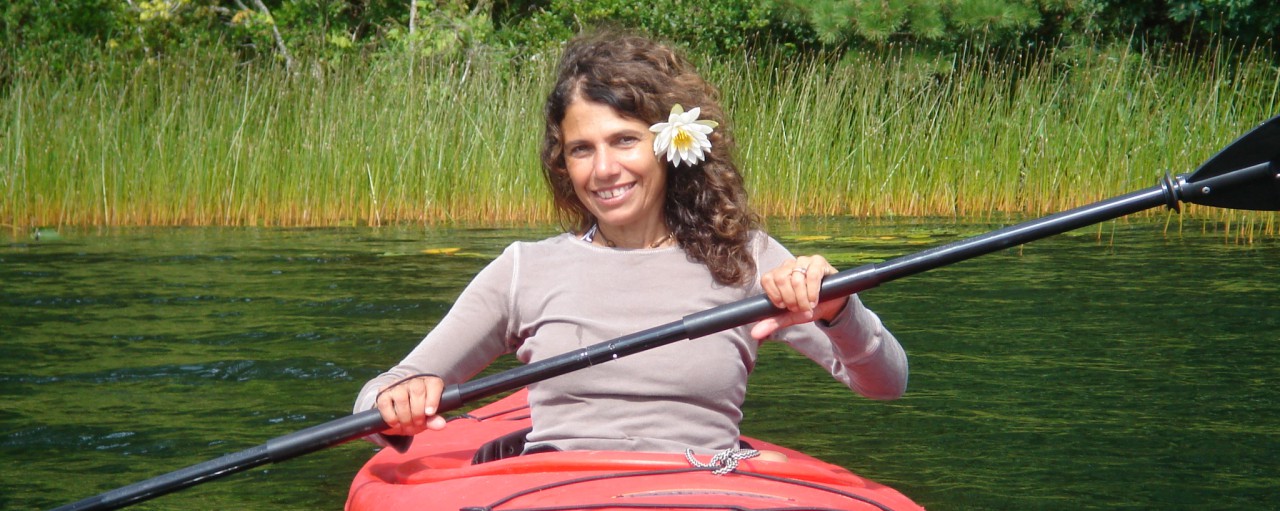
downloadIt dawned on me this week that one of the most wonderful gifts in life is the ability to not have to be perfect. I was reminded of this on a beautiful sunny Friday afternoon last week. It was one of those picture perfect, almost fall days with a gentle breeze, sunny sky, no humidity and perfect temperature. Once a year I go with one of my best friends to a reservoir near where I live to go kayaking. My husband and I go several times during the warm months but my friend Barbara does not own a kayak and so for the past two years she and I decided to start a traditional and yearly kayak outing. She is retired and I get out of work early on Friday, so last Friday we went on our trip. We packed some sandwiches, the new Lay’s Reuben flavored potato chips and some wine and a camera, and off we went. Since it was a week day we almost had the reservoir to ourselves. We both had our hair disheveled, no make up to speak of, crappy water shoes, faded shorts and tee shirts, and no jewelry (well, except one of the necklaces that I refer to as my kayak necklace, which is made of natural jute and beads that my daughter made for me, and that I love (and do wear other places), but especially love for things I do in nature, like kayaking).IMG_6753

Anyway, we paddled along and stopped at a clearing on the shore to go walk along a path that became muddy, but was beautiful along a bog with reeds and lily pads and frogs. We also had found a spot where we paddled to float near a fallen tree (dubbed Broken Bark Bar) to have our late afternoon lunch/happy hour plastic cup of wine and proceeded to chat about everything. We both agreed we were at a point in our lives where we were so thankful that we were content and thankful to enjoy all the beautiful but simple things in life. We realized how relieved we felt to actually not care about our hair, our make up, or what we were wearing. Life is hard enough as it is. Problems come up with children and family and friends and life in general. It never ends! Imagine the extra strain of having to be perfect. Sadly, I clearly remember all the people I have met who struggle with this on a daily basis.

Just imagine:

Having to do a certain amount of exercise a day. Having to follow a certain diet, and think about every morsel that passes your lips (yes, there are people with dietary restrictions who have to avoid foods for medical reasons, but that is not who I am referring to). I am thinking about those people who forbid themselves things on a daily basis, and truly get emotionally upset when they do not follow their own self-imposed rules. People who invent some body image goal they feel is the only body they could possibly be happy in. It typically is not achievable without mental and physical repercussions, yet they carry on with the delusion that this perfect body will be the answer. Even when they reach their “goal weight”, it is never good enough. One thing I will never forget is the anorexic patient who told me “I finally realize, the only time I get to wear my goal jeans is when I lose so much weight that I have to be hospitalized”.

Can I share what I have learned from those I have seen reach these goals? These are the patients I have worked with over the years, and this is what I have seen: they change their goals once they reach them. It starts with one goal of losing a certain amount of weight, but then, that is not good enough. The weight goal lowers. They reach it and it still does not make them happy. The person who has the goal of doing a certain amount of exercise? The need to run a certain race, then another and another. Well, when they reach their goal, it is not enough. The goal increases. And they still are not happy. The end never comes.

I think we all have a bit of perfectionism in our lives, or at least unreasonable expectations. I know of moms who need to vacuum 4 times a day (and don’t let their children walk on the carpet….no footprints allowed). I know of women who pick their perfect outfits out of their perfectly organized closets the night before work (I definitely can’t relate). I personally struggle with going to bed if there are dishes in the sink. It won’t happen, I can admit. I just can’t wake up to that. Mornings are hard enough.

So, anyway, at the end of our kayak trip we got ashore, loaded our kayaks, life jackets and oars and drove back, back to reality. We put up our pictures on Facebook, and tucked another wonderful memory away in our hearts. I felt thankful for this friendship with such a wonderful and special woman, a mother who I am sure whose sons would consider the perfect mother, a friend who her many friends would consider a perfect friend, and to her significant other, well, I know he thinks she is perfect, too. With no make up, disheveled hair, faded shorts and tee shirt. I left feeling so very thankful for this beautiful day, but mostly for the realization that I now, finally, can embrace my imperfections and truly not care. Age has helped (one of the perks of getting older!) I only hope and pray that others might take a step to let go of just a little bit of perfectionism in their lives. Care about your health, but there is no need to eat 100% perfectly, or to exercise 100% every single day or to any perfect schedule, or to be any certain body that is not achievable without getting sick or obsessing about food. If you try and try and try…….and still can’t let go of it, consider getting some help. Realizing that you don’t want to have to be perfect anymore is a huge step forward.

For a long time now I have realized being imperfect is my definition of perfect. So consider a new definition of perfection for yourself!

Now if I could only get over leaving the dishes……

5 Reasons You Should Not Skip Meals

stock-illustration-65223149-top-view-of-empty-plate-with-spoon-and-knifeLast week I got together with my three best friends from high school. We all try to connect on each other’s birthdays and so that we are guaranteed to catch up at least four times a year. We usually meet around happy hour/dinner time at a local restaurant in the town where we all grew up. It is always so fun! But as we age, all of the typical discussions regarding how our lives have changed come up, and mostly we laugh a lot!

But this time one of my friends looked absolutely exhausted. She had not slept well the night before and also had not eaten anything all day! It struck me that every time we have gotten together, she is famished because this has been the habit she has gotten into (she us such a caring person that she tends to focus on her family, her family’s restaurant, her own business and never takes time for herself).

I am not one to lecture anyone about their eating habits, but if someone asks me something, I will answer. “Aren’t I burning fat?” she asked. As with most middle aged women, we do gain some weight and the typical person tries to lose it. I then explained how our bodies react to starvation, and not only was it not supportive of promoting a person’s genetically determined body weight, it also could be dangerous at worst, or make you feel crappy (like she was feeling!) at best. Anyway, because so many people are under the misconception that skipping meals is a good way to lose weight, I thought I would write about it.

There are probably lots more reasons (such as the obvious fact that it is next to impossible to meet your nutritional needs by skipping meals), but here are my top 5:

  1. It backfires. Almost everyone has had the experience of not eating enough during the day for one reason or another. Most of the time, dieters do it on purpose, others may just be too busy and not realize several hours has gone by and they missed a meal. The result is the same: a drive to overeat. If you have read any of my previous posts, you know that our appetite and hunger level is intricately tied to numerous regulators. When we do not consume enough calories/energy during the day, we will make up for it. Some make up for it by just automatically listening to their body and eating a very large meal because they are overly hungry! And they feel much better after eating that big meal. Others (dieters/restrained eaters) often feel very guilty when they compensate for not eating enough by eating a big meal, and then binge eat because they feel so bad.
  2. You burn muscle and consequently lower your metabolism. Unfortunately, contrary to what my friend and most people think, you do NOT burn all fat when you skip meals. When we don’t eat for a long period of time, our body has three options to get some energy: protein (from our muscles), carbohydrate in the form of glucose or stored glycogen (we don’t have much energy here, just a few hundred calories, unless you are a trained athlete and your stores may have an increased capacity, but most of us are not trained athletes!), and fat (in our fat stores). Also unfortunately for those trying to lose weight by meal skipping, our bodies draw from all of these forms of storage and eventually may even prefer amino acids (which it can get readily from our muscles). What most people do know is that muscle “burns more than fat” and that is why people who have more muscle need more calories. So what happens when you skip meals and need to burn up some muscle for energy? The next day, with even a fraction less lean muscle, you burn less. Over time, this can have a big negative affect on your metabolism. In extreme situations such as in those with eating disorders who have starved and restricted for a long time, the heart muscle can actually atrophy, causing dangerous health repercussions. The only way to find out if heart damage has occurred is with an echo cardiogram which is expensive. Most patients get an  electrocardiogram which may be normal but does not mean damage has not occurred.
  3. It may increase belly fat and contribute to insulin resistance.  A recent study (May 2015) conducted at Ohio State University revealed that skipping meals not only leads to abdominal weight gain, but it can also lead to the development of insulin resistance in the liver. If youskip meals you might set your body up for larger fluctuations in insulin and blood sugar. The result is more fat gain instead of fat loss. Find the original article in the Journal of Nutritional Biochemistry, July 2015, Volume 26, Issue 7, Pages 721–728 and for a summary of the research results see CBC News Article on Skipping Meals and Belly Fat.
  4. You wreak havoc with your digestive system. One of the biggest complaints I get from people who skip meals is constipation. We all have experienced that uncomfortable feeling at times when maybe we have traveled and our bodies get off track, or we have been ill or maybe ate too much chocolate! It is not a fun feeling, but can you imagine having to feel this way on a regular basis? In addition to constipation, lots of people who skip meals and then eat tend to complain of feeling bloated and gassy, or even having stomach pains. Our bodies just simply like to be in a regular rhythm of eating. Our digestive enzymes get used to helping us digest our meals at regular intervals. When we start to skip meals, eventually these enzymes decrease so we even may stop feeling hungry (many of my patients will ask “why should I eat lunch if I am not hungry? I thought I am supposed to “listen” to my body!” Well, if you have been skipping meals on a regular basis, this is the one time I will say don’t listen to your body because it has been derailed. If this has happened to you then start by adding in a small meal (maybe half a sandwich) and build up to a normal lunch over time. Eventually you will start feeling hungry again and this indicates your body’s metabolism as well as digestive system is getting back to normal. Of course there are other contributors to constipation and digestive issues (food intolerance, inadequate fluid intake, not enough fiber) but going long periods without putting something in your digestive system is not going to help.
  5.  You just plain won’t feel good.    Finally, when you don’t provide your body and brain with the fuel it needs, you just are not going to be in a good mood. You will likely drag, be unable to focus, get grouchy more easily and just simply not be that fun to be with! I have found that most people do not even realize how crappy they feel when they do not eat enough during the day. When they begin to add in breakfast and lunch they are often amazed at how good they feel and how much more energy they have. If I had a dollar for every person that has said “wow, I feel so much better! I didn’t even realize how bad I felt!” I might not be having the time to write this blog because I would be retired and relaxing on my favorite beach on Keewaydin Island.

Just to be clear, I am not promoting weight loss, but instead I am hoping those of you who are always trying to lose weight will stop skipping meals. Why not think about working on a healthier lifestyle instead so that you feel good and can enjoy life. And that involves eating your three meals a day.

Three square meals a day. Funny how good sound advice never seems to change.

Why you need to stop trying to have “willpower”

hungry man and burger I have always disliked the word “willpower”. Maybe because so many people cast judgement when they think someone does not have any. Why do you keep smoking? You need to have more willpower! Why do you keep overeating? You need to have more willpower! Why are you binge eating? You need to have more willpower! Why do you drink so much? You need to have more willpower! If only you had more willpower. I hate that word.

Also, people judge themselves. When they want to change and can’t, most people beat themselves up mentally and verbally. Why can’t I have more willpower?! This makes me sad because changing, especially when it comes to eating behaviors, has nothing to do with willpower.

I like looking at things in a somewhat holistic way. It is never one simple answer and most people behave in a certain way because of a variety of influencing factors. When it comes to eating, I always have felt there are three things that affect us (probably more but to me, these are the three general areas I have encountered with the people I have worked with).

  1. Physiology
  2. Environment and habits
  3. Emotions

First, let’s talk about physiology. By this I mean all the physiological things that are going on in your body that most of us never think about. What most people do not know is that our bodies regulate themselves as far as what and how much to eat. For example, people who try to avoid carbohydrates eventually end up craving them. Why? Because a chemical messenger named serotonin in our brains will drop if we do not eat enough carbs and will send the message that we need to eat them! Have you ever craved something sweet? We all have. Even dietitians usually can’t keep track of what they eat, let’s face it, we all have busy lives and sometimes just eat what is there. But our bodies will definitely tell us, they are keeping track! A good example is a dinner I prepared for my husband the other day. We kind of ran out of food and I had gone out with a friend so had already had an early dinner. I threw together a “Chef’s Salad” because I had leftover grilled chicken, leftover pepperoni slices from a party, some prosciutto I had left from a recipe I made over the weekend, cheese and lots of salad (it was buy one, get one!). He loved it with his Chipolte Ranch Dressing, but I knew he was going to be craving something sweet later at night because there were no carbs in it. He is not a fan of beans and I had no croutons : ( So later at night it was kind of funny when he said “do we have anything sweet? I need something sweet!” So predictable. Nothing to do with willpower and everything to do with physiology.

What kind of imbalances are YOU creating with your eating? In addition to not getting enough carbs, if we don’t get enough calories our bodies regulate that also. Leptin is one messenger that will make sure you know you have not eaten enough. Are you skipping lunch to lose weight? Are you then getting mad at yourself for not having “willpower” at night when you end up binge eating? Not your fault, and not your lack of willpower. Physiology, plain and simple. You can’t fight it, so don’t blame yourself. There are so many more examples, but the bottom line is that your body is much smarter than you are, and having more willpower is not the answer. Trusting your body is. Check out more on this topic (especially for you biology buffs) with these articles:

Appetite Hormones (July 2015 Issue, Today’s Dietitian,Appetite Hormones  By Marsha McCulloch, MS, RD, LD, Vol. 17 No. 7 P. 26)

Gastrointestinal-Brain Connection

The second reason people need to forget about willpower is the power of environment and habits. We all have behaviors that are affected by our environment, and eventually we fall into habits that we don’t even have to think about. Let me ask you a simple question: what do you do when you walk in the door after a long day of work (or school)? Do you kick your shoes off and run to the couch, click on the TV and relax? Do you go straight to your room, remove your work clothes, put on your jogging shorts and sneakers and run to the track? Or do you go straight to the fridge and open the door? Or maybe grab a beer and sit in front of the news?

All of these behaviors are habits. None has anything to do with willpower. The person who has been coming home and going to the track has no more willpower than the person who runs to the fridge to grab a snack or a beer. The issue is that each person has developed a habit over time, triggered by their environment. Just walking in that door sets all behaviors in place. The question we need to ask ourselves is NOT why we don’t have more willpower, but what behaviors are we not happy with and want to change? Changing habits is another long story and not easy. We can start however by changing that initial trigger, not by blaming ourselves for not having enough willpower! What if you avoided that couch and put on sneakers instead? then went and sat outside on the porch just to watch the birds. Anything to break that chain. Wishing you had more willpower or berating yourself because you do not is not the answer.

Finally, the third reason to forget about willpower is to remember that emotionally we are all different. No one has the same life growing up, the same role models, the same experiences or the same biological make up. How can we expect to have the same amount of willpower? Consider the woman I once worked with many years ago. She was a binge eater and was a stay at home wife to a man that wanted her to be thinner.  She had gained weight throughout her 20 year marriage and he just wanted to help her. So what he thought was helpful (“you don’t need that! That is enough for you!”) was actually hurtful. She told me that she would eat her Special K with skim milk in the morning while he had his bacon and eggs, then watch through the window as he drove away. The minute he disappeared from sight, she would go straight to the fridge and start eating. And eating. She had a binge eating disorder that was partly due to emotional reasons. NOT lack of willpower.

The bottom line and take-home message I hope you get is that expecting yourself to have more “willpower” may be a losing battle. Instead, can you consider looking at your lifestyle and asking yourself what behaviors you feel are not contributing to health? Are you restricting too much and then binge eating and getting mad at yourself? Are you wishing you could be more active because you really do want to have more energy but feel you have no willpower to go to the gym?  Are you drinking too much and blaming yourself?  I suggest just start by thinking about which of these three areas are affecting you most. Then work on figuring it out without judgement. Stop expecting yourself to have willpower to fix things that are way more complicated.

Working on your health both physically and mentally is a wonderful thing! Just taking the time to read this post shows you care about yourself and that is a great thing too! Stop berating yourself for not having enough “willpower”. No one does.

Cleaning Your Closet: Why is it so hard to let go?

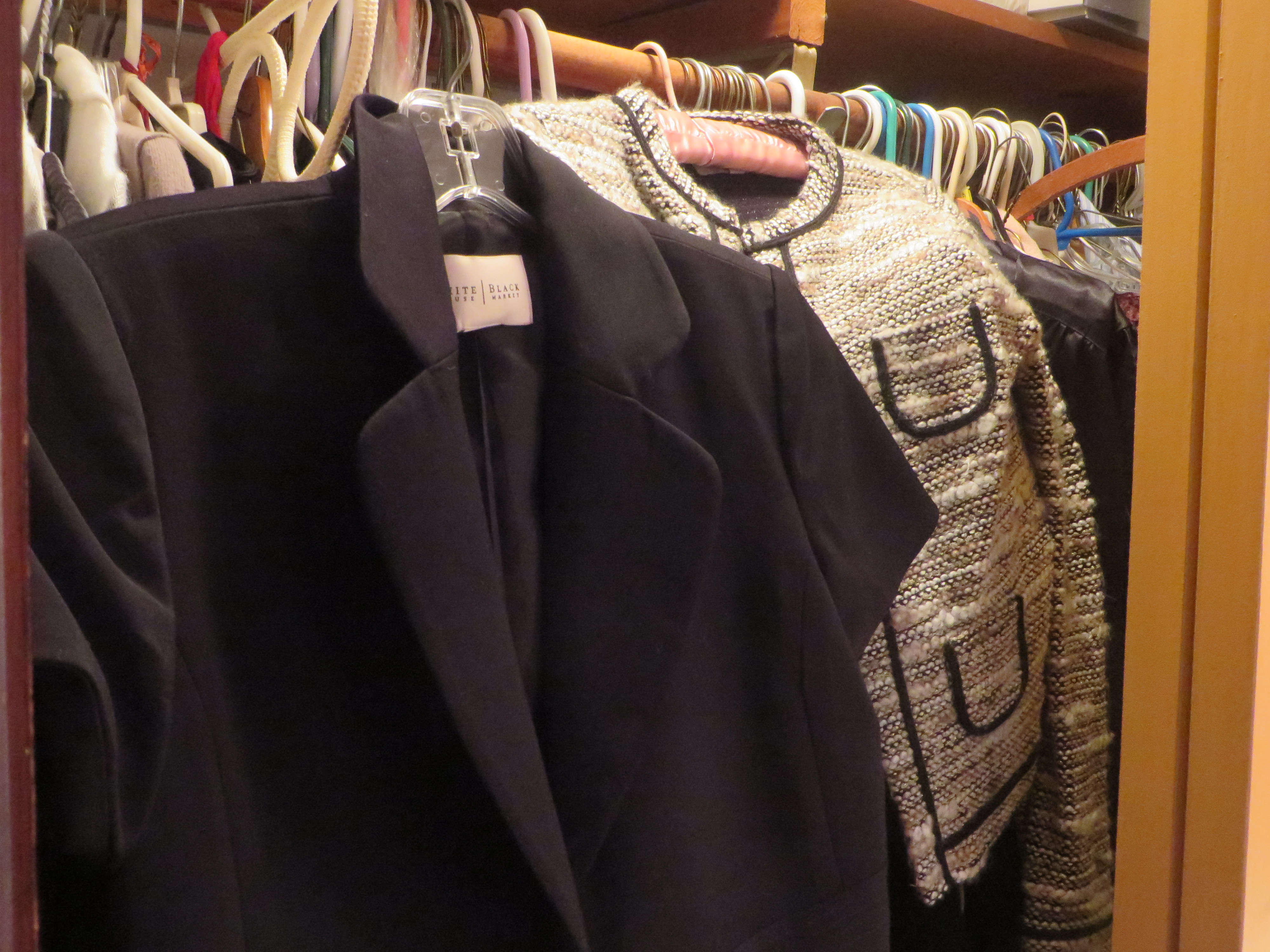
IMG_6662I have a lovely beaded shawl that my mom gave me that will go perfectly with the cranberry colored dress I am wearing to a wedding this afternoon. I can’t find it. It is driving me crazy because I know it is here…….somewhere. I vaguely remember hanging it upstairs in a spare closet (where several other things we don’t use often are kind of shoved). Things like holiday wrapping paper, a few boxes of old pictures and files, wrought iron candle holders that I got at a tag sale that are just too nice to throw away. The shawl is not in there, I don’t think. It could have fallen on the floor and although I need to clean that closet out, I am not in the mood on this gorgeous Saturday morning to do that.

As I was rummaging through another closet, I kept coming across all these clothes I just never wear. I swear I just cleaned this closet and got rid of so much, yet here I am again, frustrated. Why is it that I keep these things? My friends and I have had so many discussions around clothing. Over the years, working with patients with weight issues, the subject of clothing comes up often too. It has been my experience at least in my life that it is mostly women who struggle with clothing issues (I am sure some men do too, but so far, I have not encountered one who talks about it the way we women do). Just this week, I went shopping with my husband who needed to buy a gray suit for his daughter’s wedding next month. It was so easy! As he was trying on his first gray suit, I glanced around the floor of the large store we were in. To me, all the racks of suits looked the same, just different groupings of colors. On the other side of the store where the women’s clothes were on display it was a different story. So many colors and patterns and styles to chose from! No wonder it is confusing (and we won’t discuss shoes).

So why is it that me and many other women I know can’t just go to their closet and find what they need, get rid of stuff they never wear and live a simple clothing life? Here is what I have realized:

  1. Some women (me) find it hard to resist a sale. That cute little sweater jacket from Ann Taylor that is normally $89.99 and now marked down to $9.99? How could I resist! Well, after hanging there for almost 2 years and maybe being worn once (it is just so thick and warm, who could stand it for more than an hour or so? No wonder it was on sale!) probably needs to go. But then it would have been a waste of money. This winter I will wear it, right?
  2. Some of us, as we age, get a bit confused as to what is appropriate to wear. We may have a few items that we absolutely love. For example, I have these very comfortable khaki green cargo shorts I bought years ago from Sports Authority that are perfect for kayaking. They were on sale, they are sturdy and I wouldn’t care if they got a bit of slimy lake water on them. Unfortunately, they are short. Back then I wouldn’t care, but now, at my age, I feel uncomfortable in shorts that are too short (and unfortunately, I own some more expensive and nice shorts that I splurged on back in the day that I also have not worn for many years….and also have not parted with). It is hard to get rid of stuff you know you spent good money on. It was easy, however to get rid of a short leather and suede skirt a friend had given me. I never wore it (well once for Halloween when I dressed as Dolly Parton!). When I turned 40 it was easy to let it go. The nice expensive shorts are another story.
  3. Some clothing holds special memories. I still have my first robe tucked up in a drawer (somewhere) that I wore after I came home from the hospital when my first daughter Jennifer was born in May. My mother bought it for me, it is white with tiny roses on it and button down so it was easy to nurse in. I just can’t part with it. I also still have the straight leg, high waisted faded Levis I got after my third child Kara was born. I remember it was our first house and for some reason, I loved those jeans and they hold memories of back then when I was a young mother.
  4. The size thing. There are so many stories I could share about so many women who have a range of sizes depending on where they are in their dieting lives at the moment.  We all know people who are able to lose a lot of weight and go down several sizes, yet they keep their larger sized clothes just in case. And then when they gain back the weight, they keep their smaller clothes just in case. There are people who slowly gain a bit of weight over the years and it is perfectly normal, however they refuse to go up a size because of the number thing. Some people think it means something to be this size or that size. Why does this matter? Do you judge someone who is not a certain size? Why do you judge yourself? Those have always been my questions to some of my patients. What about comfort? I have always said, one way to feel bad about your body is to wear tight clothes. Squeezing into a size you used to fit in just to be able to say you wear a size whatever does not make sense, especially if you do not hold your friends to that standard, why do it to yourself? Think about how wonderful you feel in the clothes you throw on when you are ready to lounge around at the very end of the day (I am talking jammies here, PJ’s, leggings, sweats, happy clothes). How does your body feel then? Much better I bet. Why can’t we wear clothes that make us feel like that all day? Maybe not sloppy sweats but just putting on clothes that truly fit comfortably can feel the same as those jammies. Personally, I look at several sizes when I go shopping. I start at the sale rack (of course) and if it is cheap and I love it, I don’t care what size it is (as long as it is big enough). I have been know to buy clothing twice my size but if the armholes fit, it is usually fine! You can look nice but also be comfortable. And happy.
  5. Style. We all care about it even when we think we don’t. A year or two ago, jeans took a turn from boot cut or bell bottoms to suddenly straight leg. I did not own any. I started to feel like I was not stylish at all and the only one wearing bell bottoms. I rarely buy the crazy fashions because I just don’t care (although I would if I loved it, for instance when the hippie shirts came back, I did buy one or two because that is what I wore back in the day, loved it then and love it now). Anyway, when the straight legs went on sale at my favorite store, I tried a few on. They were stretchy and comfy! And usually most pants are too long on me so I have to wear some type of heel or pay big bucks to have them hemmed. With these straight legs I could wear flip flops! I got some. And I am going to keep them until they fall apart because I love them. I also have to face the fact that all those padded shoulder gorgeous jackets I purchased back in the day when I had to dress professionally will never come back and even if they do, I don’t like them now. Why am I keeping them?

We have all read the advice about how to know what to keep and what to let go. Advice such as “if you haven’t worn it in a year, get rid of it” and “for every new item you buy you need to get rid of something” and “if you don’t absolutely love the way you feel in it, get rid of it”. This all sounds good, but not too easy to do for the above reasons. But maybe we can start.

For me, I have decided:

1. If I have not worn it in five years (believe it or not) I probably won’t wear it tomorrow.

2. If it is itchy or makes me too hot I won’t wear it.

3. If it has padded shoulders or if it is short or high waisted it will continue to sit there.

4. I will never get rid of the clothing that holds important memories.

For this morning I am going to go empty that upstairs closet and start filling large trash bags to take to Goodwill. I am going to set aside my special memory clothing and find a plastic bin to store them in (maybe I will even label it). I am going to try to be honest with myself about the fact that I really am too old to wear some of these things, they make me uncomfortable both physically and psychologically, and they are wasting space in my closet. Space where a lovely black beaded shawl might be hiding.

Good luck in letting go of your useless clothing!